
snakelocks anemone
- Actinia viridis
Actinia viridis
- Actinia viridis
| Family | Actiniidae |
|---|---|
| Genus | Anemonia |
| IUCN category (World) | LC |
Introduction
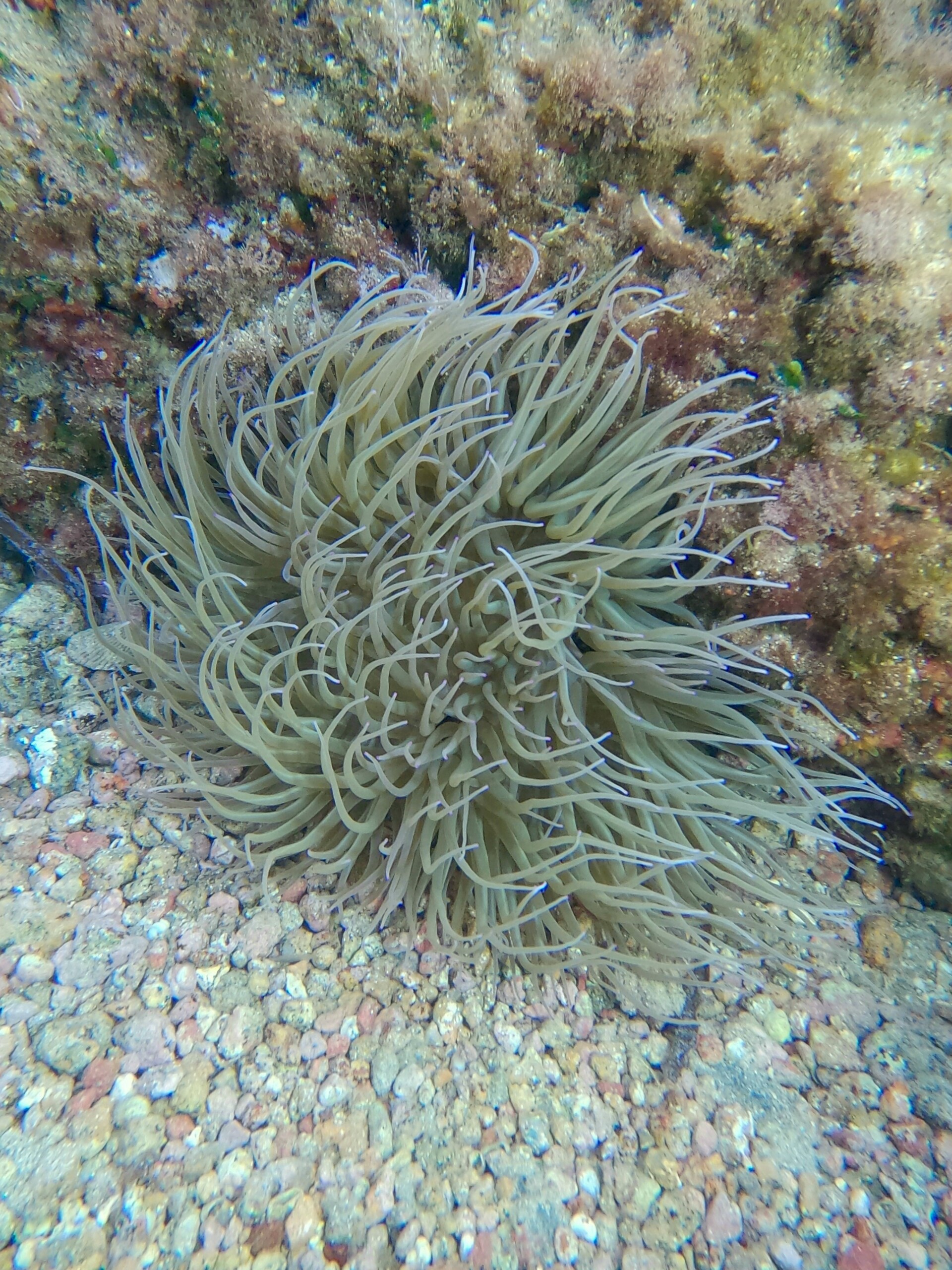
Anemonia viridis, more commonly known as Snakelocks anemone, is an anemone native to the temperate waters of the Mediterranean Sea, northeastern Atlantic Ocean, and northern European seas. This species is often confused with Anemonia sulcata.
This anemone inhabits various shallow habitats and attaches to a variety of substrates, from rocks to sandy-muddy bottoms to gravel.
Who is it?
Morphology
-
Size5 - 8 cm
-
Longevity10 year
-
Size5 - 8 cm
-
Longevity10 year
How to recognize This cnidarian ?
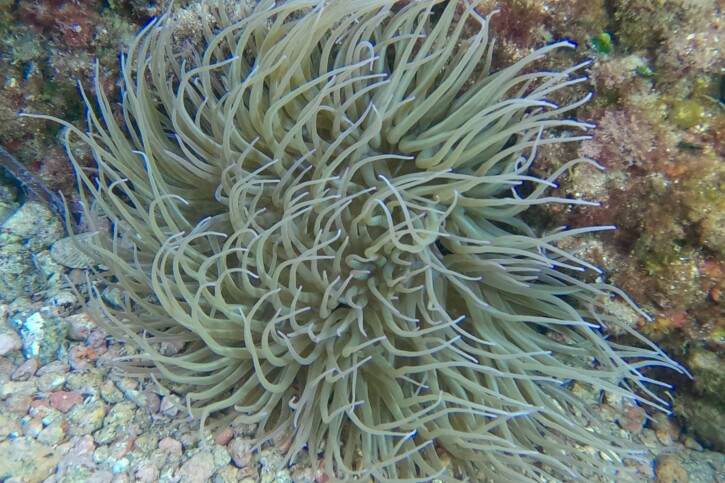
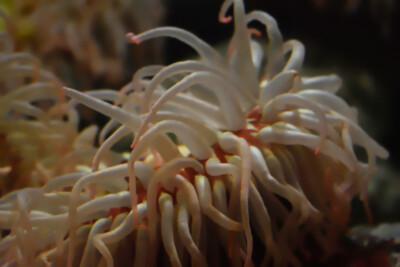
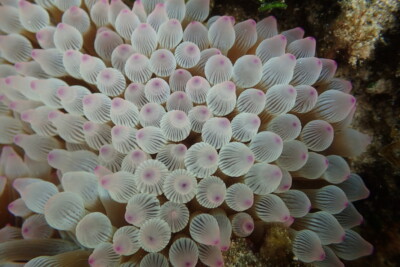
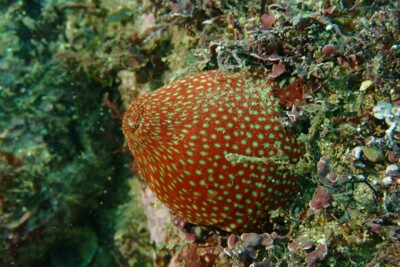
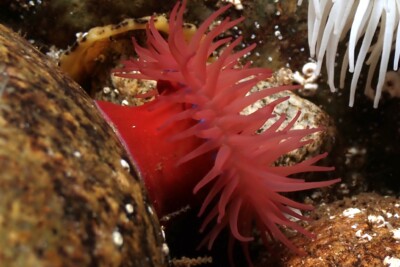
The snakelocks anemone can reach up to 8 cm in size, but rarely exceeds 10 cm. Its tentacles are flexible and elongated. The body is generally light green, while the tips of the tentacles are pale pink or even violet.
Sexual dimorphism
There is no difference between males and females.
Behaviour & Life cycle
-
Sociabilitysolitary
-
Dietpredator
-
Way of livingdiurnal
Anemonia viridis is a solitary cnidarian.
This species lives attached to the substrate and feeds by catching animals (such as shrimp and fish) that come into contact with its tentacles.
Reproduction
-
Reproductionovipare qui pond en eau libre
-
Larva typeplanula
Reproduction can be sexual, through gamete release, and asexual, through organism splitting.
During sexual reproduction, mature gametes are released into the coelenteron and expelled through the mouth. The planktonic larva is of the planula type. The first stage of metamorphosis involves tentacle formation, followed by septa, then the pharynx before attachment to the substrate.
Risks for humans
-
VenomousNo
This species is not harmful to humans.
Origin and distribution
Geographic distribution & Conservation
The snakelocks anemone can be found in temperate waters of the Mediterranean Sea, northeastern Atlantic Ocean, and northern European seas.
Conservation and international regulations
Where to see this species?
What is its habitat?
Natural environment characteristics
-
Temperature11 - 18 °C
-
Depth0 - 40 m
-
EnvironmentBenthic fixed
Biotope presentation
The snakelocks anemone can be found down to 40 m in depth, but typically inhabits the midlittoral and sublittoral zones up to 25 m.
This anemone lives in various habitats, including attachment to rocks or different types of seaweed, in sandy sediments of various sizes, seagrass beds, and soft substrates.
To go further


Sources & Contributions
Participation & Validation
The Fishipedia team and specialist contributors are committed to providing high-quality content. However, although the information comes from scientific sources or testimonials from specialists, the cards may contain inaccuracies.

Adrien Falzon

Aurélien Calas
Translation
Translation done with the valuable contribution of our translators, who make this information available to a wider audience. We sincerely thank them for their commitment.
Bibliographic references
- GBIF — Anemonia viridis
- iNaturalist — Anemonia viridis
- Guide des bords de mer — Peter Joseph Hayward — Chris Shields — Tony Nelson-Smith — Delachaux et Niestlé —
- Les habitudes alimentaires de trois espèces d’anémones de mer méditerranéennes, Anemonia viridis (Forskål), Actinia equina (Linnaeus) etCereus pedunculatus (Pennant) — Ch. Chintiroglou — A. Koukouras — Springer link —
Where to see this species?
Scientific partners





Tags
Species of the same family


