
Introduction
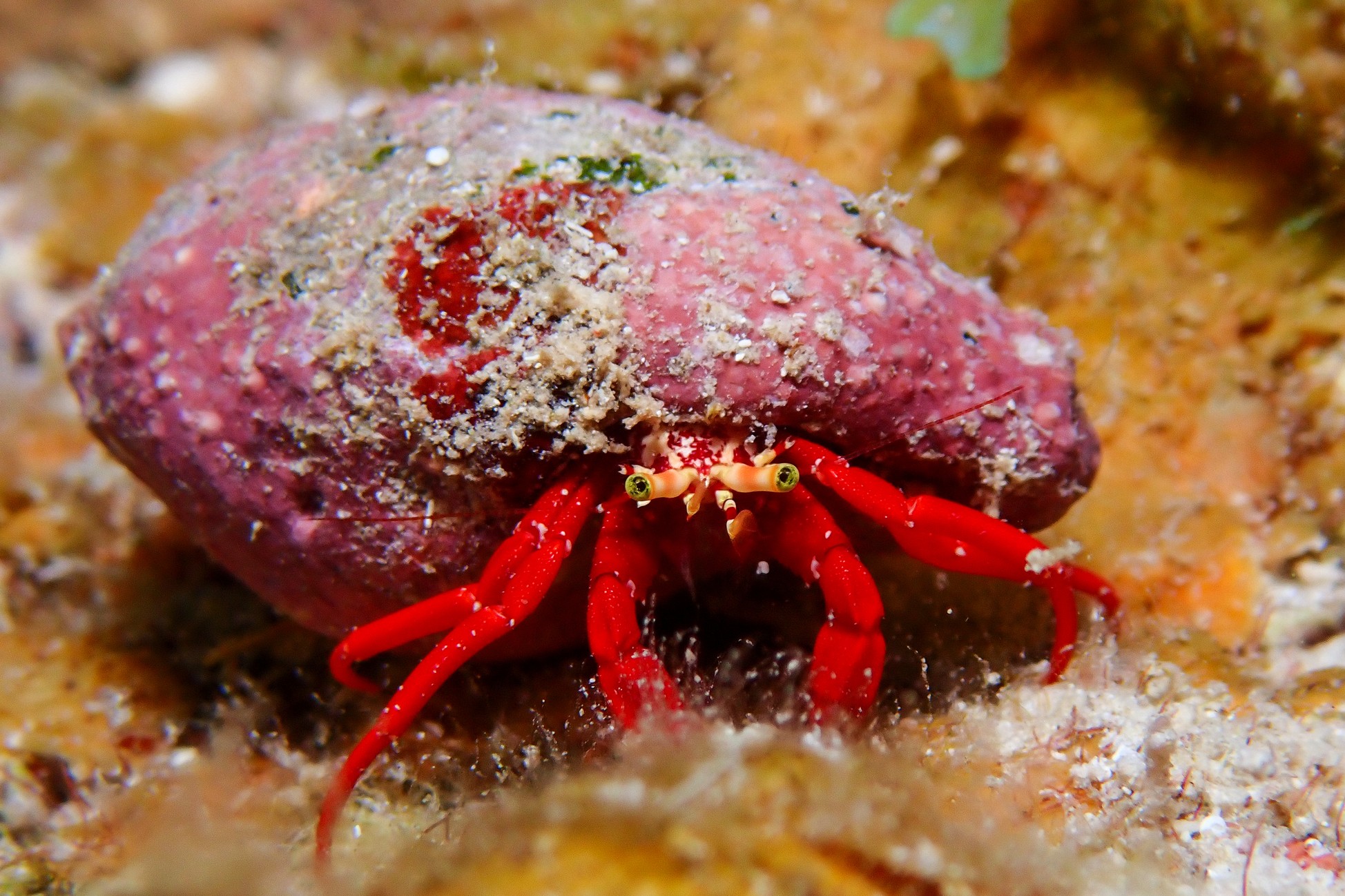
The red reef hermit (Paguristes cadenati) is a decapod crustacean of the family Diogenidae, widely distributed in the tropical Western Atlantic, from the Caribbean to the Gulf of Mexico.
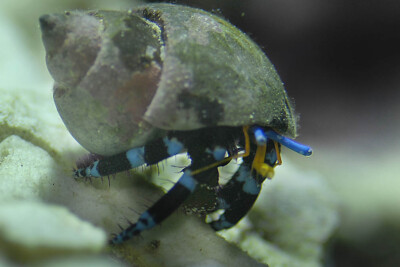
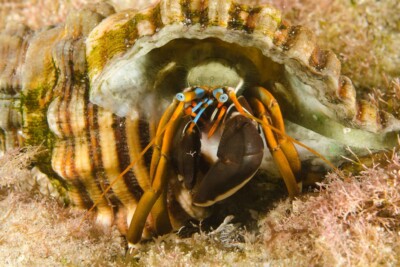
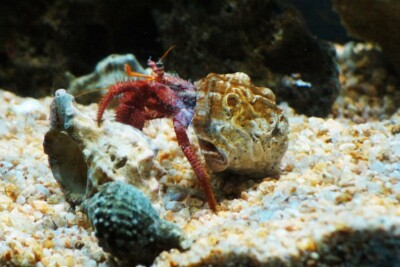
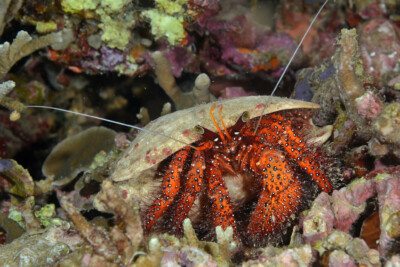
This species of modest size is identifiable by the bright red color of its legs and claws, contrasting with its marbled cephalothorax. Affiliated with shallow reef habitats, it is distinguished by mainly nocturnal activity and a notable abundance on healthy coral platforms.
Who is it?
Morphology
-
Average size0.8 cm
-
Maximum size1 cm
-
Average size0.8 cm
-
Maximum size1 cm
How to recognize this crustacea ?
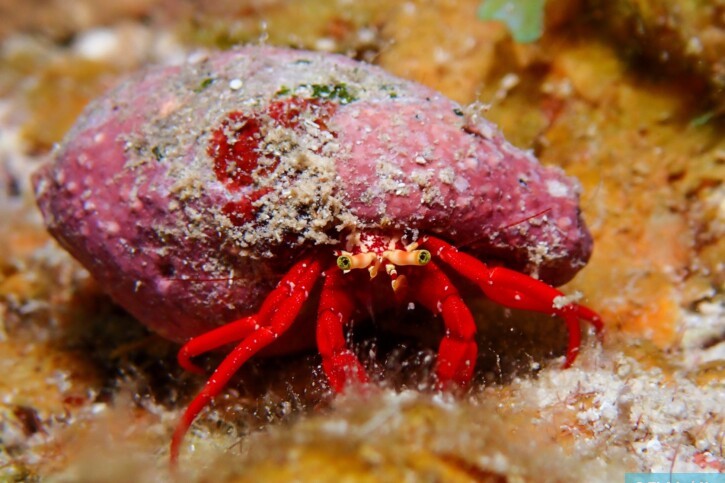
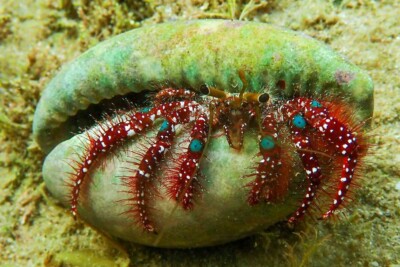
This red reef hermit has an anterior cephalothorax longer than wide, adorned with a characteristic red and white marbled pattern. The coloration of the locomotor appendages and claws is a bright and uniform red.
Sexual dimorphism
Males possess modified sexual appendages on the first and second abdominal somites. Females are distinguished by the absence of a developed incubation pouch (marsupium).
Behaviour & Life cycle
-
Sociabilitysolitary
-
territorialNo
-
VenomousNo
-
Way of livingdiurnal
Like all crustaceans, The red reef hermit molts whenever it becomes cramped in its shell. Before the hardening of its new body, it is more vulnerable and spends a good part of its time hidden. This mechanism, very complex, allows the periodic renewal of the exoskeleton and part of the internal skeleton. It is also during the moult that the females become fertile.
Like all hermit crabs, this species depends on empty gastropod shells to protect its soft abdomen. It shows significantly increased activity at night, becoming much more visible and abundant on reefs after sunset.
During the day, it tends to hide in crevices. Aggressive behavior and courtship rituals rely on olfactory and tactile signals, with indirect sperm transfer during mating.
Omnivorous and opportunistic, the red reef hermit actively grazes on the substrate. Its diet includes algae, biofilm, organic detritus, and small benthic invertebrates. Its subequal and granulated claws allow it to scrape rocky surfaces and manipulate food particles of various sizes.
Reproduction
-
Reproductionovipare
Reproduction follows the typical cycle of Diogenidae: after a courtship display, the male transfers sperm using his gonopods. The female then lays her eggs and attaches them under her abdomen with her pleopods. The absence of a closed incubation pouch means the eggs are directly bathed in seawater. Larval development is pelagic, with larvae drifting in the water column before metamorphosing and seeking a shell to settle on the seabed.
Harmless species
The red reef hermit poses no danger to humans.
Origin and distribution
Geographic distribution & Conservation
The distribution area of this species covers the entire tropical Western Atlantic, including Belize, the Greater Antilles (Cuba, Jamaica), the Lesser Antilles, and Florida. It is common in shallow reef and rocky areas. No major threats are identified for this species, which remains abundant in its natural habitat as long as gastropod populations (shell suppliers) and reef health are maintained.
Conservation and international regulations
Where to see this species?

What is its habitat?
Natural environment characteristics
-
Temperature24 - 28 °C
-
Depth1 - 50 m
-
FlowMedium
Biotope presentation
This crustacean is benthic and exclusively marine, between 1 and 52 meters deep, with a high concentration in the 1 to 10 meter zone. It frequents coral reefs, reef slopes, and exposed rocky areas where shells are available. The species is often observed at night on outer reefs or shallow drop-offs.
To go further

Sources & Contributions
Participation & Validation
The Fishipedia team and specialist contributors are committed to providing high-quality content. However, although the information comes from scientific sources or testimonials from specialists, the cards may contain inaccuracies.

Benoit Chartrer
Translation
Translation done with the valuable contribution of our translators, who make this information available to a wider audience. We sincerely thank them for their commitment.
Where to see this species?
Scientific partners




Tags
Species of the same family


