
Introduction
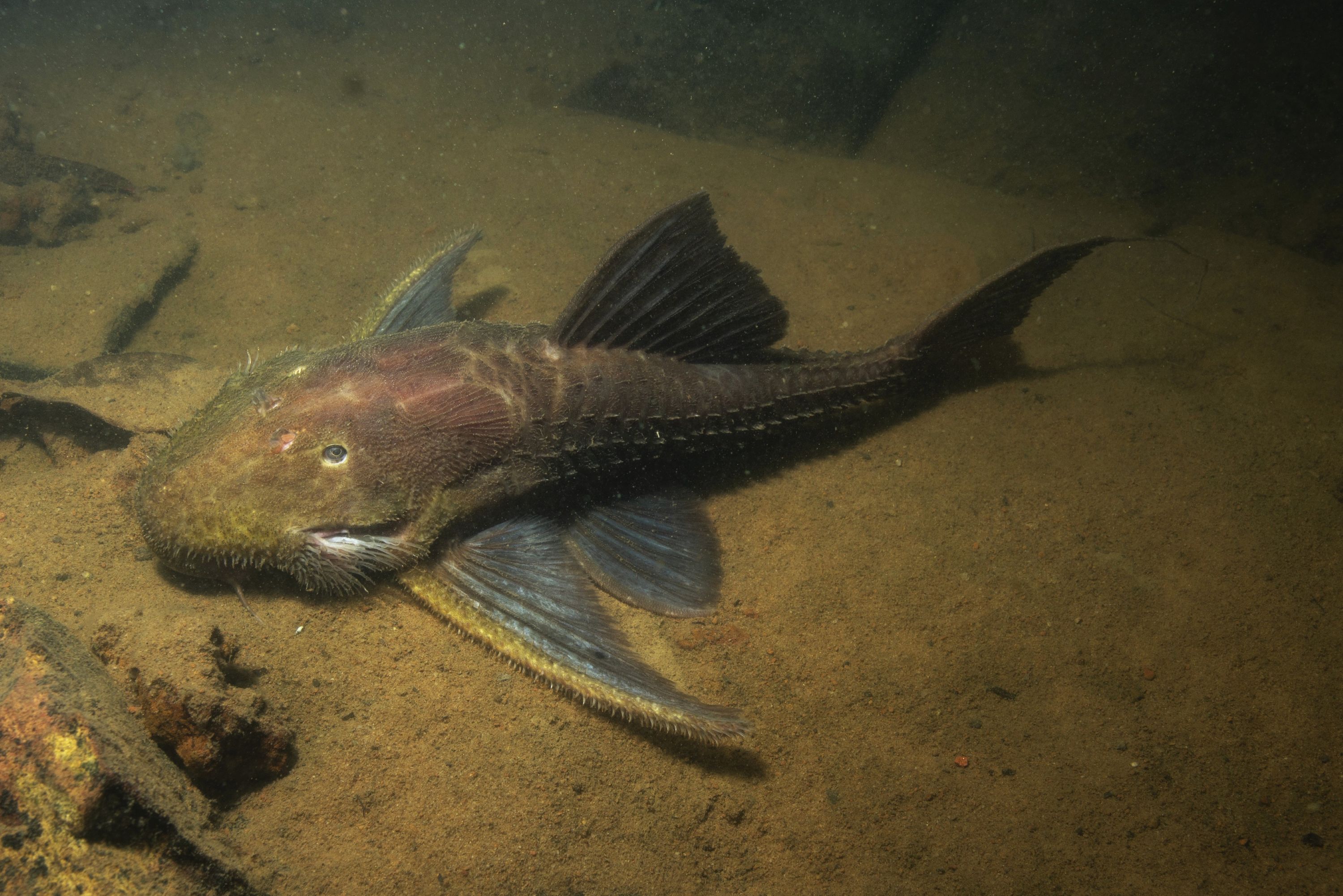
Acanthicus hystrix, commonly known as Guariba or Carachama locally, is a large catfish widely distributed in the Amazon (Brazil, Peru), Orinoco (Venezuela, Colombia), and Tocantins-Araguaia basins. Although the original holotype was destroyed during a bombing in 1944, the species is recognized through illustrations of its original description and numerous examined specimens.
No quantitative data exists on overall size or population trends, but the species is considered common throughout its range. It holds major economic importance as an ornamental fish (code L155), captured by divers equipped with compressors, especially in the Altamira region.
Who is it?
Morphology
-
Type
-
Average size45 cm
-
Maximum size60 cm
-
ShapeCatfish
-
Mimicryplants
-
Type
-
Average size45 cm
-
Maximum size60 cm
-
ShapeCatfish
-
Mimicryplants
How to recognize This fish ?
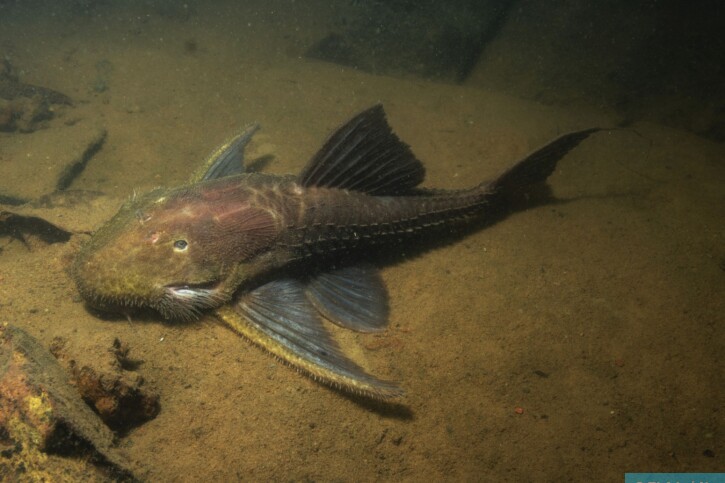
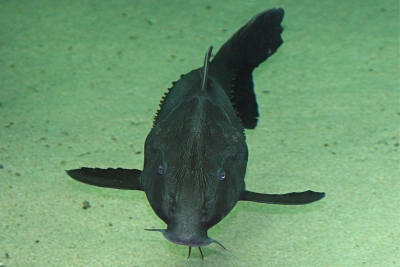
This loricariid is distinguished by the absence of an adipose fin, the presence of small plates on the abdominal region, and greatly enlarged pectoral spines. Its body is protected by five rows of keels formed by hypertrophied odontodes, providing it with a robust armor.
Coloration ranges from dark brown to nearly uniform black, devoid of spots or light spots, unlike its sister species Acanthicus adonis. The caudal fin features characteristic stripes of ochre to gray color. The species can reach up to 53.0 cm in standard length (about 60 cm total length).
Geographic variations are noted: specimens from the Orinoco, Rio Branco, and Takutu basins often exhibit darker coloration and a more depressed body than those from other regions.
Sexual dimorphism
Sexual dimorphism is pronounced in adults: mature males develop much more extensive and sharp odontodes on the pectoral spine, operculum, and cheeks. This morphological difference is accompanied by behavioral divergence, with males becoming more aggressive and territorial upon maturity.
Behaviour & Life cycle
-
dietomnivorous with alguivorous tendency
-
Sociabilitysolitary
-
territorialYes
-
Way of livingdiurnal
A benthic species, Acanthicus hystrix frequents the main channels of rivers, in moderate to strong currents. It hides under rock and gravel conglomerates or among medium to large rocky blocks. Omnivorous and detritivorous, it primarily feeds on periphyton colonizing submerged logs along wooded banks.
Mature males exhibit pronounced territorial behavior and can be aggressive in defending their shelters. This aggressiveness suggests limited tolerance among adults in confined spaces, with the species not forming structured shoals but occupying its habitat dispersedly.
Reproduction
-
Reproductionovipare qui pond sur substrat caché
Sexual maturity is attained at a significant size, concurrent with the development of hypertrophied odontodes in males. Like its closest congeners, the species is presumed oviparous and cavernicolous, with male likely guarding the spawn within a protected cavity.
Harmless species
Acanthicus hystrix poses no direct threat to humans as a predator. However, its enlarged pectoral spines and sharp odontodes present a risk of physical injury during handling, especially for fishermen and aquarists.
Origin and distribution
Geographic distribution & Conservation
The distribution range covers the drainages of the Branco, Ucayali, Solimões, Trombetas, Japurá, Madeira, Xingu rivers, as well as the Tocantins-Araguaia and Orinoco basins (Orinoco and Apure rivers). Presence is also possible in Guyana and Suriname.
Despite sustained fishing pressure for the aquarium trade, no major threats are reported, and the species maintains a common status. The trade sometimes distinguishes morphotypes (L193 for Orinoco/Apure, L407 for Branco/Takutu) based on color and body shape, but morphometric analyses confirm these as geographic variations of a single species.
Where to see this species?

What is its habitat?
Natural environment characteristics
-
Temperature22 - 27 °C
-
pH (acidity)6 - 7.5
-
FlowStrong and Medium
Biotope presentation
This fish inhabits tropical freshwater main channels, characterized by strong currents and bottoms composed of rocks, gravels, and submerged logs. It is dependent on areas where rocky outcrops offer shelter against the current, typically between 2 and 3 meters deep. Water temperature in its natural habitat ranges between 22°C and 27°C. Its presence is closely linked to wooded banks where periphyton, its primary food source, thrives on submerged substrates.
To go further
Species of the same family
To read on the web

Sources & Contributions
Participation & Validation
The Fishipedia team and specialist contributors are committed to providing high-quality content. However, although the information comes from scientific sources or testimonials from specialists, the cards may contain inaccuracies.

Benoit Chartrer
Translation
Translation done with the valuable contribution of our translators, who make this information available to a wider audience. We sincerely thank them for their commitment.
Where to see this species?
Scientific partners




Tags
Species of the same family


