zanzibar guitarfish
| Family | Rhinobatidae |
|---|---|
| Genus | Acroteriobatus |
| IUCN category (World) | NT |
Introduction
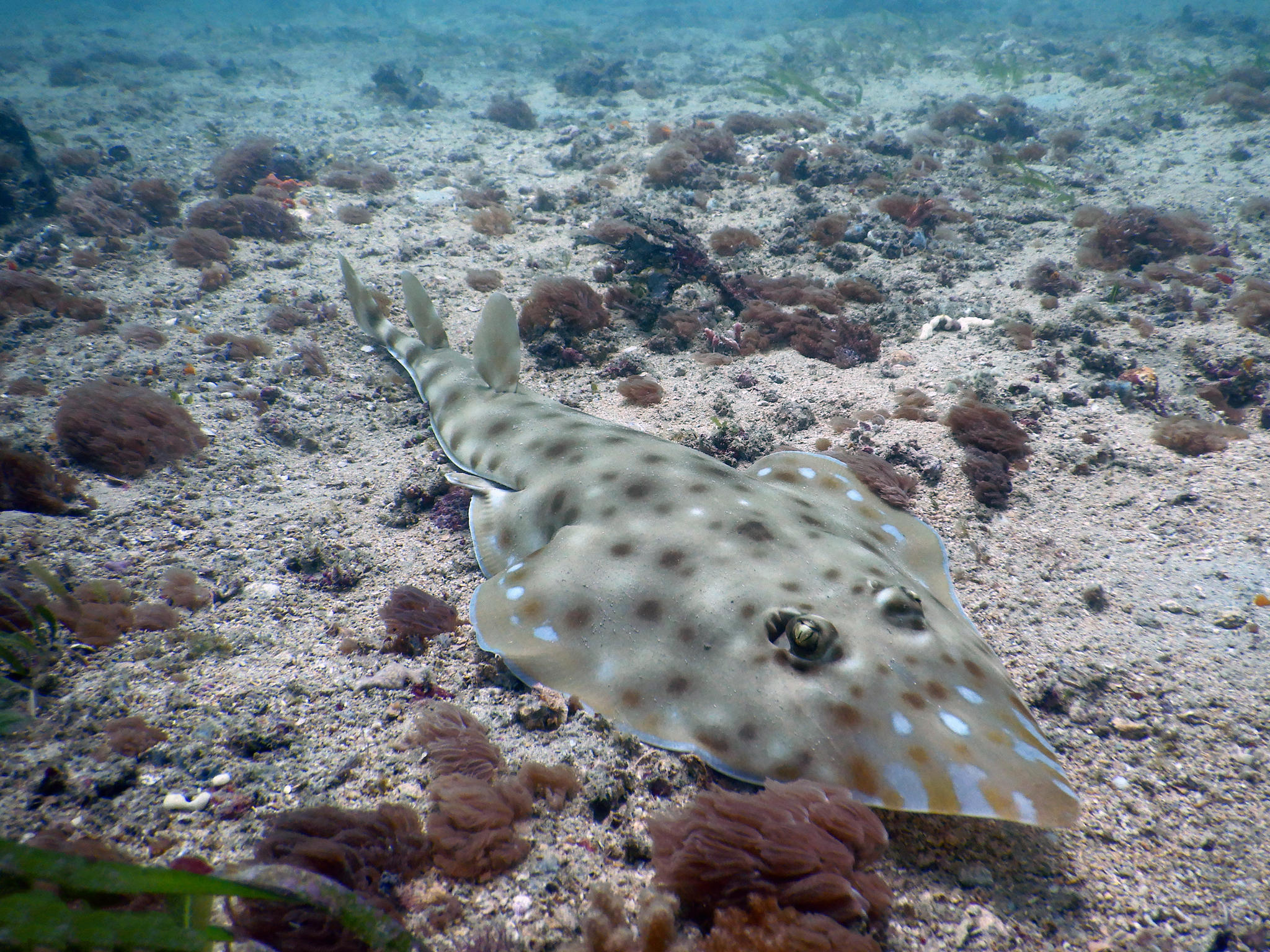
Acroteriobatus zanzibarensis is a species of zanzibar guitarfish endemic to the Zanzibar region in Tanzania. Very rare and known only from a few specimens, it is considered a species with an extremely restricted range. It is threatened by local artisanal fishing.
Who is it?
Morphology
-
Average size75 cm
-
Maximum size100 cm
-
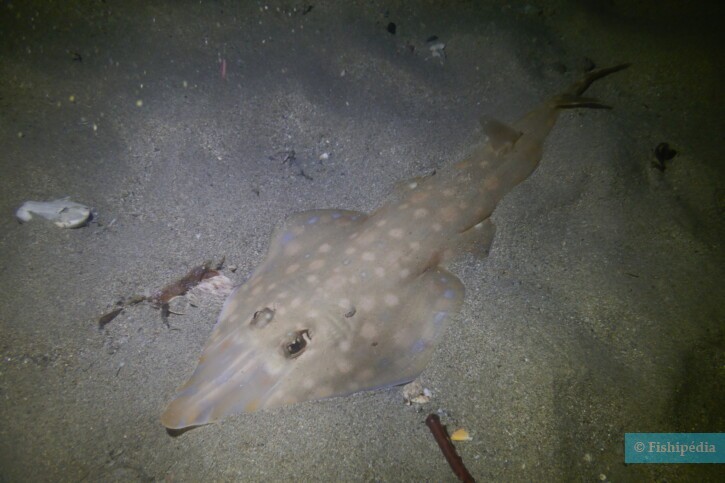
Mimicrysand
-
Patternponctuations
-
Average size75 cm
-
Maximum size100 cm
-
Mimicrysand
-
Patternponctuations
How to recognize This fish ?
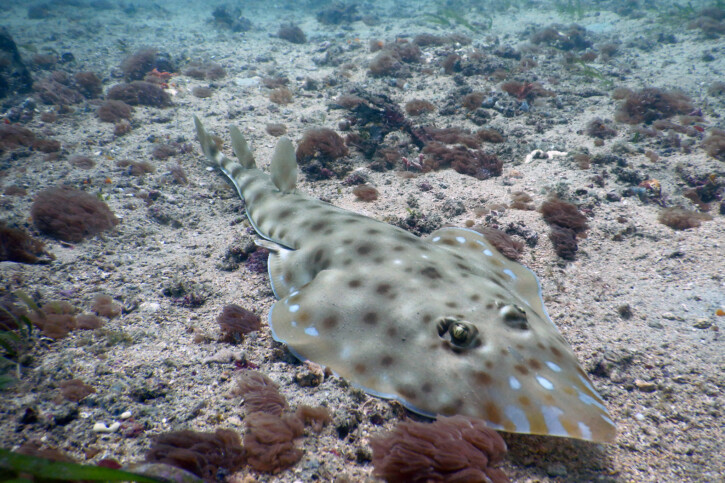
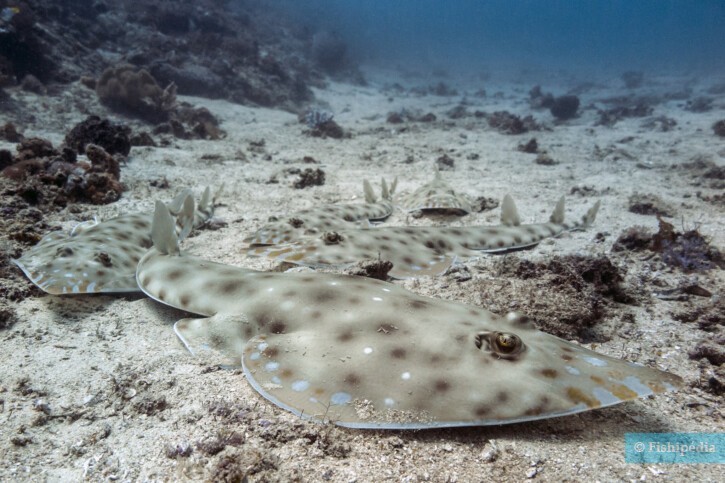
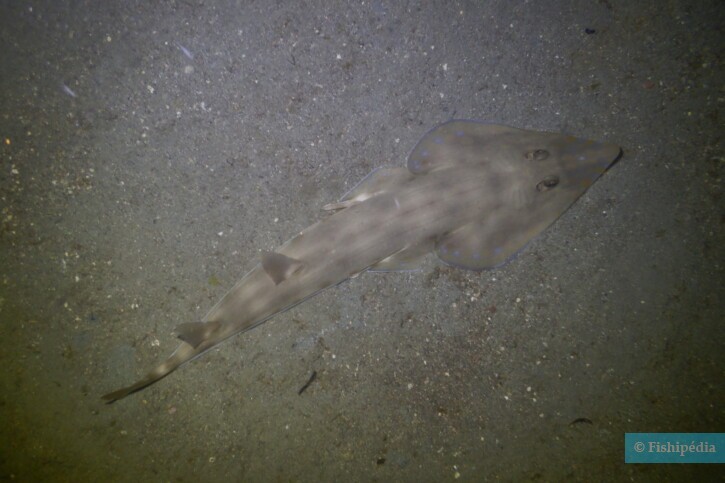
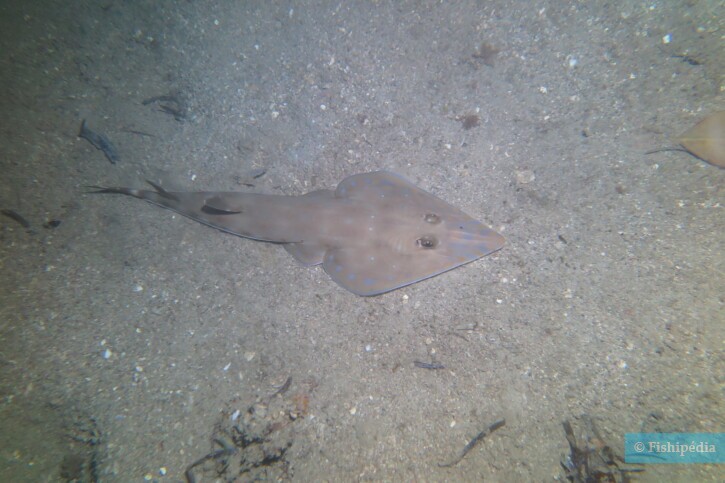
It is a large species of guitarfish, with a female measuring 205 cm according to an ancient report. Males reach sexual maturity at around 64 cm in total length. Its appearance is typical of guitarfish, with a flattened body adapted to benthic life.
Sexual dimorphism
Available information indicates a smaller maturity size in males (64 cm TL), but no other sexual dimorphism has been documented.
Behaviour & Life cycle
-
dietcarnivorous
-
Sociabilityliving in a group or alone
-
territorialYes
-
Way of livingdiurnal
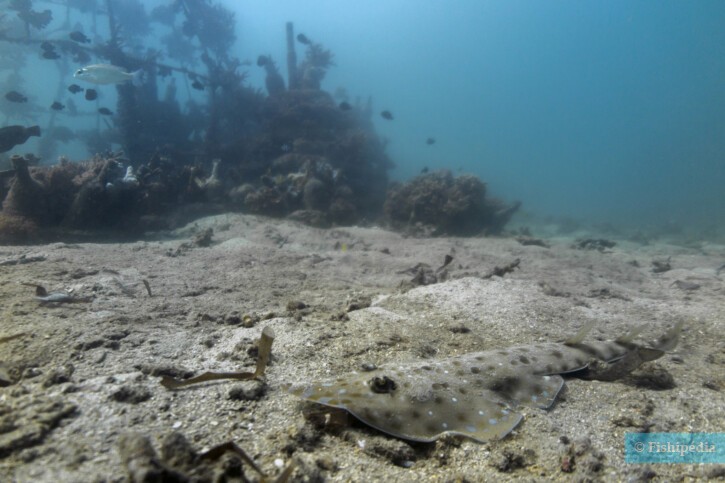
It is a benthic species inhabiting the inner continental shelf. Like other guitarfish, it is likely carnivorous and feeds on small fish and benthic invertebrates such as crustaceans or mollusks.
Reproduction
-
Reproductionovovivipare
Like other guitarfish, A. zanzibarensis is viviparous aplacental, but no species-specific details have been studied. In rhinobatids, the reproductive cycle is annual with litters of 2 to 16 young.
Harmless species
This zanzibar guitarfish poses no particular danger to humans.
Origin and distribution
Geographic distribution & Conservation
The species is only known from the coastal waters of Zanzibar (Tanzania). Fishing surveys and underwater surveys conducted off the Tanzanian coast and in East Africa have failed to find any other individuals, confirming the extreme narrowness of its distribution range. The intensive use of nets, longlines, trawls, and harpoons in Zanzibar poses a direct threat to its habitat.
What is its habitat?
Natural environment characteristics
-
Temperature25 - 29 °C
-
Depth0 - 100 m
Biotope presentation
It lives on the bottoms of the inner continental shelf, in coastal areas under high pressure from artisanal fishing.

To go further
To read on the web

Sources & Contributions
Participation & Validation
The Fishipedia team and specialist contributors are committed to providing high-quality content. However, although the information comes from scientific sources or testimonials from specialists, the cards may contain inaccuracies.

Pauline Gély

Adrien Falzon

Benoit Chartrer
Translation
Translation done with the valuable contribution of our translators, who make this information available to a wider audience. We sincerely thank them for their commitment.

Marine Kassel
Scientific partners