
black bullhead
- Ictalurus melas
- Ictalurus meles
- Ictalurus melas
- Ictalurus meles
| Family | Ictaluridae |
|---|---|
| Genus | Ameiurus |
| IUCN category (World) | LC |
Introduction
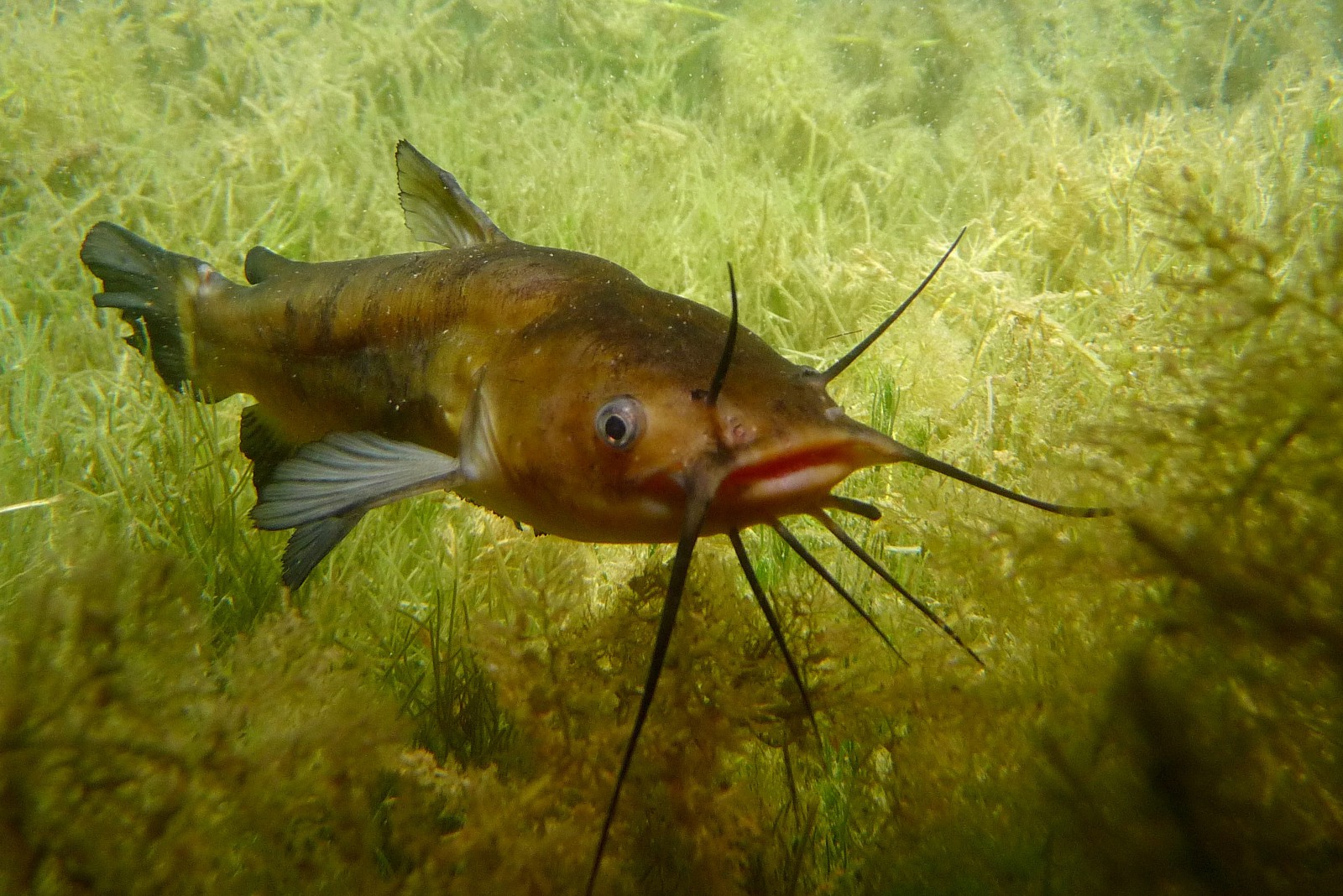
Ameiurus melas, commonly known as the black bullhead, is a freshwater fish native to North America.
In France and throughout Europe, this species is considered a nuisance. It is said to have been introduced in 1871 when a few individuals escaped from the Natural History Museum. They supposedly made their way to the Seine through the sewer system. Today, the black bullhead can be found throughout most of the territory, although its populations are declining.
Who is it?
Morphology
-
Type
-
Average size25 cm
-
Maximum size45 cm
-
Longevity10 year
-
ShapeCatfish
-
Type
-
Average size25 cm
-
Maximum size45 cm
-
Longevity10 year
-
ShapeCatfish
How to recognize This fish ?
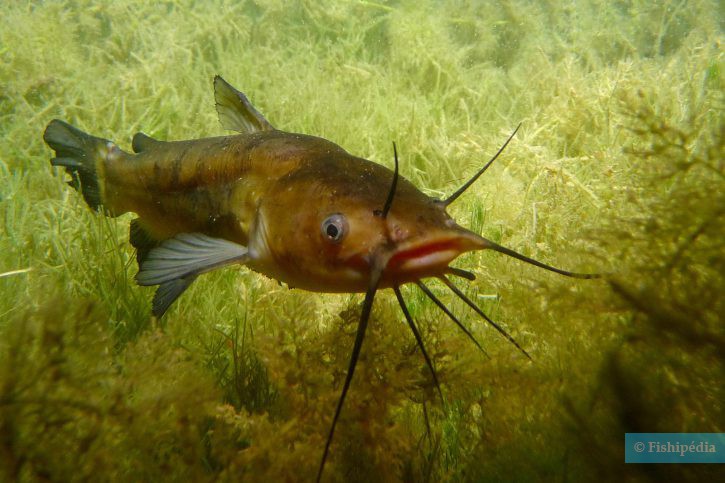
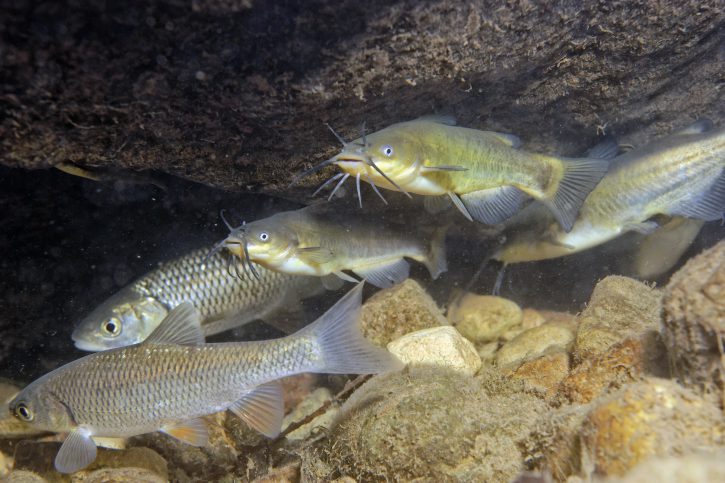
This fish has the particularity to possess several pairs of barbels, which allow him to search the bottom and to detect the food thus moved.
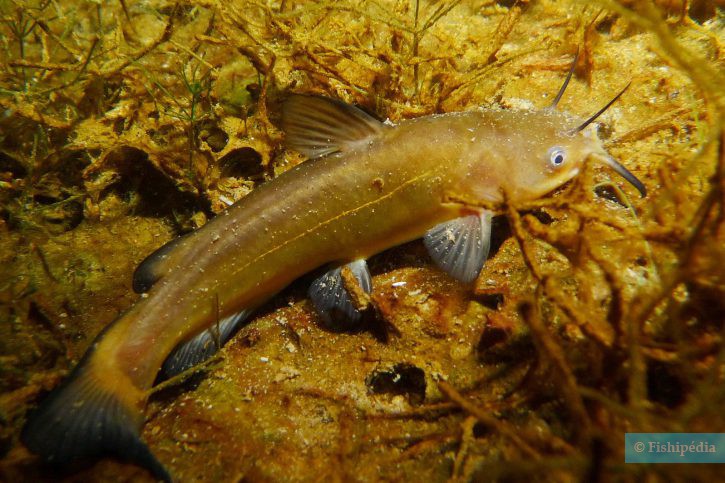
The black bullhead is solid-colored, with a body ranging from beige to dark brown, sometimes nearly black. The skin is slimy. Adults typically measure around 20cm, but some individuals may reach 45cm.
It has 4 pairs of distinctive barbels. The pectoral fins are covered in sharp spines that can easily cut a fisherman.
Behaviour & Life cycle
-
dietomnivorous
-
Sociabilityliving as a couple or in a group
-
territorialYes
-
Way of livingnocturnal
The black bullhead is notable for its adaptability, which is also the cause of its nuisance status in certain environments.
Capable of surviving more than 3 hours out of water, it is particularly robust and resistant to adverse weather and environmental conditions. During droughts, it buries itself in the mud and can withstand temperatures exceeding 35°C. In winter, it displays this behavior to stay warm at the bottom of the water.
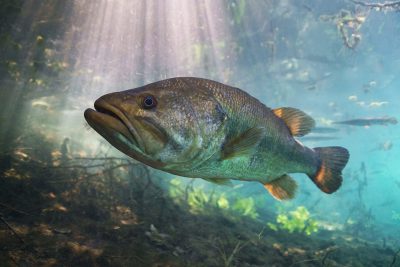
In addition to these traits, it is a highly voracious, omnivorous, and detritivorous species. Juveniles feed at night on immature insects, leeches, or crustaceans. Adults prefer mollusks, snails, plant debris, and other fish. It is a favored prey of largemouth bass and catfish.
At times, the black bullhead exhibits signs of territorial behavior.
Reproduction
-
Reproductionovipare qui pond sur substrat découvert
The black bullhead is an oviparous fish that spawns on exposed substrate. Reproduction occurs in shallow areas in spring. The female prepares the nest by removing debris, gravel, and silt from the bottom.
Prior to spawning, the pair engages in a courtship ritual during which they each run their barbels along the other's body. The female releases her eggs after the male wraps his caudal fin around her head. This process can be repeated up to five times in an hour. Between spawns, the female guards the eggs in the nest.
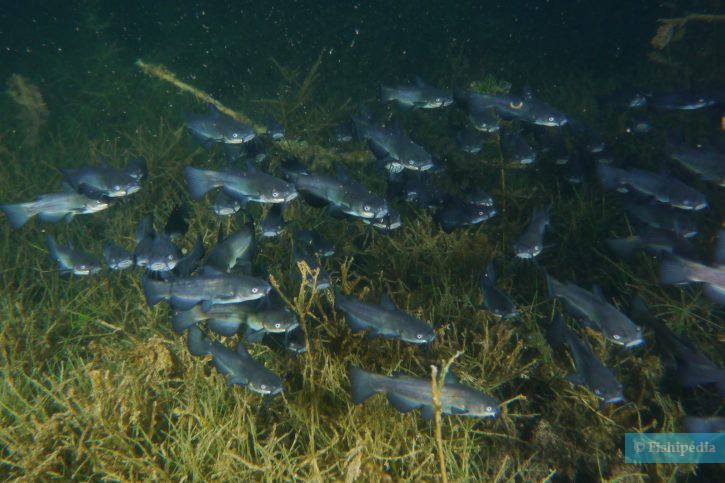
After all the eggs have been laid, the parents protect the eggs, which can number up to 5,000, until they hatch. Upon hatching, the fry quickly form tight-knit groups, easily identifiable as a "ball."
Harmless species
This species does not represent any particular threats to humans when encountered in its natural environment.
Origin and distribution
Geographic distribution & Conservation
-
Invasive speciesYes
The black bullhead is native to North America, ranging from the Great Lakes to northern Mexico. It is often confused with Ameiurus nebulosus. Errors in population location between the two species may occur.
This species has caused environmental disruptions due to accidental introductions in several countries, especially in Europe. It is found in the Ebro and Tagus rivers in Spain, as well as in most French basins. It is more sporadically present in Italy, the Netherlands, Belgium, and Germany, and may have colonized other regions.
Conservation and international regulations
Where to see this species?


What is its habitat?
Natural environment characteristics
-
Temperature14 - 35 °C
-
pH (acidity)6.5 - 7
-
gh (hardness)6 - 10
-
FlowMedium, Slow and Stagnant
Biotope presentation
Benthic in nature, the black bullhead is found in stagnant or calm waters, as well as in ponds. It spends its life on the bottom, near soft substrates such as mud or sand.
To go further
To read on the web


Sources & Contributions
Participation & Validation
The Fishipedia team and specialist contributors are committed to providing high-quality content. However, although the information comes from scientific sources or testimonials from specialists, the cards may contain inaccuracies.

Benoit Chartrer
Translation
Translation done with the valuable contribution of our translators, who make this information available to a wider audience. We sincerely thank them for their commitment.

Marine Kassel
Where to see this species?
Scientific partners





Tags


