warty anglerfish
| Family | Antennariidae |
|---|---|
| Genus | Antennarius |
| IUCN category (World) | LC |
Introduction
The warty anglerfish (Antennarius maculatus) belongs to the family Antennariidae, a group of Lophiiform fishes specializing in ambush predation. These globular and slightly compressed fish possess an illicium – a transformation of the first dorsal spine into a fishing rod – ending in a lure mimicking prey. This device, sometimes combined with chemical secretions, allows them to attract prey that they capture with their protractile mouth.
Who is it?
Morphology
-
Average size12 cm
-
Maximum size15 cm
-
Mimicrysponge
-
Patternmottling
-
Average size12 cm
-
Maximum size15 cm
-
Mimicrysponge
-
Patternmottling
How to recognize This fish ?
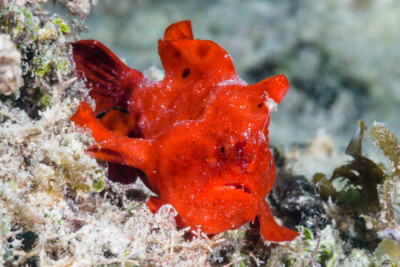
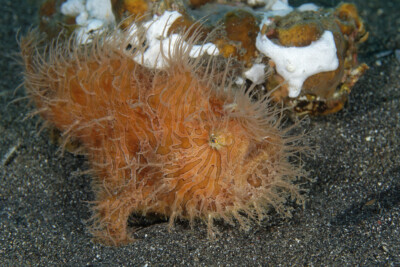
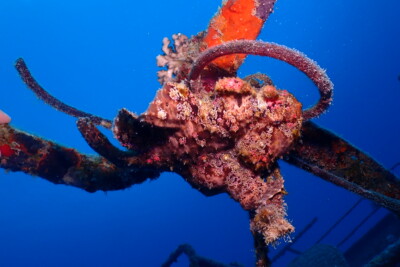
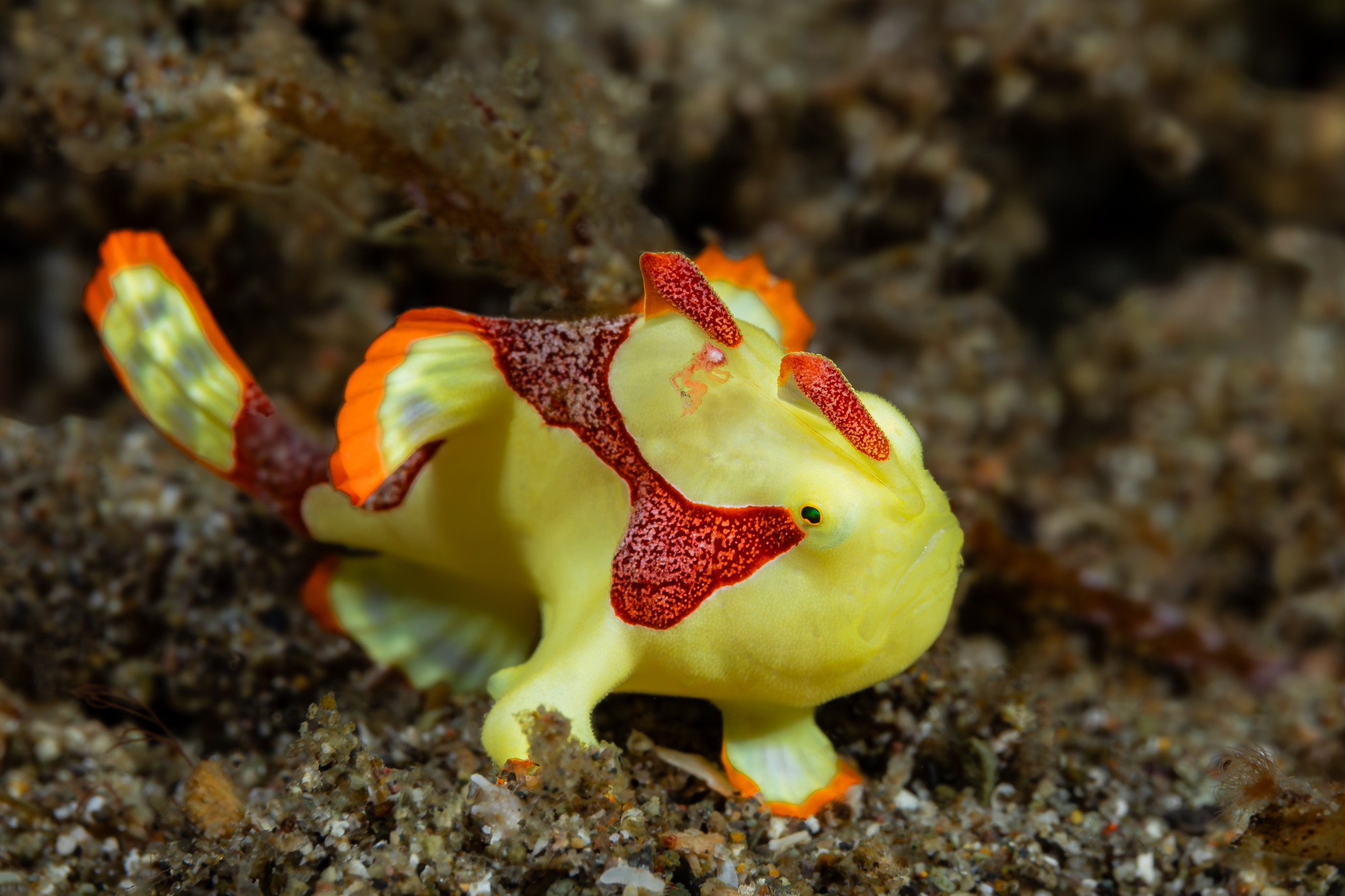
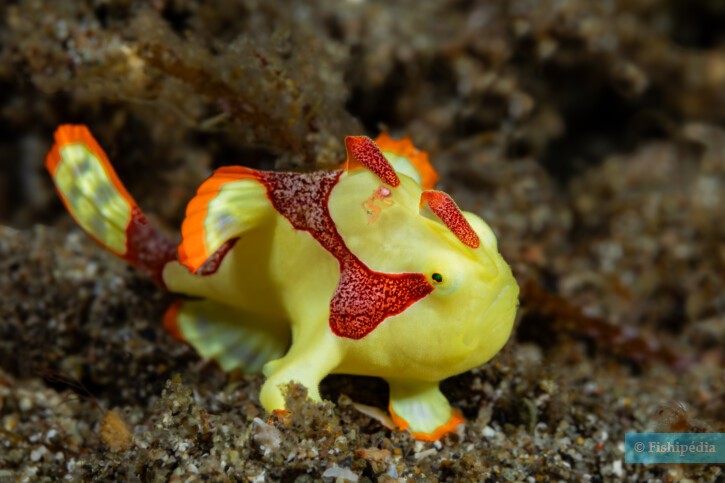
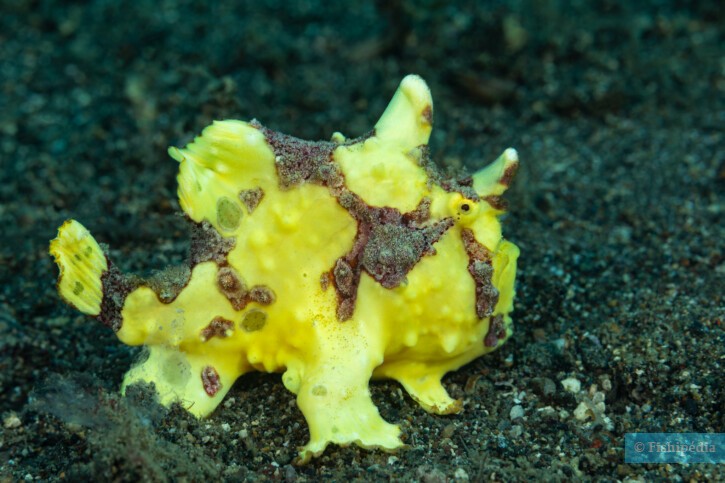
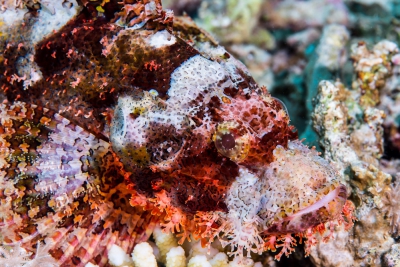
Antennarius maculatus reaches a maximum length of 15 cm. The skin is covered in characteristic warty protuberances. The illicium is about twice as long as the second dorsal spine and mimics a small fish. The coloring is variable: cream, yellow, brown, or black, with dark circular spots and pink to red marbling. Fins are often edged in red or orange. This species can be distinguished from A. pictus by a transverse band reaching the posterior edge of the eye. It mimics sponges.
Sexual dimorphism
Sexual dimorphism is not pronounced. Like in other antennariids, females can be identified by a larger abdomen when carrying eggs.
Behaviour & Life cycle
-
dietcarnivorous
-
Sociabilitysolitary
-
territorialNo
-
Way of livingdiurnal
A solitary and discreet species, it remains motionless and hidden among sponges, soft corals, and algae. Juveniles, more exposed, mimic nudibranchs with their coloring. An opportunistic predator, the warty anglerfish preys on small fish, luring them within reach of its mouth with its lure.
Reproduction
-
Reproductionovipare
The species is oviparous. Eggs are grouped in a floating mucilaginous veil, called an 'egg raft.' The male fertilizes the gelatinous mass by flying over it. Pelagic larvae drift in the water column before settling on the seabed and adopting the benthic lifestyle of adults.
Harmless species
This species poses no danger to humans.
Origin and distribution
Geographic distribution & Conservation
The species is widely distributed in the Indo-Pacific, from the Red Sea and Mauritius to the Hawaii and Society Islands, and from Japan to Western Australia and New Caledonia. It inhabits depths from the surface to 20 m. Though locally common, it is closely tied to coral reefs, threatened by climate change, pollution, and human disturbances. No direct global threat is reported, but ongoing reef destruction weakens its populations.
Where to see this species?


What is its habitat?
Natural environment characteristics
-
Temperature25 - 30 °C
-
Depth1 - 15 m
Biotope presentation
The warty anglerfish lives in shallow coastal reefs, often sheltered from waves. It can be found among sponges, soft corals, and algae. Adults lead a cryptic and motionless lifestyle, while juveniles are more visible on the reef.
To go further
Espèces du même genre
To read on the web


Sources & Contributions
Participation & Validation
The Fishipedia team and specialist contributors are committed to providing high-quality content. However, although the information comes from scientific sources or testimonials from specialists, the cards may contain inaccuracies.

Benoit Chartrer

Adrien Falzon
Translation
Translation done with the valuable contribution of our translators, who make this information available to a wider audience. We sincerely thank them for their commitment.
Where to see this species?
Scientific partners





Tags
Same genus