
blue panchax
- Aplocheilus panchax panchax
- Aplocheilus panchax siamensis
- Haplocheilus panchax
- Aplocheilus panchax panchax
- Aplocheilus panchax siamensis
- Haplocheilus panchax
| Family | Aplocheilidae |
|---|---|
| Genus | Aplocheilus |
| IUCN category (World) | LC |
Introduction
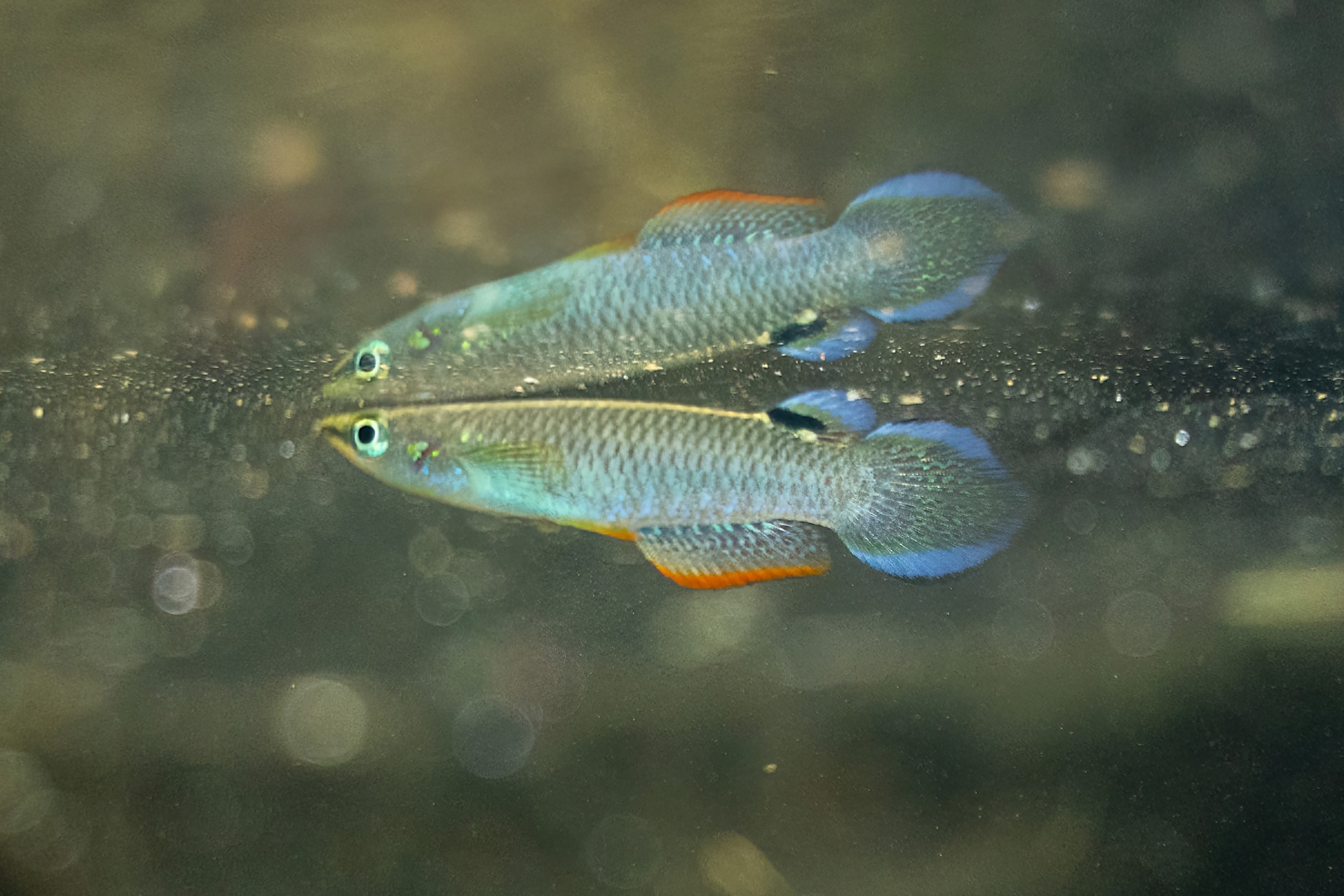
Aplocheilus panchax, sometimes known as blue panchax, is a small cyprinodontiform fish found in South and Southeast Asia. Popular as an aquarium fish, it is also recognized for its role as a larvivorous fish, used in several countries as a biological control agent against mosquitoes, sometimes with detrimental effects on local biodiversity.
Who is it?
Morphology
-
Type
-
Average size5 cm
-
Maximum size9 cm
-
ShapeRectangular
-
Type
-
Average size5 cm
-
Maximum size9 cm
-
ShapeRectangular
How to recognize This fish ?
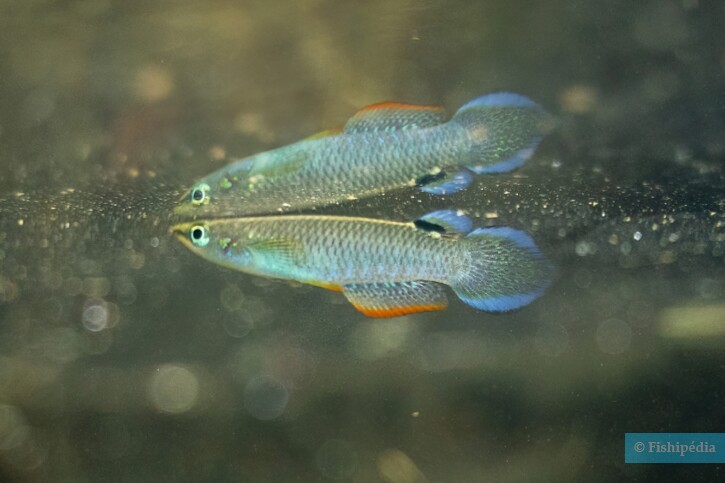
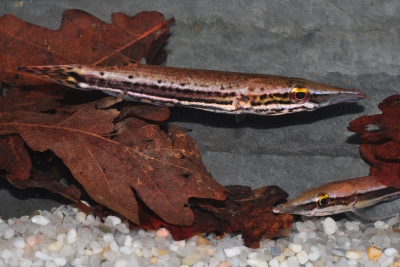
The body is elongated and fusiform, reaching up to 9 cm in total length, usually around 5 cm. The fins are adapted for surface swimming. The coloration is silver to bluish, sometimes with iridescent reflections. The mouth is oriented upwards, typical of surface-dwelling species.
Sexual dimorphism
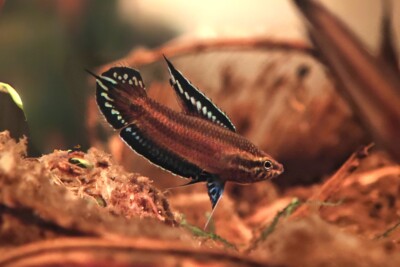
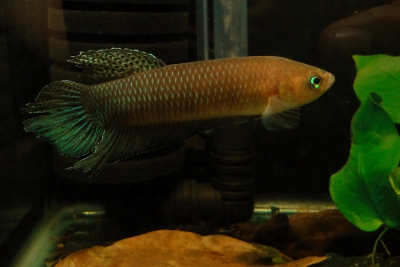
Adult males are generally more colorful, with slightly more developed fins and stronger blue or greenish hues. Females are slightly stockier, with a rounded abdomen when gravid.
Behaviour & Life cycle
-
dietinsectivore
-
Sociabilityliving in small groups
-
territorialNo
-
Way of livingdiurnal
A non-migratory species, it frequents calm, shallow areas. It primarily feeds on insects and mosquito larvae, but also consumes other aquatic invertebrates. Its surface behavior makes it an efficient predator of larvae in stagnant or slow-moving habitats.
Reproduction
-
Reproductionovipare qui dépose ses Œufs dans la végétation
-
PolygamyYes
Aplocheilus panchax reproduces regularly, with a peak in spawning during the rainy season, particularly from November to March. Sexual maturity is reached at around 4–5 months, at approximately 8 cm in length. The eggs, laid on submerged vegetation, hatch in 9 to 14 days depending on temperature and water conditions. The species is oviparous, with no parental care.
Harmless species
No danger to humans.
Origin and distribution
Geographic distribution & Conservation
The species is widely distributed from Pakistan, Nepal, India, Bangladesh, Sri Lanka, and Myanmar, to Cambodia, Vietnam, and the Indo-Malay archipelago (Peninsular Malaysia, major Sunda Islands, Timor-Leste). It is also reported in the Seychelles and has been introduced in certain regions for mosquito control.
Conservation and international regulations
What is its habitat?
Natural environment characteristics
-
Temperature20 - 25 °C
-
pH (acidity)7 - 7.9
-
gh (hardness)5 - 12
Biotope presentation
It is found in fresh and brackish lowland waters: ponds, ditches, canals, reservoirs, rice fields, mangrove areas, and estuaries. The species prefers clear, shallow waters with dense vegetation, but can also tolerate slightly brackish or mildly polluted environments.
To go further
To read on the web

Sources & Contributions
Participation & Validation
The Fishipedia team and specialist contributors are committed to providing high-quality content. However, although the information comes from scientific sources or testimonials from specialists, the cards may contain inaccuracies.

Benoit Chartrer
Translation
Translation done with the valuable contribution of our translators, who make this information available to a wider audience. We sincerely thank them for their commitment.
Scientific partners




Tags


