Introduction
The Gladiator Betta is a small osphronemid endemic to the Maliau Basin in Sabah (Malaysian Borneo). Its name refers to its combative behavior. Like other Betta, the labyrinth organ allows it to facultatively breathe air in waters with very low oxygen levels.
Who is it?
Morphology
-
Average size8 cm
-
Maximum size10 cm
-
ShapeRectangular
-
Average size8 cm
-
Maximum size10 cm
-
ShapeRectangular
How to recognize This fish ?
Like all fish of its genus, the Gladiator Betta has the particularity of being able to breathe in two different ways. In addition to the classic gills, this species is equipped with a breathing apparatus called Labyrinthe which allows it to absorb oxygen from the air. These species are commonly called the labyrinth Fish.
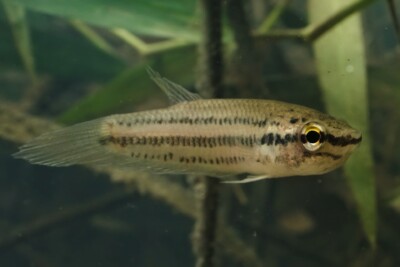
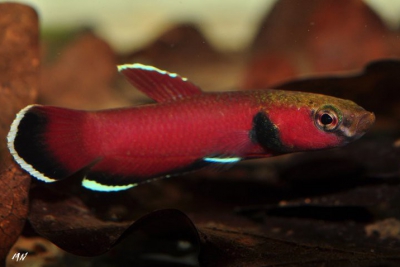
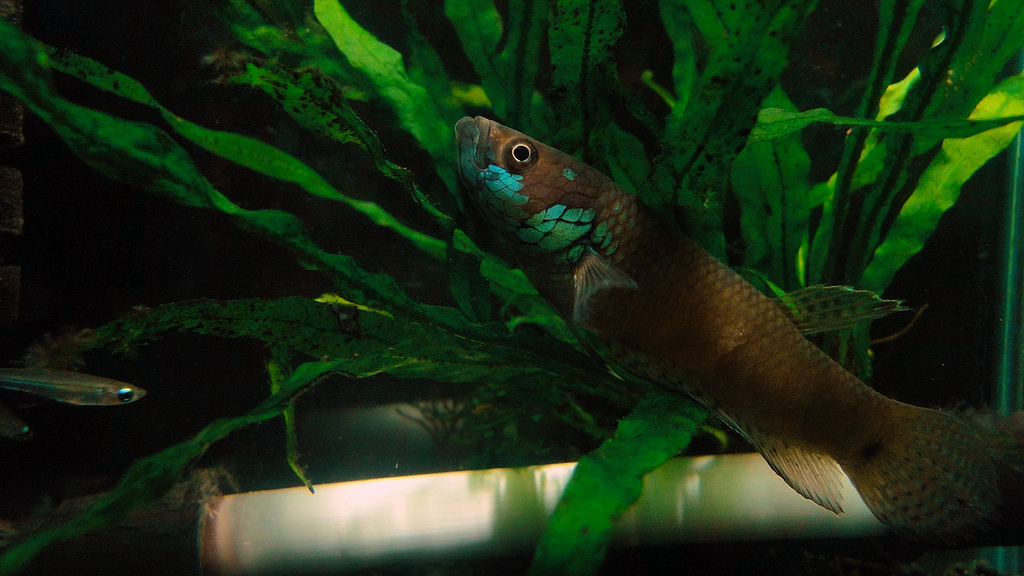
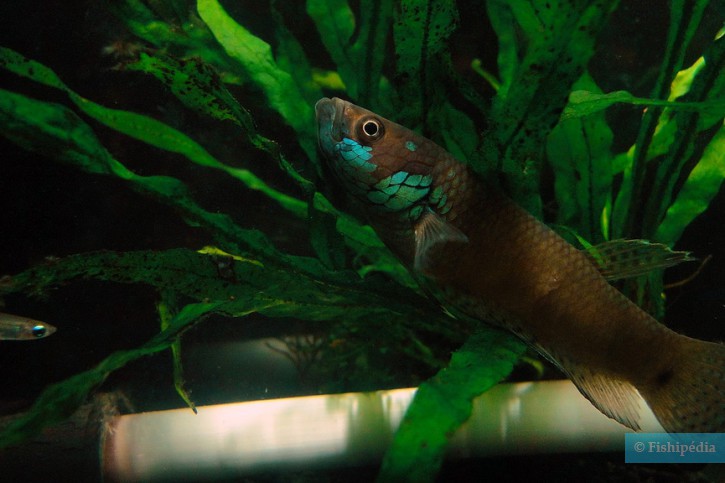
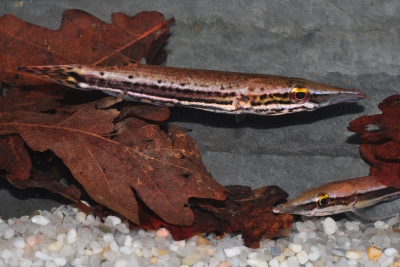
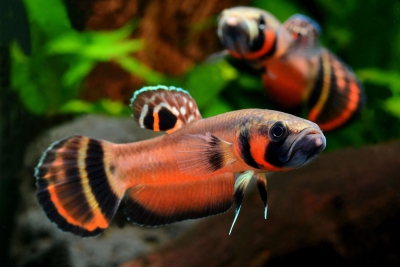
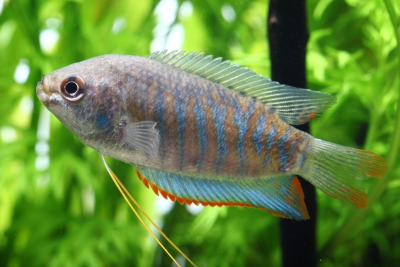
The species reaches about 5.6 cm in standard length. The body is fusiform, yellow-brown, with an operculum with bluish hues and a uniformly brown caudal fin. It is distinguished by the absence of a dorsal spine. The lower jaw is relatively long, providing an effective grip on the surface and near the bottom.
Sexual dimorphism
Dimorphism is moderate, with males often being more slender and displaying sharper color contrasts, especially during the breeding season. The fins of males may appear proportionally more developed.
Behaviour & Life cycle
-
dietcarnivorous
-
Sociabilityliving as a couple or alone
-
territorialYes
-
Way of livingdiurnal
The Gladiator Betta is notoriously aggressive and territorial: adults maintain distances of about one meter, with sometimes a few juveniles nearby. Opportunistic, it exploits the litter to capture larvae and microcrustaceans, and also intercepts prey falling to the surface film under the forest cover. Facultative air breathing supports this activity in very low-oxygen waters, explaining its tolerance to stagnant and acidic water pockets.
Reproduction
-
Reproductionovipare incubateur buccal
The species belongs to the unimaculata group and exhibits paternal mouthbrooding: after spawning, the male collects the eggs and carries them until hatching, away from aggressive interactions. Courtship and defense of micro-territories take place near root and dead wood shelters.
Harmless species
No danger to humans.
Origin and distribution
Geographic distribution & Conservation
The Gladiator Betta is only known from streams in the Maliau Basin (Sabah, Malaysia). Its habitat is within a conservation area, justifying the current assessment as 'Least Concern'. A reassessment would be necessary in case of changes in protection status or increase in human activities.
Conservation and international regulations
What is its habitat?
Natural environment characteristics
-
Temperature22 - 25 °C
-
pH (acidity)4.2 - 5.5
-
gh (hardness)1 - 6
Biotope presentation
The species frequents streams in blackwater heath forests, very soft and acidic (pH 4.2–4.8), at tropical temperatures and low flow. The environment is shaded, shallow, rich in leaf litter, roots and dead wood, with extremely low mineral content.
Main recommendations for fishkeeping
Deontology
In order to preserve wildlife, if you acquire this animal, it must not be released into the wild. See also, the Fishipedia charter.
Fishipedia supports the practice of responsible and environmentally friendly aquarium keeping. We encourage maintenance if it is motivated by a desire to understand the biological functioning of living things and if it is done with respect for animal life.
We believe that aquaristics is an opening to the discovery of aquatic environments, especially freshwater, and that this knowledge is necessary to better protect and respect these environments. Logically, we refute the compulsive purchase of animals that would not find a sufficient and / or adapted place in the host aquarium.
Our recommendations
-
Min volume90 liters
-
Population min1
-
Temperature22 - 25 °C
-
pH (acidity)4.2 - 5.5
Characteristics
-
Difficulty breedingvery difficult
-
Robustnesstolerant
-
Behaviourslightly aggressive
Recommended equipment from our partners
-
Aquarium
-
Filtration
General reminders
It is strongly advised to read the complete dedicated file and to get information on the feedbacks of maintenance of the envisaged animal, this to avoid any potential conflict whose end result is generally the death of the individual (or the other inhabitants). It is important not to overload your aquarium to limit pollution. This will make maintenance easier.
In nature, animals are subject to weather conditions and live in waters with variable characteristics. The recommendations offered by our team for aquarium maintenance are a guidance and cannot be assimilated to scientific datas.
General reminder on maintenance datas
Le démarrage d'un aquarium est une partie primordiale pour l'équilibre et le bien-être des poissons. Lorsque l'on met en eau un aquarium, l'eau passe naturellement par un cycle biologique : le cycle de l'azote. Celui-ci dure environ trois semaines. Tous les 2 jours, nous vous conseillons de tester votre eau jusqu'à ce que le taux de nitrite soit à zéro pendant plusieurs jours d'affilée.
Pour accélérer ce cycle, vous pouvez utiliser un activateur de bactéries comme JBL Denitrol. Cette solution riche en bactéries vivantes et enzymes permet une mise en place rapide du cycle de l'azote. Les poissons peuvent alors être introduits plus rapidement.
Il est important de tester l'eau de son aquarium régulièrement pour maintenir un environnement sain pour les poissons et les autres habitants. Les tests d'eau permettent de mesurer les niveaux de différents paramètres tels que le pH, la dureté totale, ainsi que les taux de nitrates, de nitrites et d'ammoniaque.
Pour réaliser ces tests, vous pouvez utiliser des produits d'analyse spécialisés tels que JBL ProScan qui permet de réaliser un diagnostic de l'eau directement via un smartphone. Il existe également des coffrets de tests plus classiques de bandelettes, comme JBL PROAQUATEST.
En cas d’usage de l’eau du robinet, vous pouvez utiliser un conditionneur d’eau de type Biotopol de JBL pour éliminer les substances nocives comme le chlore, le cuivre, le plomb et le zinc. Une eau trop dure ou trop calcaire peut être inadaptée à de nombreuses espèces tropicales d’eau douce. Si nécessaire, vous pouvez la couper avec de l’eau osmosée ou de pluie filtrée afin d’obtenir une dureté plus adaptée aux besoins de vos poissons et de vos plantes. Les conditionneurs d'eau garantissent une meilleure santé aux poissons et une meilleure croissance des plantes.
Chlorine and chloramine are dangerous for the health of animals. Used to disinfect water, these agents are present in significant quantities in tap water. We recommend using an anti-chlorine agent every time you change the water. In addition to chlorine, treatments and medicines sold for aquarium use sometimes contain dangerous heavy metals in high doses.
Specific needs for the Gladiator Betta
The Gladiator Betta is a species which lives naturally at a temperature between 22 °C and 25 °C. Nitrate levels should remain below 50mg/L. To keep the water clean and unpolluted, plan on changing 20% to 30% of the water volume each month.
The Gladiator Betta is a species whose maintenance is rather reserved for informed aquarists . It can only be successfully carried out by carrying out a minimum of documentation work. Special husbandry conditions can easily lead to the death of the species or other animals.
Jumping fish
Be careful, the Gladiator Betta is an excellent jumper, naturally using this faculty to change its living area or to escape from predators. The aquarium must be perfectly covered to prevent him from making a deadly jump...
Fish with a maze
The ability to breathe at the surface makes this fish more likely to live in small volumes. Naturally, the Gladiator Betta can be found for long periods in water holes where oxygen is scarce.
Cohabitation & Environment
The Gladiator Betta is a fish which it is advisable to maintain in specific aquarium. A 90 liter tank is sufficient to consider its breeding. Associating it with other species is not fundamentally impossible but a documentation work is necessary for the constitution of the population.
The males of this species do not support each other, the maintenance of several of them in the same tank is strongly disadvised.
The species enjoys a particularly vegetation-rich environment. The addition of plants will provide many useful hiding places for resting. These areas are also conducive to possible breeding in the aquarium. Floating plants such as Salvinia can be added to recreate the subdued atmosphere characteristic of its living conditions in the wild.
Acid Water Maintenance
The Gladiator Betta living naturally in acidic water, generally in "black" or "sieved" water, the implementation of a filtration on peat is ideal for its balance. Adding decaying leaves and alder fruit can significantly improve living conditions by naturally increasing acidity of some water.Tips for feeding
The Gladiator Betta is carnivorous.
This species does not appreciate being fed with freeze-dried food (flakes...). Some specimens will never eat this type of food.
Feed animals in moderation to maintain good water quality. Meals should be eaten within 2–3 minutes, served in several small portions rather than a single large ration.
Uneaten food quickly decomposes, releasing ammonia, nitrites, and nitrates, which disturb the aquarium’s biological balance.
Make sure each species can access food properly, slower or bottom-dwelling individuals may require targeted feeding.Reproduction protocol
-
egg-laying protectionYes
Hybridization risks
In general, it is advised not to mix several species of the same genus or different varieties of the same species, to avoid the risks of hybridization.
These animals might interest you
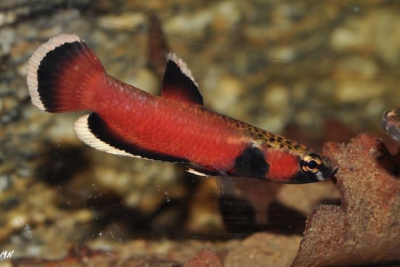
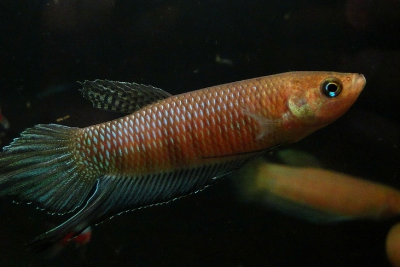
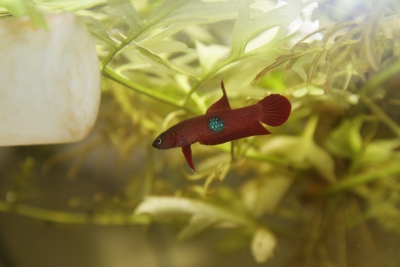
These plants might interest you
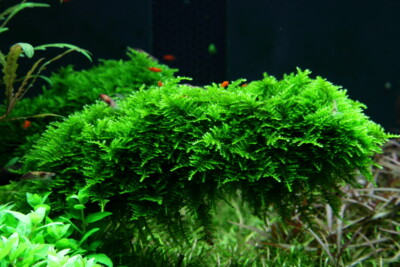
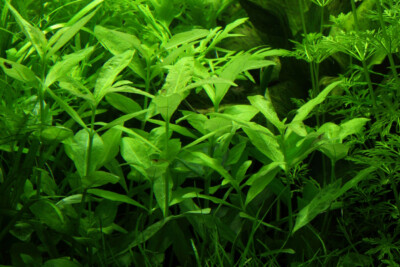
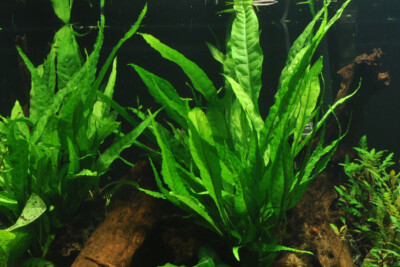
Plants play a crucial role in aquariums, both for their ability to filter water by absorbing excess nutrients and for their aesthetic contribution. They provide fish with natural hiding places, can serve as breeding sites, and generally help maintain the overall balance and optimal conditions of the aquarium. The selection presented here includes species from the same regions as the species described on this page, although they do not necessarily come from its exact natural biotope.
To go further
Species of the same family
Espèces du même genre
To read on the web

Partner websites






Sources & Contributions
Participation & Validation
The Fishipedia team and specialist contributors are committed to providing high-quality content. However, although the information comes from scientific sources or testimonials from specialists, the cards may contain inaccuracies.

Benoit Chartrer
Translation
Translation done with the valuable contribution of our translators, who make this information available to a wider audience. We sincerely thank them for their commitment.
Scientific partners




Species of the same family
Same genus