
Introduction
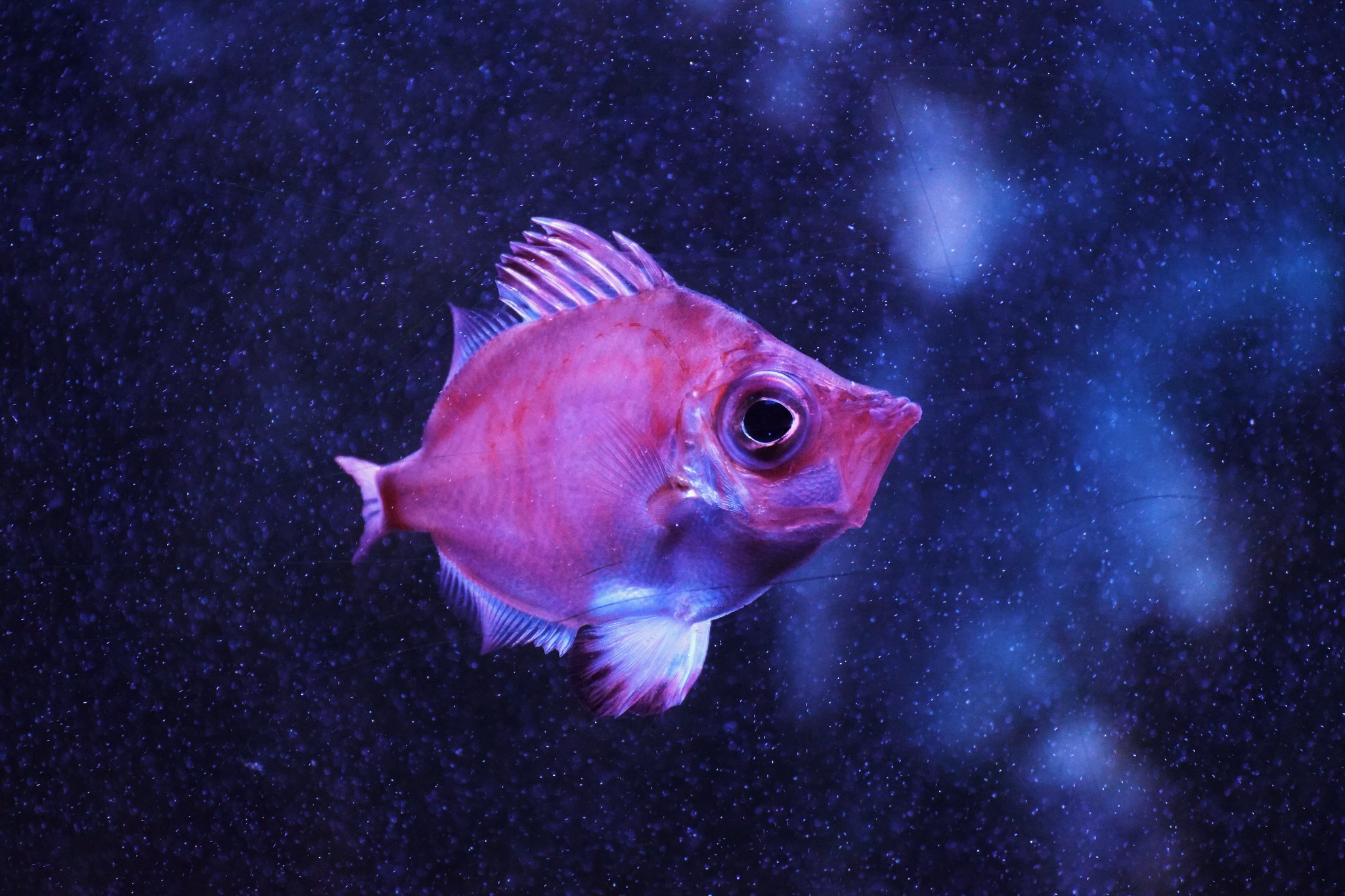
Capros aper, more commonly known as boarfish, is a marine fish native to the eastern part of the Atlantic Ocean and the Mediterranean Sea. This benthic species inhabits rocky areas and coralligenous habitats at moderate depths (30 to 700 meters).
Who is it?
Morphology
-
Average size13 cm
-
Maximum size25 cm
-
Longevity26 year
-
Patternvertical stripes
-
Average size13 cm
-
Maximum size25 cm
-
Longevity26 year
-
Patternvertical stripes
How to recognize This fish ?
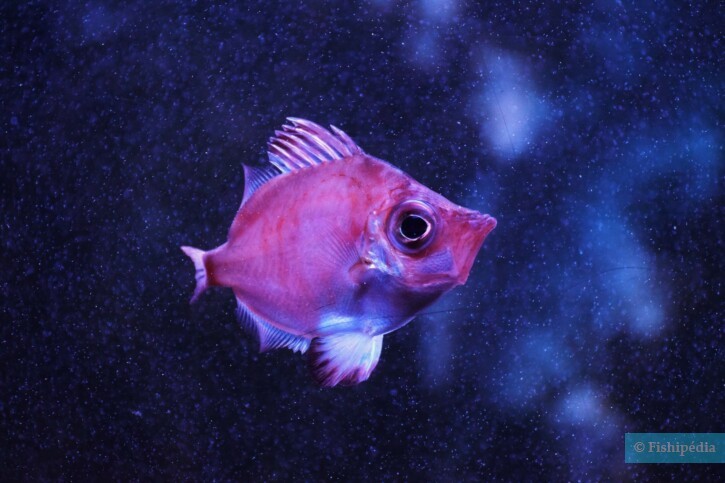
The boarfish measures around 13 cm. Females are larger and can reach 25 cm. This fish is bicoloured with a pinkish compressed body. A darker band, which can be orange, runs along the centre of the body.
The eye is prominent, a characteristic that helps this species see better in low light conditions. It is as long as the snout, or even longer.
Sexual dimorphism
In this species, the female is larger than the male as adults.
Behaviour & Life cycle
-
dietcarnivorous
-
Sociabilitygregarious
-
territorialNo
-
Way of livingdiurnal
The boarfish is a social fish that naturally resides close to the seabed or near corals and rocks. It is a relatively calm carnivorous species that feeds on crustaceans, worms, and mollusks. When prey comes near, this fish sucks it in through its highly protractile mouth.
Reproduction
-
Reproductionovipare qui pond en eau libre
The boarfish is an oviparous fish that spawns in open water. In the Mediterranean Sea, breeding occurs between April and June, extending to August in colder regions. Reproduction takes place closer to the surface. The eggs and larvae contain a substance that increases buoyancy. After hatching, they drift to the surface among the currents.
Harmless species
This species does not pose a particular danger to humans in its natural habitat.
Origin and distribution
Geographic distribution & Conservation
This species is found from Norway to Senegal and is common in the western Mediterranean Sea.
Conservation and international regulations
Where to see this species?




What is its habitat?
Natural environment characteristics
-
Temperature7 - 15 °C
-
Depth30 - 700 m
Biotope presentation
The boarfish is most commonly found at depths ranging from 30m to 700m. This species inhabits rocky areas near corals or crevices. It is also often found near wrecks and rugged seafloors.
To go further
To read on the web


Sources & Contributions
Participation & Validation
The Fishipedia team and specialist contributors are committed to providing high-quality content. However, although the information comes from scientific sources or testimonials from specialists, the cards may contain inaccuracies.

Benoit Chartrer
Translation
Translation done with the valuable contribution of our translators, who make this information available to a wider audience. We sincerely thank them for their commitment.

Marine Kassel
Where to see this species?
Scientific partners





Tags


