Introduction
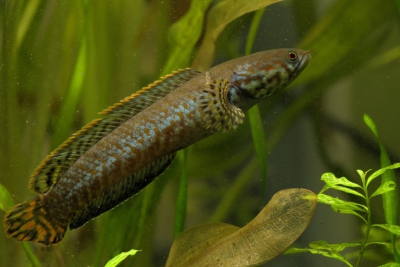
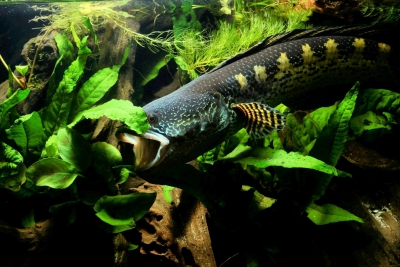
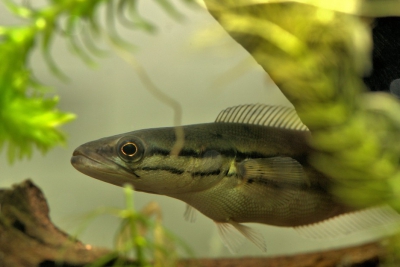
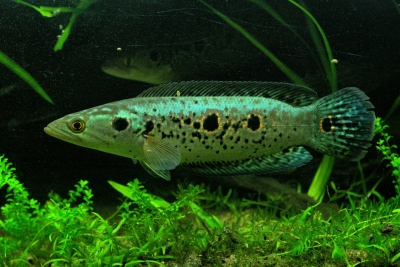
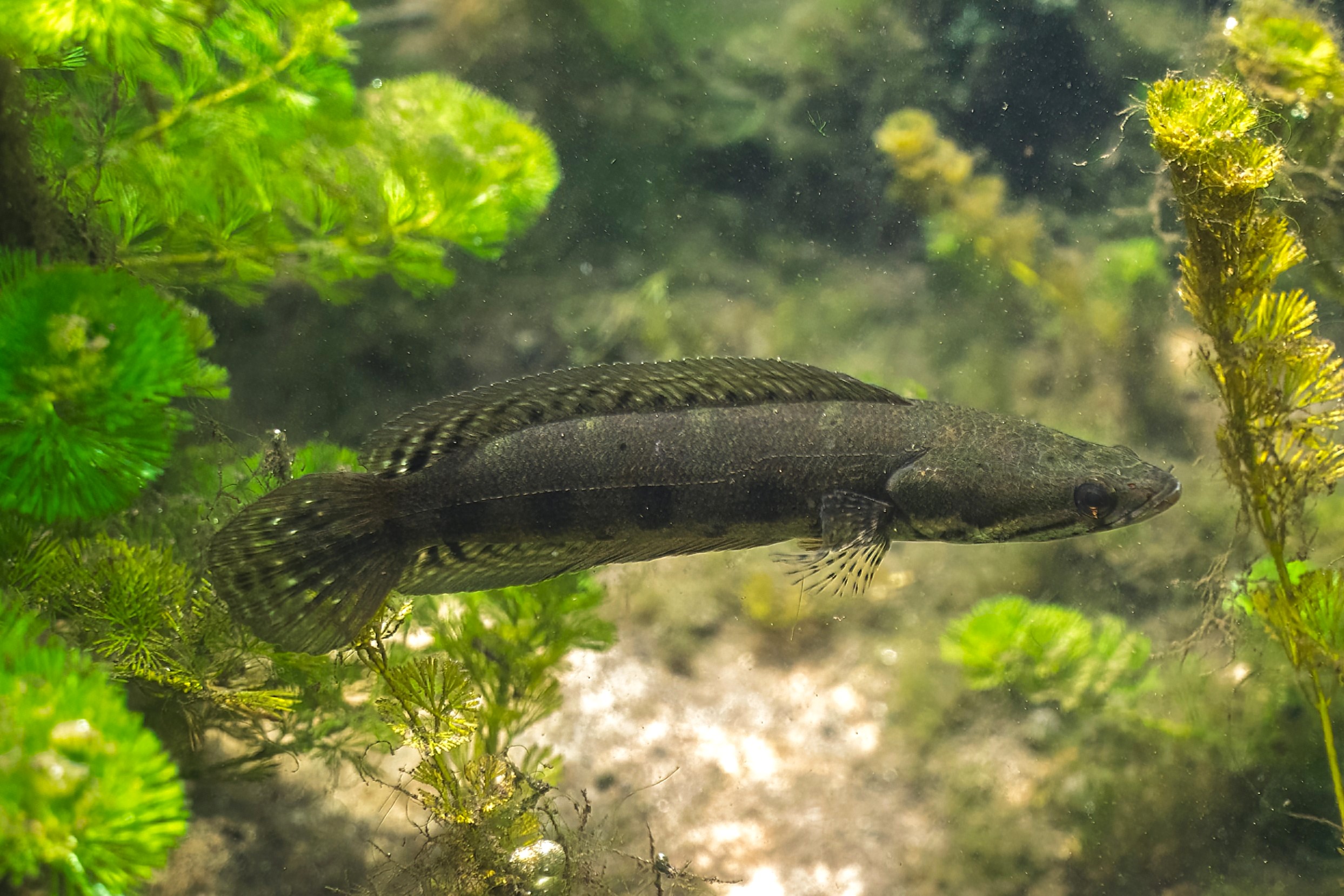
Channa lucius, known as the Javanese snakehead, is a species of Channidae widely distributed in Southeast Asia. It is characterized by its changing coloration between juveniles and adults and its discreet lifestyle in forest and swamp waters.
Who is it?
Morphology
-
Average size30 cm
-
Maximum size53 cm
-
Mimicrysand
-
Average size30 cm
-
Maximum size53 cm
-
Mimicrysand
How to recognize This fish ?
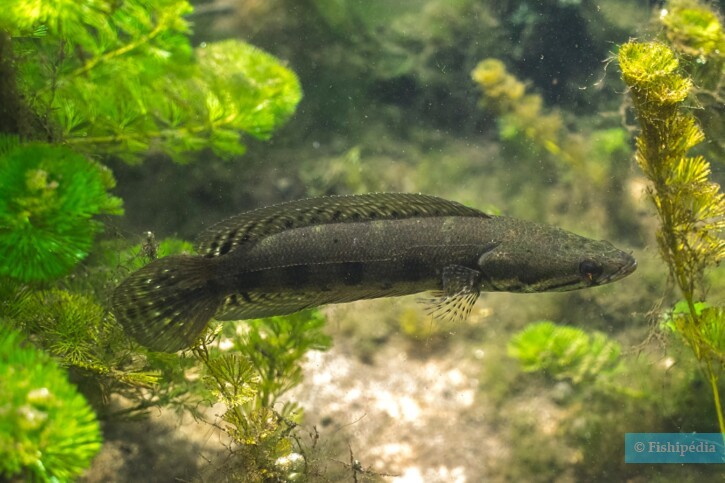
This fish can reach a total length of 53 cm. It has an elongated body, oval in section, covered in small cycloid scales. Juveniles have two large dark bands running from the snout to the caudal fin. As they age, these bands fragment into 5 to 9 irregular black spots, while the belly is crossed by paler oblique bars.
Sexual dimorphism
Sexual differences are not pronounced, but like in other Channa species, adult females have a rounder abdomen during the breeding season.
Behaviour & Life cycle
-
dietcarnivorous
-
Sociabilityliving as a couple or alone
-
territorialYes
-
Way of livingnocturnal
Like other Channa species, it is an obligatory air breather. A discreet species, often crepuscular or nocturnal, it adopts an ambush hunting strategy. Its diet is mainly carnivorous, consisting of fish, crustaceans (crayfish, crabs, shrimps), and sometimes aquatic invertebrates. Its ability to camouflage in submerged vegetation or among dead wood makes it an efficient predator.
Reproduction
-
Reproductionovipare réalisant des nids de bulles
Reproduction takes place in stagnant or slowly flowing freshwater. Both parents participate in guarding the young after hatching, a typical behavior of the genus. Details of the breeding cycle are still poorly documented.
Harmless species
No direct danger to humans.
Origin and distribution
Geographic distribution & Conservation
The species is present in much of Southeast Asia: Thailand, Peninsular Malaysia, Sumatra, Borneo, and probably still in Java, where it has however disappeared from much of its range.
Its range covers approximately 4 million km². It is generally abundant and locally common, despite regional disappearances. Classified as 'least concern', it is nevertheless sensitive to local habitat alterations.
Conservation and international regulations
What is its habitat?
Natural environment characteristics
-
Temperature24 - 29 °C
-
pH (acidity)5 - 6
-
FlowMedium, Slow and Stagnant
Biotope presentation
Channa lucius inhabits various environments: lakes, ponds, marshes, acidic peat swamps, flooded forests, and middle reaches of rivers. It prefers slow to moderately flowing water, well shaded and rich in aquatic vegetation, but can also be found in faster flowing areas, between 24 and 29 °C, often in brown or slightly acidic waters.
To go further
Espèces du même genre
To read on the web

Sources & Contributions
Participation & Validation
The Fishipedia team and specialist contributors are committed to providing high-quality content. However, although the information comes from scientific sources or testimonials from specialists, the cards may contain inaccuracies.

Benoit Chartrer
Translation
Translation done with the valuable contribution of our translators, who make this information available to a wider audience. We sincerely thank them for their commitment.
Scientific partners



Tags
Same genus