Loading...
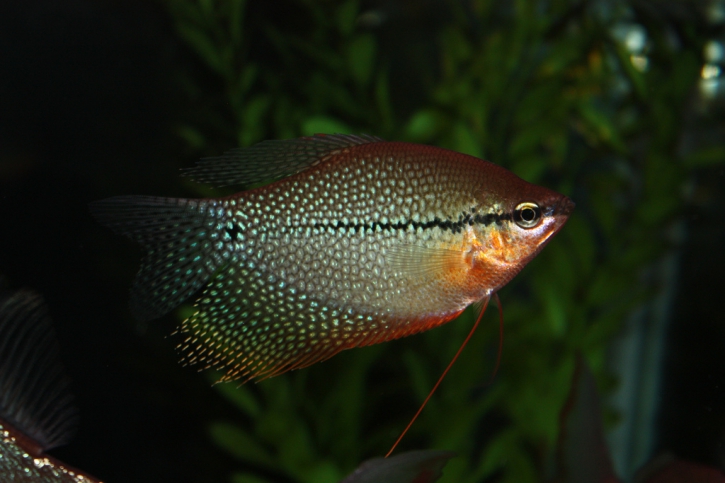
All species in the genus Trichopodus are commonly referred to as “gouramis.” As of 2021, six species have been described, three of which are well known in the aquarium hobby. The taxonomy of the group has changed frequently over time. Some species were previously classified under the genera Deschauenseeia, Osphromenus, Colisa, and Trichogaster. From 1923 to 1997, most were placed under Trichogaster due to a misinterpretation by Myers.
Trichopodus species inhabit densely vegetated ponds and marshy areas in Southeast Asia, from Myanmar to the major Indonesian islands. They are particularly common in the floodplains of the Mekong River and the slow-moving streams of Borneo. Most feed on crustaceans and aquatic microorganisms, while some species supplement their diet with aquatic plants. In several regions, these fish are farmed both for the aquarium trade and for food. They are prized by South Asian fishermen, and in many tropical countries, some Trichopodus have become invasive after being introduced into the wild.
These fish are generally gregarious, forming loose groups of varying sizes. Males are territorial and tend to fight. During the breeding period, mature males build bubble nests at the water surface, among floating vegetation. During this phase, their colors intensify, and males become more aggressive and territorial. The initial phase of spawning occurs among plants. Once completed, the male chases the female away and moves the eggs into the bubble nest. The female may return to lay more eggs, or another female may be courted, after which the male repeats the process. The male guards the nest until the fry hatch.
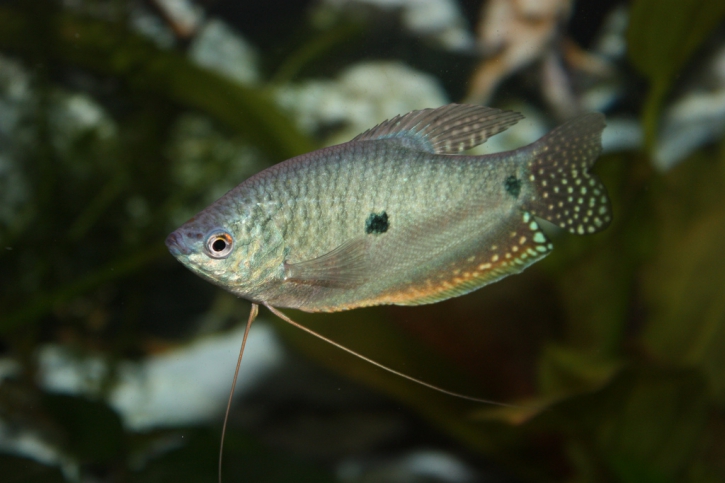
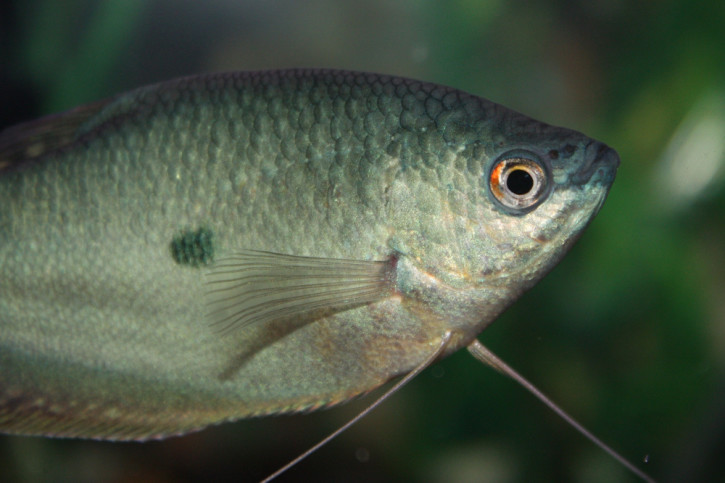
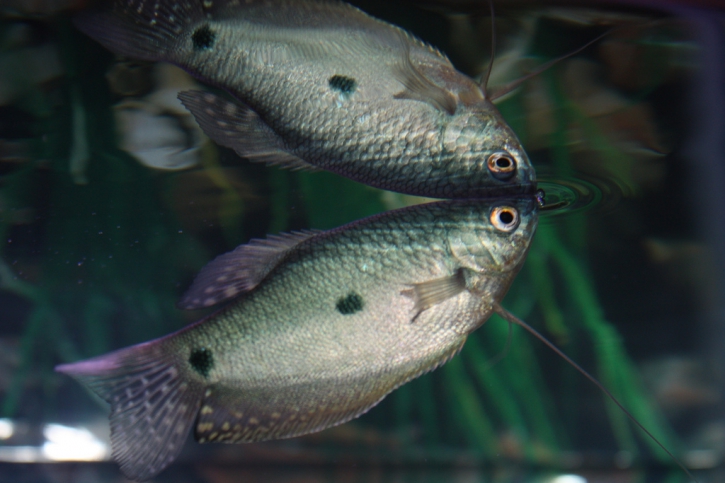
Like their close relatives, their bodies are laterally compressed and feature a long anal fin. The pelvic fins have evolved into long, filamentous structures used as sensory organs. These filaments are covered in taste buds innervated by the facial nerve, used for both touch and taste.
Gouramis of the genus Trichopodus can be distinguished from their closest relatives by a short-based dorsal fin located mid-body, far behind the base of the pectoral fins. The lateral line is always present, though it may be interrupted. The caudal fin is forked. Adult males can be recognized by their more pointed dorsal fins.
The labyrinth organ, located in a cavity above the gills, allows them to absorb oxygen from the air at the surface. Although they can breathe through their gills and the labyrinth organ even in well-oxygenated water, they will eventually drown if they cannot access the surface. This ability offers a considerable advantage during dry seasons, when oxygen levels are low, and also makes them more resilient in degraded environments.
En attente de chargement...
Pour vos cadeaux de Noël, Fishishop propose une sélection de jouets, accessoires et vêtements enfant autour du monde aquatique, créés par des marques engagées.
En achetant sur Fishishop, vous soutenez directement le développement de l’encyclopédie Fishipedia : nouveaux contenus gratuits, outils pédagogiques et projets de sensibilisation à la biodiversité aquatique. Nous travaillons avec des partenaires qui partagent ces valeurs, avec des produits durables et pensés pour éveiller la curiosité.


