
Introduction
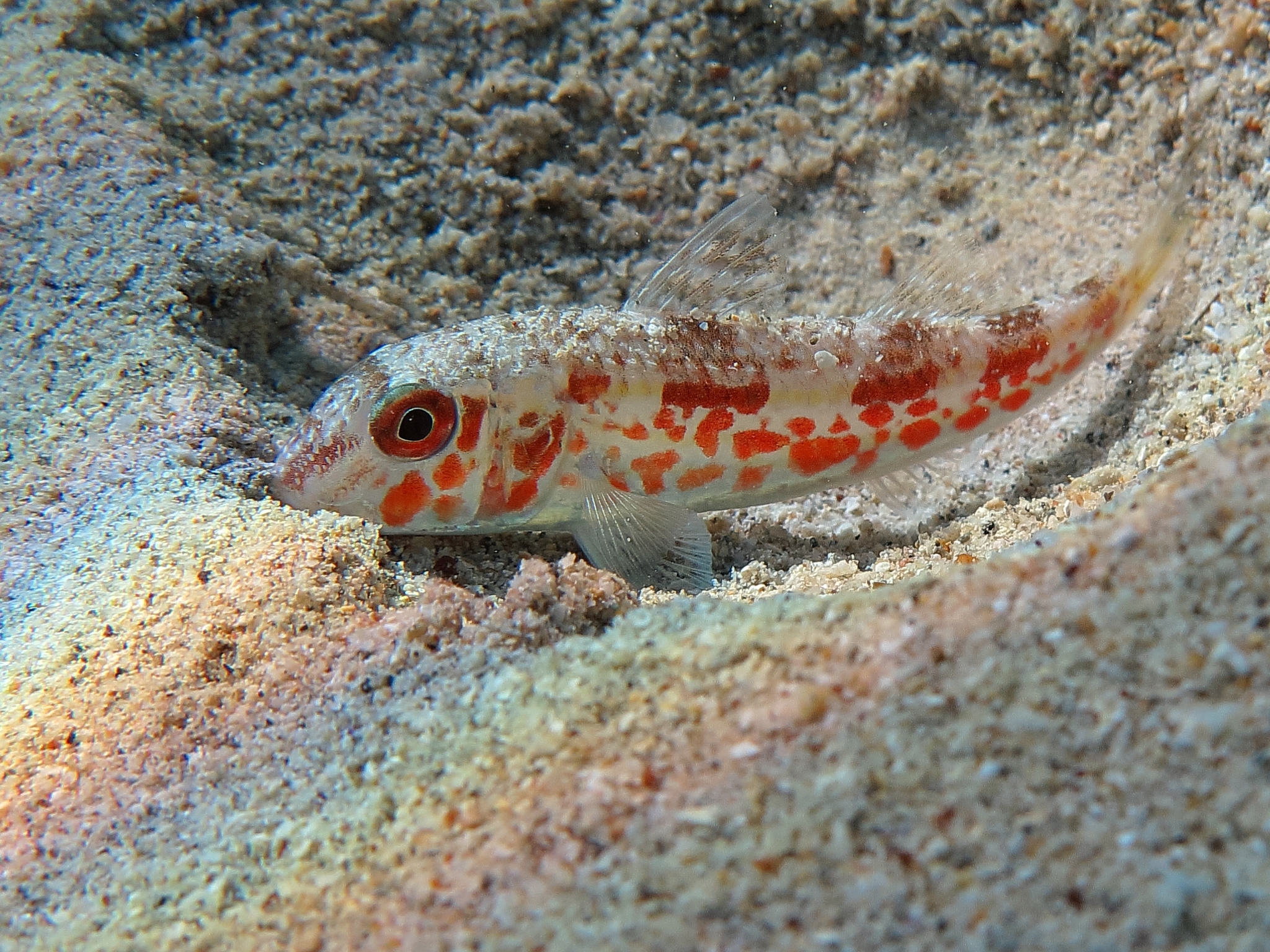
The Red Mullet (Mullus barbatus), often simply called "red mullet" or "striped red mullet", is a demersal fish of the Mullidae family, widely distributed in the Eastern Atlantic (from Scandinavia to Senegal), the Mediterranean Sea, and the Black Sea.
An emblematic species of soft bottoms, it differs from its cousin the Red-Barred Mullet (Mullus surmuletus) by a marked preference for muddy substrates and deeper bathymetry. Classified as "Least Concern" by the IUCN, it faces intense fishing pressure in Europe, leading to a decrease in the average size of captured individuals and stocks considered overexploited in the Mediterranean Sea.
Who is it?
Morphology
-
Average size20 cm
-
Maximum size38 cm
-
Patterntasks
-
Average size20 cm
-
Maximum size38 cm
-
Patterntasks
How to recognize This fish ?
This fish has the particularity to possess several pairs of barbels, which allow him to search the bottom and to detect the food thus moved.
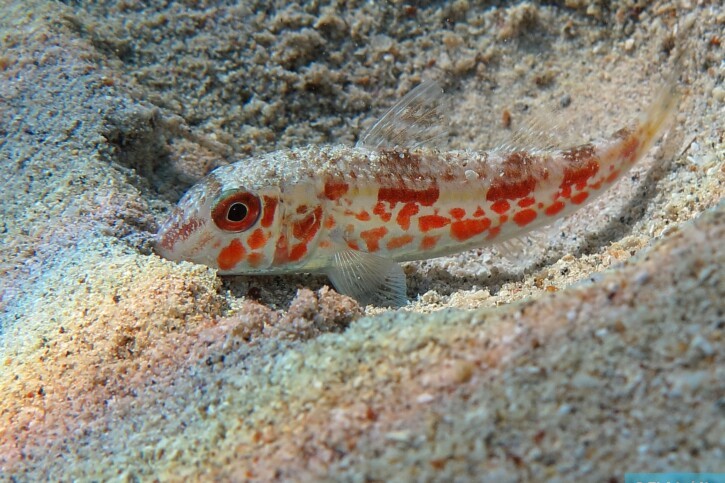
The Red Mullet reaches a maximum size of 30 cm, although commonly observed individuals measure between 10 and 22 cm. Its body is fusiform and laterally compressed, displaying a coloration ranging from pink to brick red, often paler on the belly. Its most distinctive feature is the presence of two long mobile chin barbels, used as touch and chemical organs to dig through the sediment.
Unlike the red-barred mullet, the red mullet does not have a yellow longitudinal stripe on its flanks. Its lateral line is arched upwards at the level of the second dorsal fin. The scales are cycloid and easily detachable.
Behaviour & Life cycle
-
dietcarnivorous
-
Sociabilityliving in a group or alone
-
territorialNo
-
Way of livingdiurnal
A gregarious species, the red mullet forms dense schools, often composed of individuals of similar size. It is mainly active at night or dawn, during which it intensifies its search for food. Its digging behavior is remarkable: it uses its barbels to probe the mud and sand, stirring up the substrate to dislodge hidden prey. This activity is made possible by an extremely developed chemoreceptive system, compensating for the low visibility in the turbid or deep waters it frequents. It undergoes seasonal bathymetric migrations, approaching the coast in spring for reproduction.
This carnivore feeds exclusively on invertebrates living in or on the seabed. Its diet includes crustaceans (amphipods, decapods, mysids), polychaete worms, and small mollusks.
Reproduction
-
Reproductionovipare
Reproduction takes place in spring and summer. The eggs are pelagic and hatch within a few days. The larvae develop in the water column before metamorphosing and settling on the seabed to adopt the benthic lifestyle of adults. Juveniles may have an intermediate stage in open water.
In the Mediterranean Sea, intense fishing pressure has altered the population structure: catches are dominated by individuals less than 15 cm in size, which have not yet reached their second year of life. This early capture, before the first reproduction for many individuals, makes the stocks extremely vulnerable to recruitment fluctuations and threatens the species' sustainability.
Harmless species
This species does not pose a particular danger to humans if encountered in its natural environment.
Origin and distribution
Geographic distribution & Conservation
This species occupies a vast distribution range: Eastern Atlantic (from the United Kingdom and southern Norway to Senegal), including Macaronesia, as well as the entire Mediterranean Sea and Black Sea. Although European landings increased until 2007 (over 12,000 tons), Mediterranean stocks are considered overexploited. Intensive fishing has led to a reduction in the average size of individuals. The protection of spawning grounds is identified as crucial. Furthermore, endocrine disruptions have been observed in specimens living in polluted areas, and the species has high mercury concentrations, posing a health risk if consumed excessively.
Conservation and international regulations
What is its habitat?
Natural environment characteristics
-
Temperature12 - 24 °C
-
Depth10 - 328 m
Biotope presentation
This fish is associated with soft bottoms, showing a clear preference for muddy substrates, especially among juveniles. It coexists with the red-barred mullet (M. surmuletus), but ecologically differs: M. barbatus is more abundant between 51 and 200 meters on mud, and between 51 and 100 meters on rugged bottoms. This partial habitat segregation reduces interspecific competition.
To go further


Sources & Contributions
Participation & Validation
The Fishipedia team and specialist contributors are committed to providing high-quality content. However, although the information comes from scientific sources or testimonials from specialists, the cards may contain inaccuracies.

Benoit Chartrer
Translation
Translation done with the valuable contribution of our translators, who make this information available to a wider audience. We sincerely thank them for their commitment.
Benoit Chartrer
Scientific partners




Tags
#Mullidae
#Mullus
#fonds sablonneux
#fonds vaseux
#zones d'algues et de détritus végétaux
#Mediterranean Sea
#Black Sea
#Temperate Eastern Atlantic Ocean
#Océan Atlantique Est Afrique - Transition & Cap Vert
#Eastern Cold Atlantic Ocean
#açores
#Corsica
#Canary Islands
#Madère
#Minorque
#Sardinia
#Sicily
Species of the same family


