
Introduction
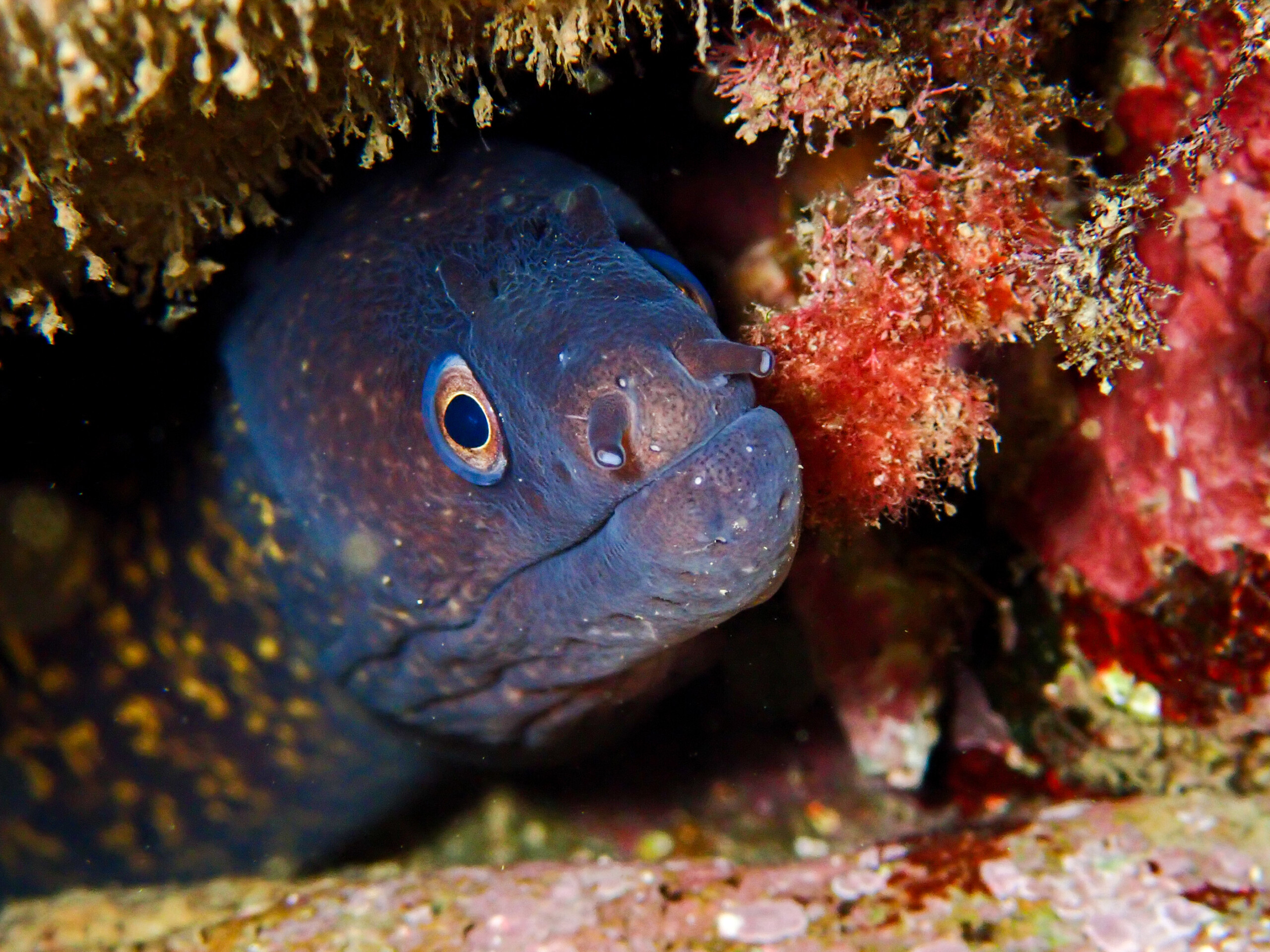
Muraena helena, also known as Mediterranean moray or also roman eel is a marine predator living in the Mediterranean Sea and on the Eastern Atlantic Ocean coast.
It is one of the most feared marine animals, mainly because of the bites it can inflict. Its ghostly mode of locomotion, serpentine appearance, and protruding dentition make it a mystical animal, sometimes feared, sometimes revered. At various times, it has been depicted as an evil animal in folklore and traditional cultures.
Already, the Romans of ancient times seem to have held it in high admiration. At that time, marine parks were built in the sea to breed and feed specimens. Some nobles reportedly managed to tame individuals that would come to feed from their hands. Sacrifices of slaves thrown to hungry morays may have taken place. However, these stories seem more like legend.
Nowadays, it is generally portrayed as cunning and aggressive, like Flotsam and Jetsam in The Little Mermaid. This reputation is largely exaggerated. The moray is a shy and discreet animal that avoids contact with humans. It mostly hides in rocks and only attacks when it feels threatened.
Who is it?
Morphology
-
Type
-
Average size100 cm
-
Maximum size150 cm
-
Longevity15 year
-
ShapeSerpentiform
-
Patterntasks
-
Type
-
Average size100 cm
-
Maximum size150 cm
-
Longevity15 year
-
ShapeSerpentiform
-
Patterntasks
How to recognize This fish ?
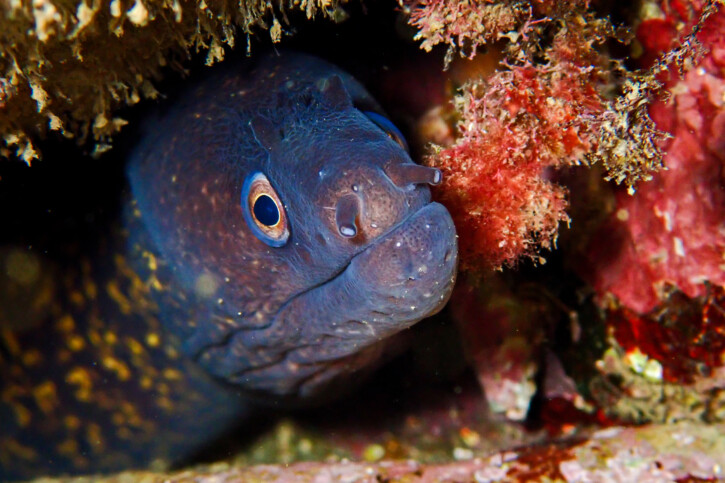
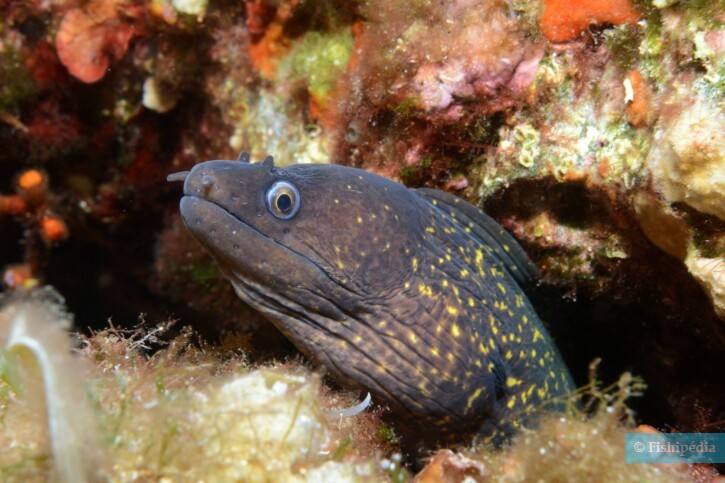
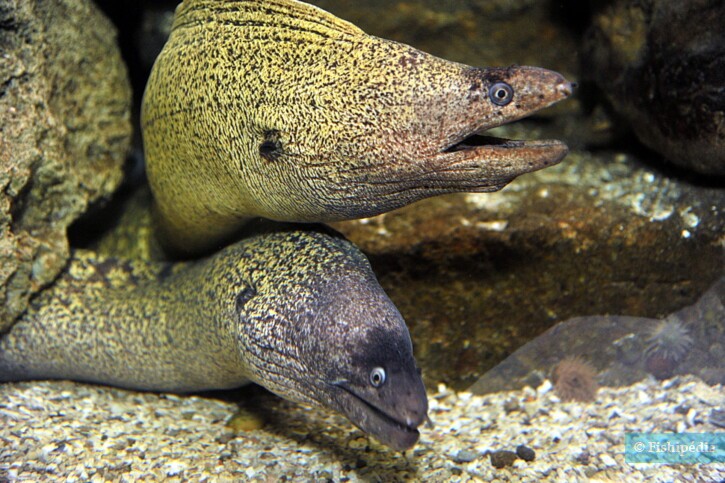
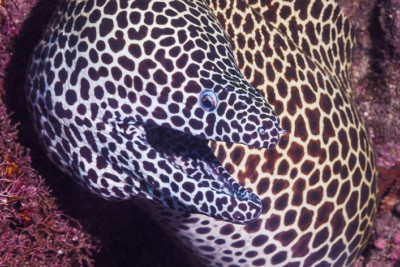
The body is serpentine, laterally compressed. It is mainly brown speckled with small golden spots.
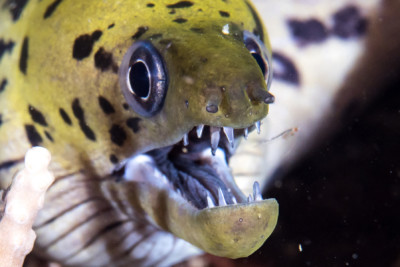
Adults are bulkier than juveniles and often darker and less colorful. The head, smaller than the body, has a wide and long mouth extending back to the eyes. This mouth can open more than 90°. The teeth are hooked, the bite is venomous.
Behaviour & Life cycle
-
dietcarnivorous
-
Sociabilitysolitary
-
territorialYes
-
Way of livingnocturnal
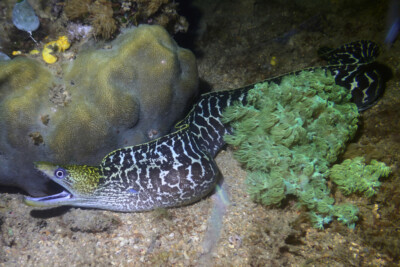
The Mediterranean moray is known to be a nocturnal predator mainly feeding on fish, cephalopods, and crustaceans. During the day, it hides in rocky cavities and crevices. It does not hesitate to defend itself or attack intruders trying to dislodge it. It is a sedentary fish that can stay on the same territory for months.
At dusk, when hunger strikes, it briefly leaves its hiding place to hunt in the nearby area. It has been observed engaging in synchronized hunting with other predators, especially groupers. In this configuration, the moray slips between the rocks while the grouper stays outside, pushing potential prey out of their hiding spots.
Muraena helena is a poor swimmer due to the shape of its non-hydrodynamic body. It has poor vision but a highly developed sense of smell, essential for its nocturnal predatory activity.
Reproduction
-
Reproductionovipare qui pond en eau libre
The Mediterranean moray would reach maturity in 3 to 10 years. The reproductive behavior is still poorly documented. However, it seems that this species migrates from coastal areas to deeper zones to spawn.
Risks for humans
-
VenomousNo
-
BiteYes
This species can attack if it feels threatened. It is important to be particularly vigilant, especially during diving or fishing sessions.
Origin and distribution
Geographic distribution & Conservation
No text specifying distribution and conservation
Conservation and international regulations
Where to see this species?




What is its habitat?
Natural environment characteristics
-
Depth1 - 800 m
-
FlowMedium
Biotope presentation
The Mediterranean moray is a territorial fish residing near the coast in rocky bottoms. It is satisfied with a crevice or space between rocks to hide during the day. Its body, covered in a thick mucus, allows it to slip between rocks without injury, in very narrow spaces, in search of food.
Attention, the poor vision of the moray makes it difficult to distinguish between fingers and food, which can cause painful bites, leading to hand-feeding of morays being banned in some places, such as the Great Barrier Reef.
Fishkeeping
Not recommended
We do not recommend keeping this species in an aquarium. It has unpredictable needs which, if not met, generate significant stress, potentially leading to a shorter life expectancy, an interruption of its growth or the development of pathogens.
To go further



Sources & Contributions
Participation & Validation
The Fishipedia team and specialist contributors are committed to providing high-quality content. However, although the information comes from scientific sources or testimonials from specialists, the cards may contain inaccuracies.

Yuhei Nakata

Benoit Chartrer

Adrien Falzon
Translation
Translation done with the valuable contribution of our translators, who make this information available to a wider audience. We sincerely thank them for their commitment.

Marine Kassel
Where to see this species?
Scientific partners





Tags
Species of the same family


