
polka-dot batfish
- Ogcocephalus radiatus
- Ogcocephalus radiatus
| Family | Ogcocephalidae |
|---|---|
| Genus | Ogcocephalus |
| IUCN category (World) | LC |
Introduction
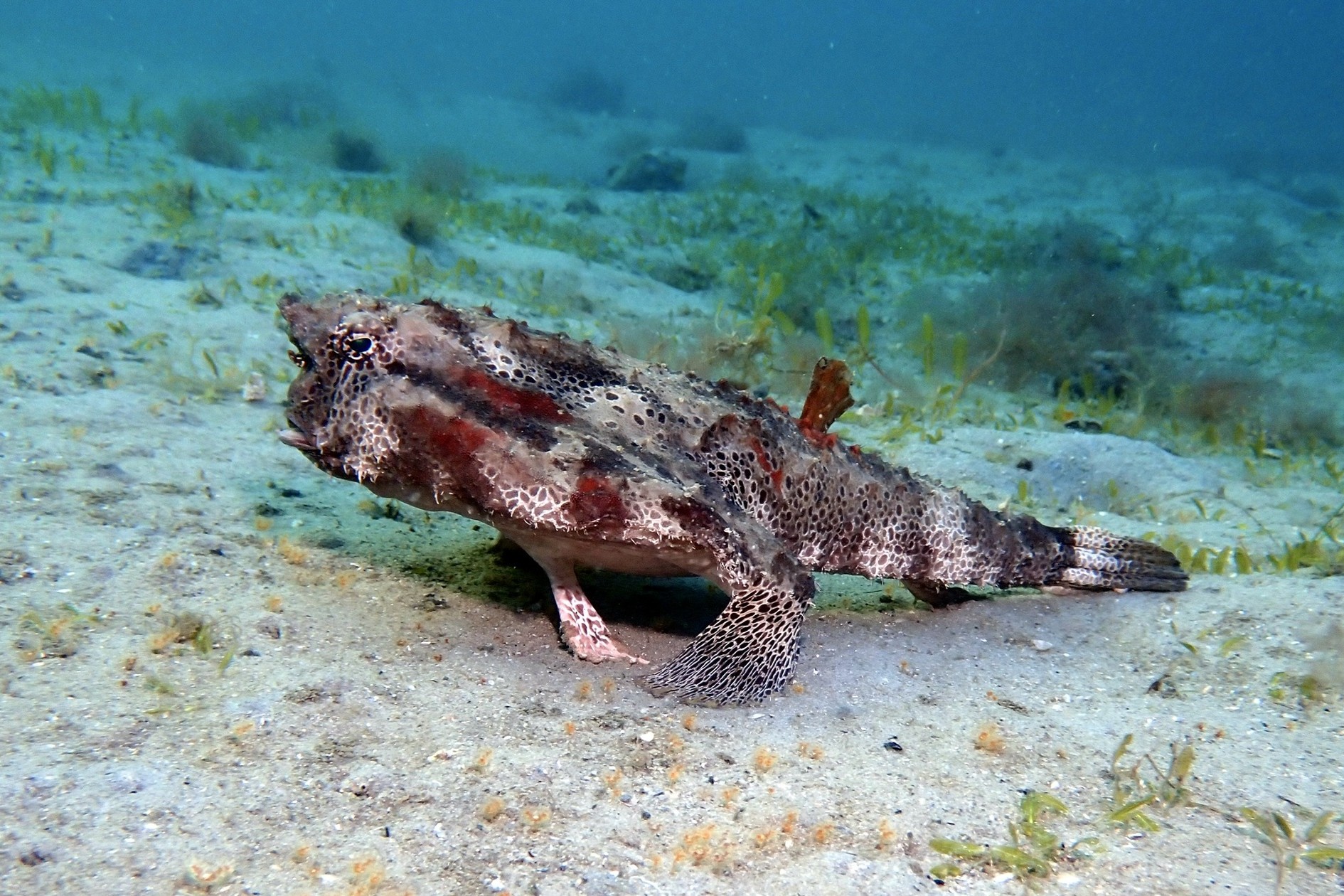
The polka-dot batfish (Ogcocephalus cubifrons), is a rare species of the Ogcocephalidae family. It is found on the continental shelf of the western Atlantic, from North Carolina to Yucatán.
These benthic species exhibit a highly specialized morphology, with an illicium, derived from the first dorsal spine, used as a "fishing rod" to attract prey. In Ogcocephalus, the illicium can act as a visual lure, sometimes supplemented by a chemical secretion to attract specific prey.
Who is it?
Morphology
-
Average size38 cm
-
Maximum size40 cm
-
Mimicrymud
-
Patterntasks
-
Average size38 cm
-
Maximum size40 cm
-
Mimicrymud
-
Patterntasks
How to recognize This fish ?
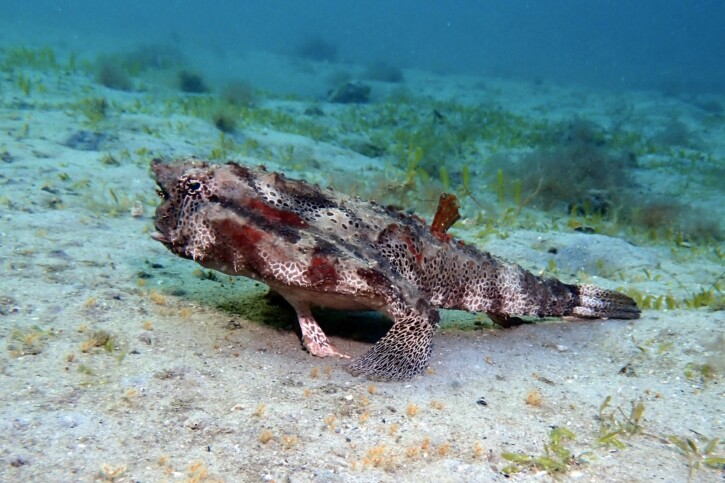
This fish has a massive head with a reduced snout in adults and a wide interorbital space. In juveniles, the rostrum is proportionally longer. Its clear pectoral fins are adorned with dark spots, and its mouth is small. Along with the pelvic fins, they are adapted for slow movement on the substrate, giving the animal a distinctive "walking" or hopping gait. It can reach a total length of 38 cm.
Behaviour & Life cycle
-
dietcarnivorous
-
Male sociabilitysolitary
-
Female sociabilitysolitary
-
territorialNo
-
Way of livingdiurnal
Chromatophores are pigment cells that reflect light in the integument of some animals. They are mostly responsible for the color of the skin and eyes of cold-blooded animals and are created by the neural crest during embryonic development.
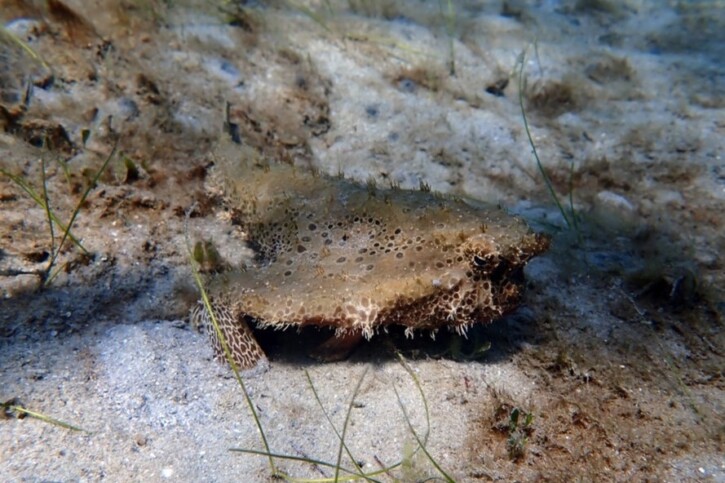
A demersal and sedentary species, O. cubifrons moves along the seafloor, advancing through glides or short jumps. It is an opportunistic predator, often motionless and camouflaged, waiting for prey before grabbing them with a protrusible mouth. Its diet consists of small crustaceans, mollusks, worms, and occasionally small fish. The illicium, sometimes waved, attracts or stimulates benthic invertebrates nearby.
Reproduction
-
Reproductionovipare
Like other Lophiiformes, the polka-dot Batfish is oviparous. The eggs and larvae are pelagic, floating in the water column before the juveniles settle on the seafloor and undergo metamorphosis.
Harmless species
No danger to humans has been reported.
Origin and distribution
Geographic distribution & Conservation
The polka-dot batfish is found in the western subtropical Atlantic, between 36°N and 18°N. Its range extends from North Carolina and the Bahamas, through northwest Florida, to the Campeche Bank off Yucatán.
Conservation and international regulations
What is its habitat?
Natural environment characteristics
-
Temperature22 - 28 °C
-
Depth0 - 70 m
Biotope presentation
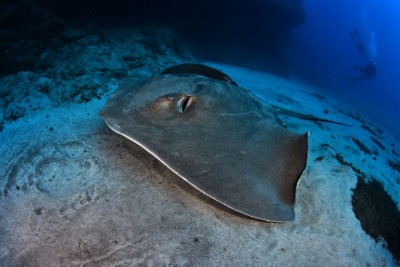
This fish inhabits the continental shelf at depths between 0 and 70 m. It occupies a variety of substrates: muddy, sandy, or rocky bottoms, sometimes associated with reef areas. Its morphology and behavior closely link it to the substrate, where it moves slowly.
To go further
To read on the web

Sources & Contributions
Participation & Validation
The Fishipedia team and specialist contributors are committed to providing high-quality content. However, although the information comes from scientific sources or testimonials from specialists, the cards may contain inaccuracies.

Benoit Chartrer
Translation
Translation done with the valuable contribution of our translators, who make this information available to a wider audience. We sincerely thank them for their commitment.
Scientific partners




Tags


