
Indonesian Leaffish
| Family | Pristolepididae |
|---|---|
| Genus | Pristolepis |
| IUCN category (World) | LC |
Introduction
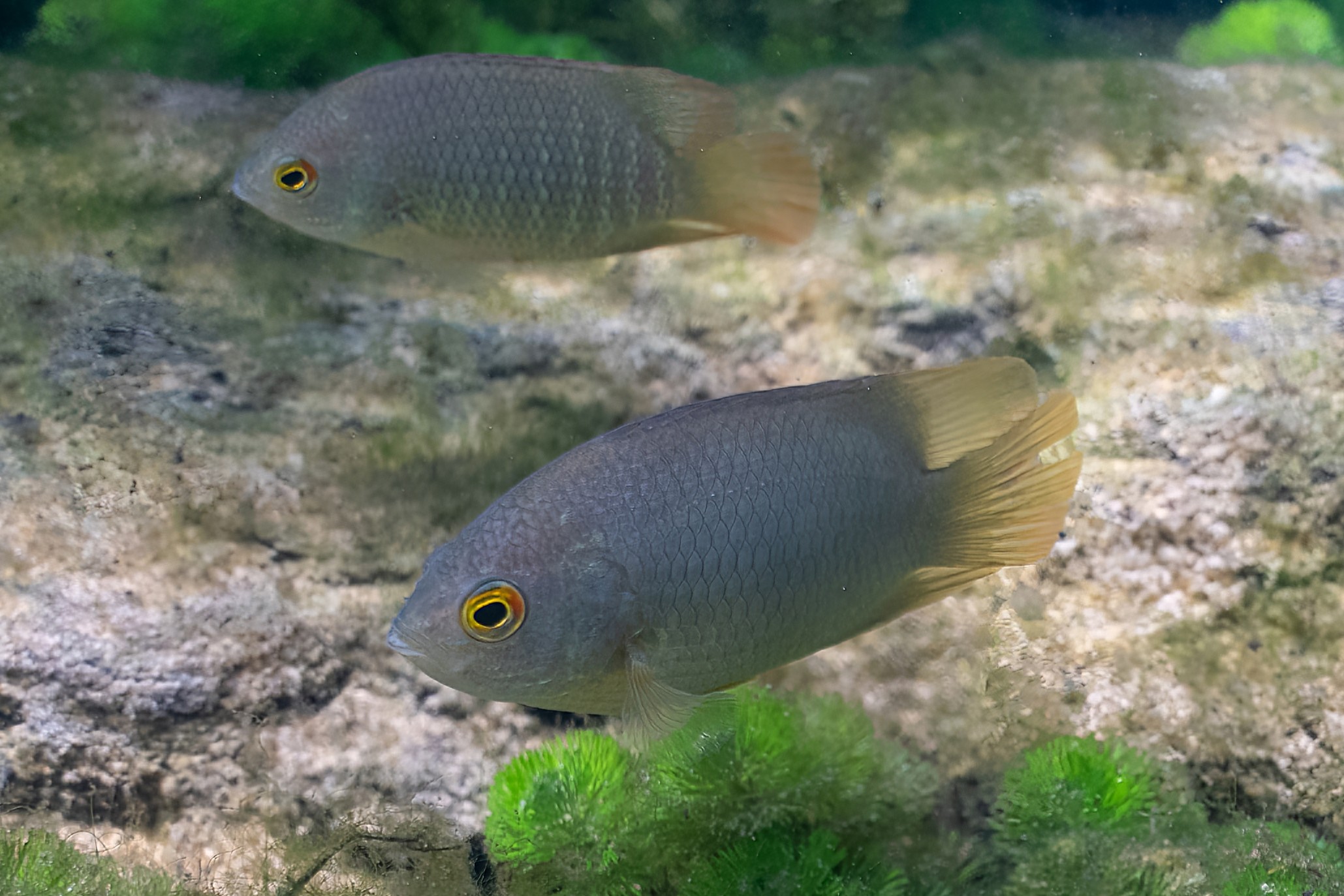
Pristolepis grootii, also known as Indonesian Leaffish, is a perciform species native to Sumatra, Borneo, Bangka, and Belitung. Described by Bleeker in 1852, it belongs to the family Pristolepididae, a small group of tropical Asian fish related to Anabantiformes. Locally known as sepatung, it plays a significant role in artisanal fisheries and is starting to attract attention for aquaculture and aquarium trade.
Who is it?
Morphology
-
Average size12 cm
-
Maximum size18 cm
-
Mimicryleaf
-
Patternponctuations
-
Average size12 cm
-
Maximum size18 cm
-
Mimicryleaf
-
Patternponctuations
How to recognize This fish ?
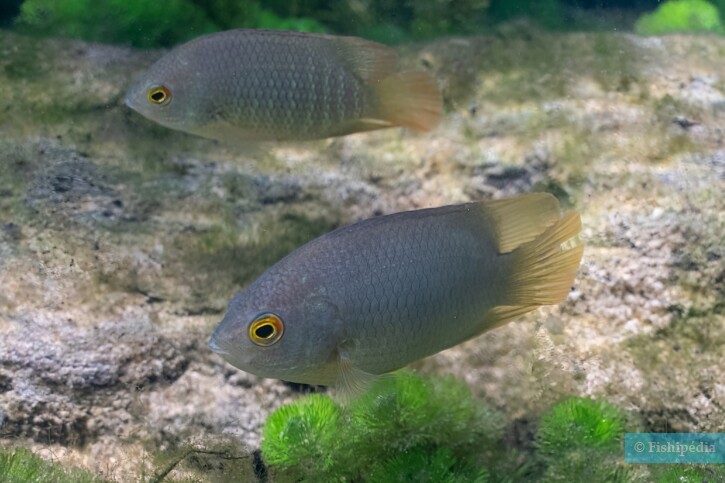
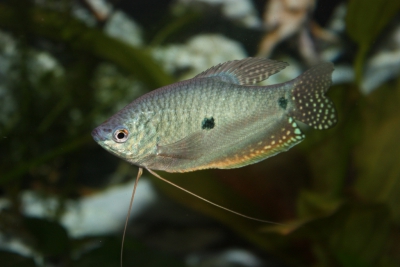
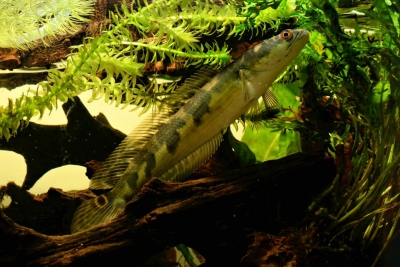
The Indonesian leaffish can reach a maximum length of about 18 cm. Its laterally compressed oval body resembles a leaf, providing effective camouflage in vegetation-cluttered habitats. The moderately protractile terminal mouth. The coloration, usually silver to brownish, shows different hues depending on the habitat and age.
Sexual dimorphism
Sexual dimorphism is slight. Adult females often have a more rounded abdomen, while males may display slightly elongated fins during the breeding season.
Behaviour & Life cycle
-
dietcarnivorous
-
Sociabilityliving in a group or alone
-
territorialNo
-
Way of livingdiurnal
P. grootii feeds mainly on small invertebrates, algae, and organic detritus. Opportunistic, it also exploits available resources in flooded areas. Its dietary plasticity promotes adaptation in both natural habitats and culture systems.
Reproduction
-
Reproductionovipare qui pond sur substrat découvert
The reproductive biology of P. grootii is still poorly understood, although observations in Indonesia indicate breeding in flooded areas, with spawning synchronized with seasonal floods. Fecundity and larval stages are still under research, particularly in domestication and aquaculture projects.
Harmless species
No particular danger to humans.
Origin and distribution
Geographic distribution & Conservation
The species is widely distributed in Sumatra, Borneo, Bangka, and Belitung, and also reported in Malaysia (Sarawak) and Thailand. It frequents slow-flowing rivers, lakes, canals, and especially blackwater swamp areas associated with peat forests. Fishing, aquarium trade, and marsh degradation pressures require monitoring.
Conservation and international regulations
What is its habitat?
Natural environment characteristics
-
Temperature24 - 29 °C
-
pH (acidity)5 - 6.5
-
FlowSlow
Biotope presentation
Pristolepis grootii inhabits floodplains, slow-flowing rivers, lakes, and peat swamps. These environments are often acidic, rich in organic matter, and shaded by riparian vegetation. In Thailand, it is observed alongside species like Rasbora trilineata, Puntigrus partipentazona, Striuntius lateristriga, Xenentodon canciloides, Trichopodus vittata, Channa lucius, Trigonostigma espei, Oreochromis niloticus (invasive), Barbichthys schwanenfeldii, Hampala macrolepidota, Osteochilus vittatus, and Notopterus notopterus.
To go further
To read on the web

Sources & Contributions
Participation & Validation
The Fishipedia team and specialist contributors are committed to providing high-quality content. However, although the information comes from scientific sources or testimonials from specialists, the cards may contain inaccuracies.

Benoit Chartrer
Translation
Translation done with the valuable contribution of our translators, who make this information available to a wider audience. We sincerely thank them for their commitment.
Scientific partners




Tags


