eastern fiddler ray
| Family | Trygonorrhinidae |
|---|---|
| Genus | Trygonorrhina |
| IUCN category (World) | LC |
Introduction
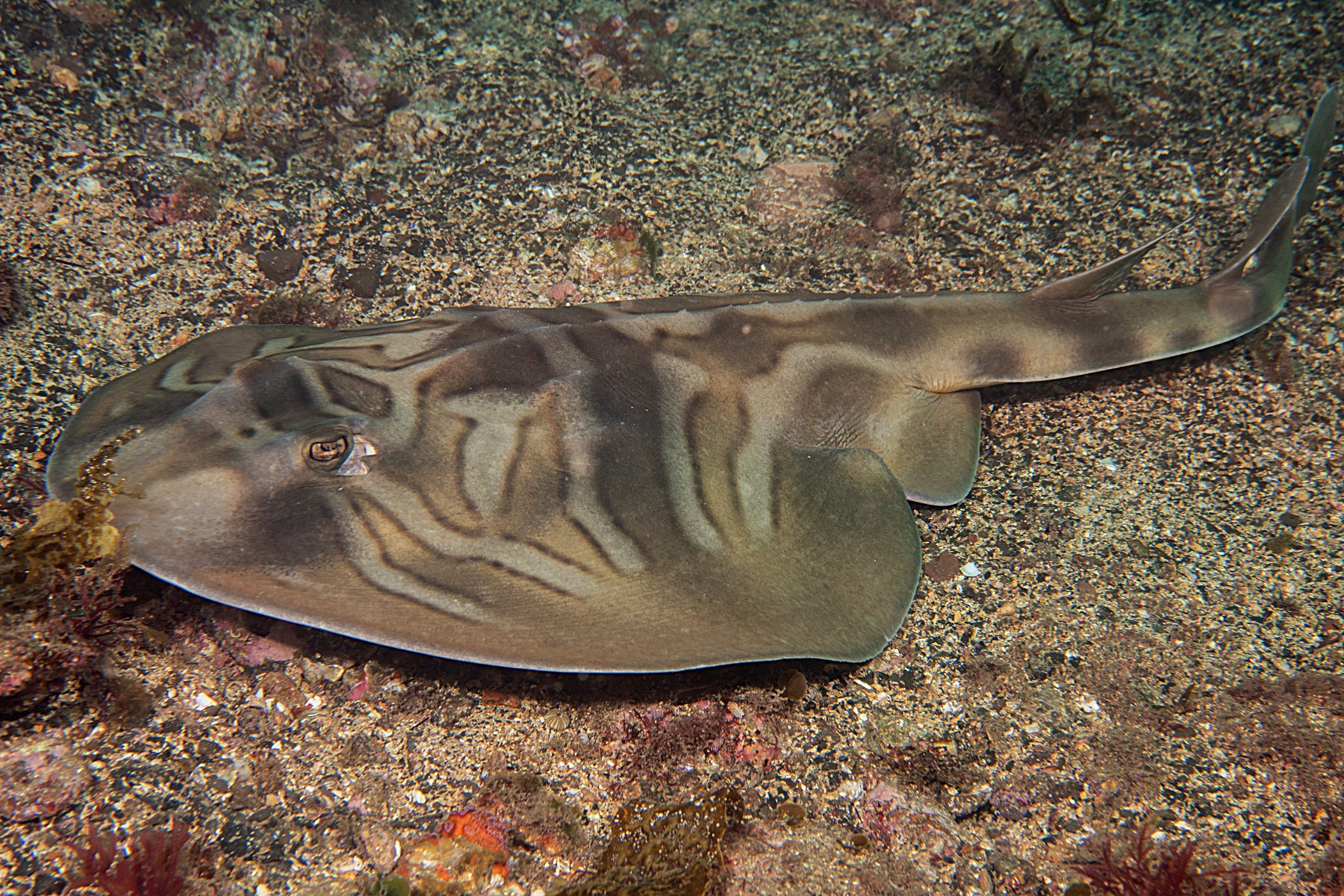
Trygonorrhina fasciata, known as the Eastern Fiddler Ray or Eastern Fiddler Ray, is a ray from the Rhinobatidae family endemic to eastern Australia. Its distribution range extends from southern Queensland to southern New South Wales.
This medium-sized species inhabits coastal waters up to 100 meters deep. Classified as "Least Concern" by the IUCN, it benefits from refuges in shallow waters inaccessible to trawling, although its precise status remains uncertain due to historical taxonomic confusion with the Southern Fiddler Ray (T. dumerilii) and the Narrow-nosed Fiddler Ray (Aptychotrema rostrata).
Who is it?
Morphology
-
Average size90 cm
-
Maximum size120 cm
-
Mimicrysand
-
Patternmottling
-
Average size90 cm
-
Maximum size120 cm
-
Mimicrysand
-
Patternmottling
How to recognize This fish ?
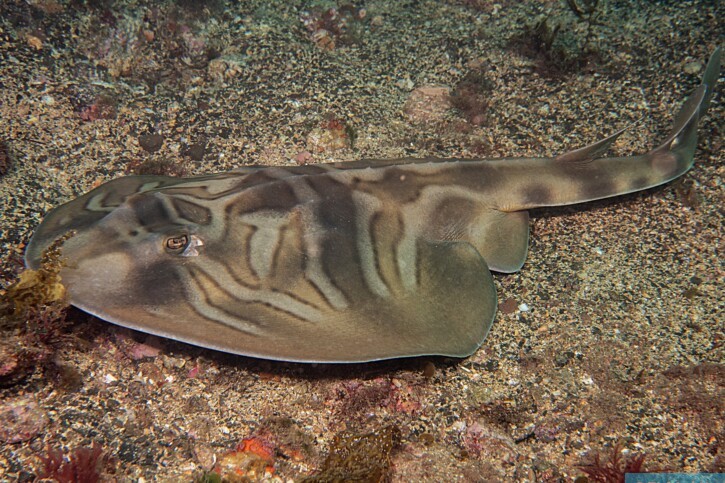
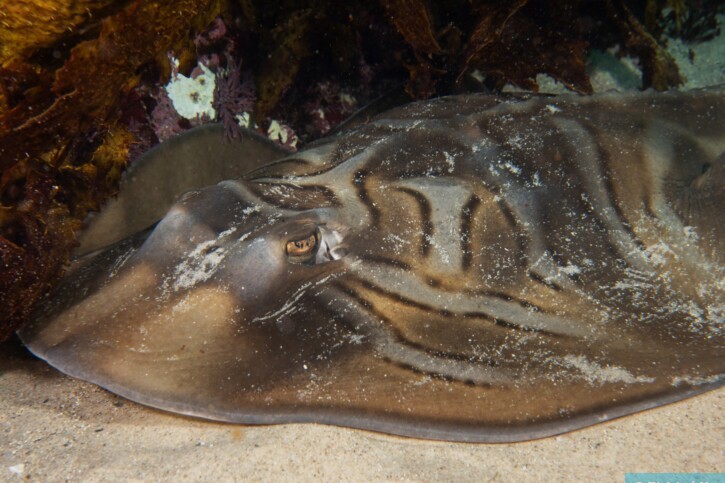
This cartilaginous fish has the characteristic flattened body of fiddler rays, with an elongated shovel-like snout. The reported maximum size reaches 120 cm, although the largest specimen observed measured 92 cm in total length.
Newborns measure less than 25 cm at birth. The coloration, typical of the genus Trygonorrhina, displays dark patterns on a light background. Its overall morphology allows it to blend in with soft substrates and seagrass beds.
Behaviour & Life cycle
-
dietcarnivorous
-
Sociabilitysolitary
-
territorialNo
-
Way of livingdiurnal
The Eastern Fiddler Ray is a benthic species associated with sandy bottoms and marine seagrass beds. It inhabits shallow coastal areas, where it finds refuge. It is a benthic carnivore, feeding on invertebrates (crustaceans, mollusks) and small fish buried in the soft substrates it frequents.
Reproduction
-
Reproductionvivipare
This species is lecithotrophic viviparous, meaning the embryos develop in the mother's uterus exclusively feeding off their yolk sac. The reproductive cycle includes a prolonged period of embryonic diapause, a mechanism similar to that observed in the Southern Fiddler Ray (T. dumerilii), allowing the birth to be synchronized with favorable environmental conditions. The litters give birth to young measuring less than 25 cm.
Harmless species
Harmless to humans, this species does not pose any particular danger.
Origin and distribution
Geographic distribution & Conservation
Endemic to eastern Australia, this ray inhabits the waters of southern Queensland and New South Wales. Capture analyses suggest a declining trend. Fishing pressure exists in the form of bycatch, but high survival rates after release are suspected.
Conservation and international regulations
Where to see this species?

What is its habitat?
Natural environment characteristics
-
Temperature18 - 24 °C
-
Depth1 - 100 m
-
FlowMedium
Biotope presentation
The Eastern Fiddler Ray inhabits shallow coastal habitats, specifically substrates of soft sediments (sand, mud) and marine seagrass beds. Its depth range extends from the littoral zone to 100 meters deep, with a particular abundance in the sublittoral zone (<75 m). It likely avoids rocky or hard coral bottoms, preferring sedimentary environments conducive to its benthic lifestyle and feeding habits.
To go further
To read on the web

Sources & Contributions
Participation & Validation
The Fishipedia team and specialist contributors are committed to providing high-quality content. However, although the information comes from scientific sources or testimonials from specialists, the cards may contain inaccuracies.

Benoit Chartrer
Translation
Translation done with the valuable contribution of our translators, who make this information available to a wider audience. We sincerely thank them for their commitment.
Where to see this species?
Scientific partners