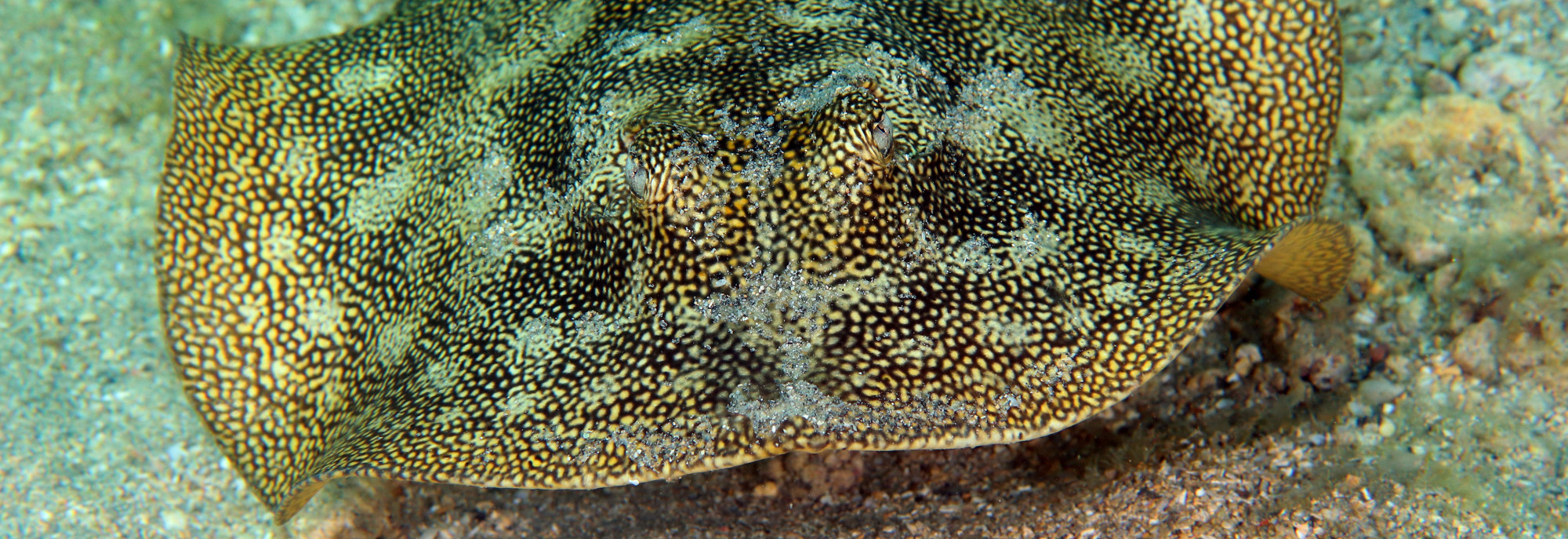
yellow stingray
- Urolophus jamaicensis
- Urolophus jamaicensis
| Family | Urotrygonidae |
|---|---|
| Genus | Urobatis |
| IUCN category (World) | LC |
Introduction
Urobatis jamaicensis, commonly known as yellow stingray, is a salt water fish from the Caribbean Sea.
This sheet is currently being prepared. The texts currently proposed come from our data model or are being drafted. To request priority for this content, you can write to us HERE.
Who is it?
Morphology
-
Average size30 cm
-
Maximum size76 cm
-
Longevity8 year
-
Mimicrysand
-
Patterntasks
-
Average size30 cm
-
Maximum size76 cm
-
Longevity8 year
-
Mimicrysand
-
Patterntasks
How to recognize This fish ?
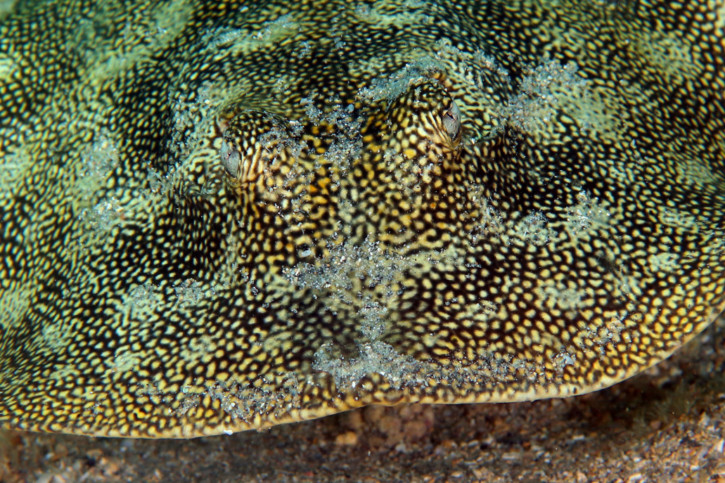
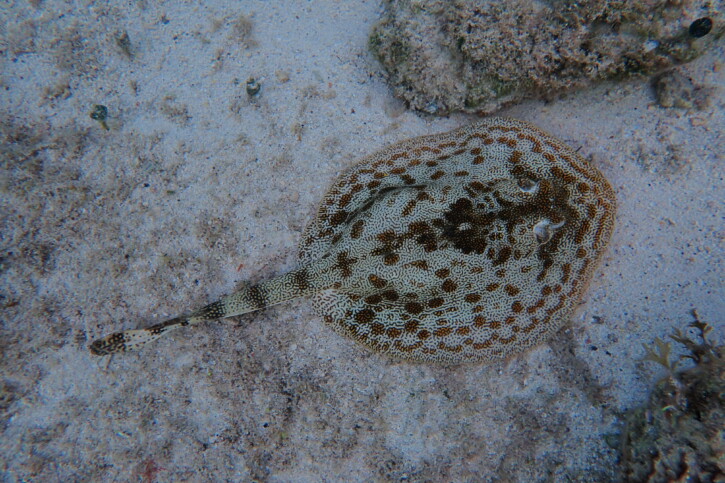
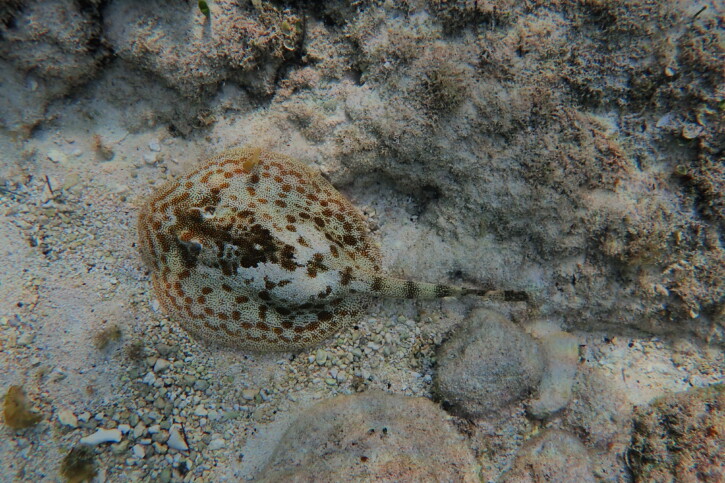
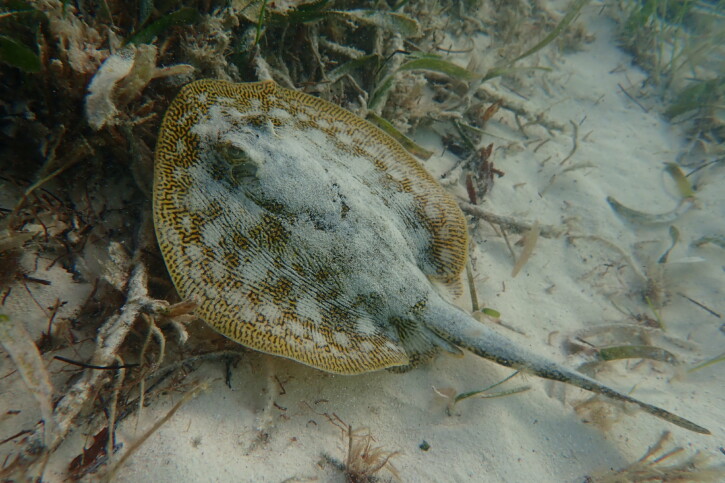
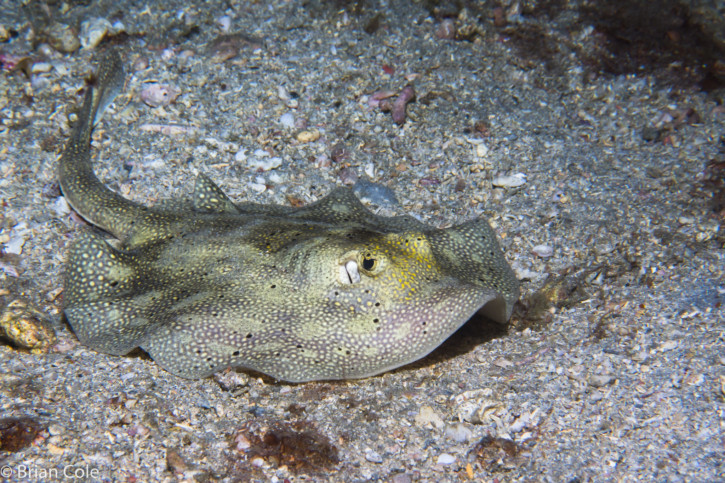
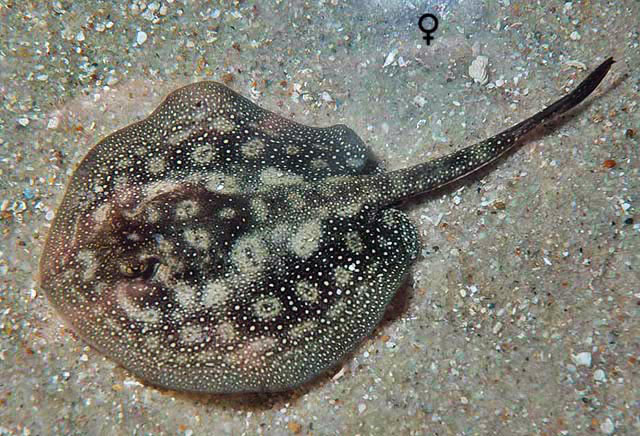
The yellow stingray measures between 30 and 76 cm. This fish is bicolore with a predominantly marron and beige body. The also has marron tasks.
Behaviour & Life cycle
-
dietcarnivorous
-
Sociabilitysolitary
-
territorialNo
-
Way of livingdiurnal
The yellow stingray is a fish solitary naturally found on the bottom. This species is carnivorous .
Although the yellow stingray is non-territorial, it is sometimes aggressive towards other species. In a constant quest for dominance, the dominant males of this species cannot stand each other. The battle between two individuals can be intense and violent. It will result in the submission and sometimes even death of one of the protagonists.
Reproduction
-
Reproductionovovivipare
The yellow stingray is a fish ovovivipare.
Risks for humans
-
VenomousNo
-
StingYes
What to do in the event of a sting?
in case of sting, the following rules should be followed, in this order:
- Isolate the victim from the danger and quickly remove him or her from the water
- Call for help
- Lay the victim down in a half-sitting position and avoid any effort
- Immobilize the affected limb
- Clean the wound
- The venom of this species being thermolabile, it can be neutralized if it is submitted to a temperature of about 45 °C. It is therefore possible to heat the wound. This popular technique should be practiced with great care so as not to aggravate the wound by burning it. It is advisable to immerse the affected limb in hot water.
- If the puncture is too deep, heating the wound will be less effective.
Sometimes the sting can cause discomfort or even loss of consciousness in the victim. The stings are usually very painful.
Origin and distribution
Conservation and international regulations
Where to see this species?

What is its habitat?
Natural environment characteristics
-
Temperature26 - 28 °C
-
Depth1 - 25 m
Biotope presentation
The yellow stingray is most often found at a depth between 1m and 25m. However, it is not impossible to find this species at other depths.
The soil is generally composed of sand.
To go further
To read on the web


Sources & Contributions
Participation & Validation
The Fishipedia team and specialist contributors are committed to providing high-quality content. However, although the information comes from scientific sources or testimonials from specialists, the cards may contain inaccuracies.

Adrien Falzon
Translation
Translation done with the valuable contribution of our translators, who make this information available to a wider audience. We sincerely thank them for their commitment.
Where to see this species?
Scientific partners