
Loading...
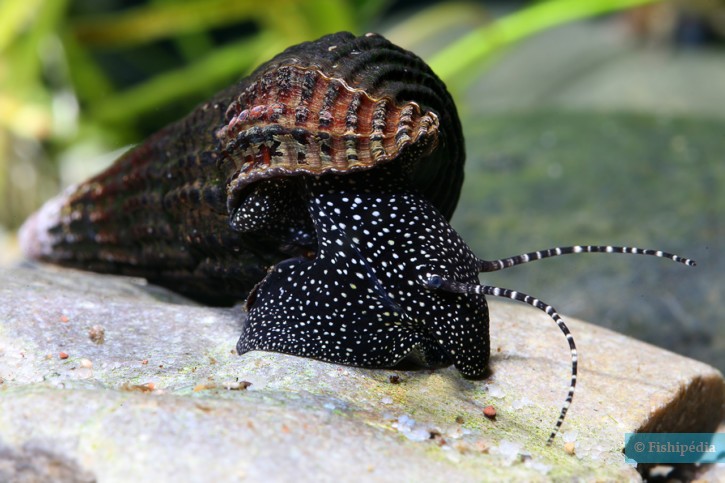
Snails of the genus Tylomelania are endemic to the island of Sulawesi. They are found in the Malili lake system, one of Asia’s major freshwater biodiversity hotspots. According to the WoRMS website, no fewer than 40 snail species are distributed among lakes Mahalona, Masapi, Matano, Towuti, and Wawontoa. These ancient lakes are also known to harbor numerous endemic species of fish and crustaceans.
All Tylomelania snails studied by the IUCN are considered endangered or critically endangered in the wild. The populations of most species are extremely localized, making them especially vulnerable. In addition, they are directly threatened by water pollution from agriculture and gold mining, ecosystem alterations for water management, and the presence of invasive species. Already impacted populations are also potentially threatened by collection for the aquarium trade.
Before being classified under the genus Tylomelania, several snails were described under the genera Melanatria and later Brotia. These names are still occasionally used. The taxonomy of the genus is not yet fully resolved, and several species remain undescribed to this day, including some found in the aquarium trade.
Tylomelania snails are viviparous and dioecious; they do not change sex. Females give birth to a single, fully developed juvenile, which they brood in their uterus. In the wild, they feed on plant material and various detritus, grazing on rocks or soft substrates. They are strictly freshwater snails, and their entire reproductive cycle occurs in freshwater. Some species inhabit waters that remain near 30°C year-round, while others live in the cooler rivers of the island.
In all species, the shell is elongated and conical. The radula—essentially the snail’s tongue—is generally very long and robust, with between 130 and 250 rows of teeth. In some species, the radula is even longer than the shell itself.
The striking shapes and vivid colors of these gastropods have made them popular among aquarists. They are commonly known by various names such as “elephant snail,” “rabbit snail,” or simply “Tylo.” Since they can reproduce easily in freshwater, and given the threats facing wild populations, we believe it is not appropriate to purchase individuals collected from the wild.
En attente de chargement...
Pour vos cadeaux de Noël, Fishishop propose une sélection de jouets, accessoires et vêtements enfant autour du monde aquatique, créés par des marques engagées.
En achetant sur Fishishop, vous soutenez directement le développement de l’encyclopédie Fishipedia : nouveaux contenus gratuits, outils pédagogiques et projets de sensibilisation à la biodiversité aquatique. Nous travaillons avec des partenaires qui partagent ces valeurs, avec des produits durables et pensés pour éveiller la curiosité.


