Introduction
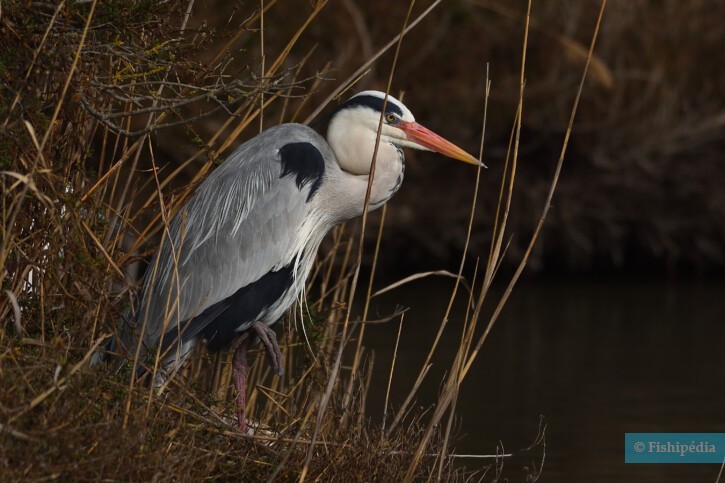
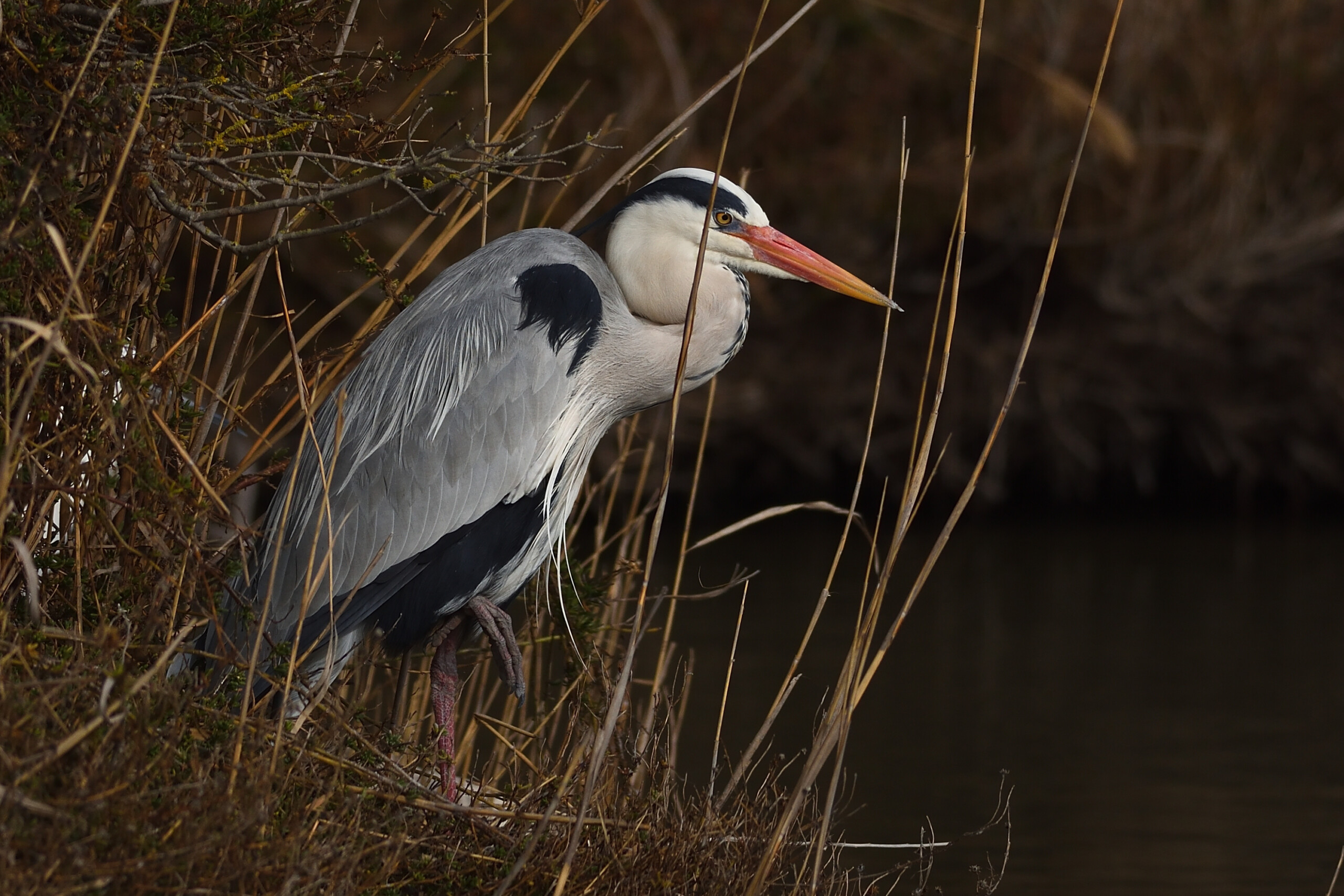
The Grey Heron (Ardea cinerea) is a large wading bird belonging to the Ardeidae's family. Iconic species of wetlands, it is widely distributed in Europe, Asia, and Africa. Recognized for its slender silhouette and ash-gray plumage, this bird plays an important role in aquatic ecosystems.
Who is it?
How to recognize This Bird ?
The grey heron is distinguished by its slender body, long legs, and flexible S-shaped neck. It measures between 84 and 102 cm in length, with a wingspan of up to 175 cm. Its ash-gray plumage is complemented by white areas on the head and neck, adorned with a distinctive black stripe extending from the eyes to the nape. The beak is long, pointed, and orange-yellow in color.
Sexual dimorphism
Sexual dimorphism is slightly marked in this species. Males are slightly larger and more robust than females, although this difference is difficult to perceive with the naked eye.
Behaviour & Life cycle
-
dietcarnivorous
-
Sociabilityliving in a group or alone
-
territorialYes
-
Way of livingdiurnal
The grey heron is a solitary predator when hunting, but it becomes gregarious during the breeding season, forming colonies known as heronries. Patient and methodical, it remains still for long periods to ambush its prey. Its flight is slow, characterized by broad and regular wing beats.
Reproduction
-
Reproductionovipare
In temperate zones, the breeding season begins in spring. Grey Herons nest in colonies, often in trees near water. The nest, built by the pair, consists of branches and grass. The female lays between 3 and 5 pale blue-green eggs, which are incubated for about 25 days. Both parents participate in raising the young, which leave the nest after 7 to 8 weeks.
Harmless species
This species does not represent any particular threats to humans when encountered in its natural environment.
Origin and distribution
Geographic distribution & Conservation
The grey heron is present over much of Eurasia and Africa, with resident and migratory populations depending on the region. It occupies various aquatic habitats, from inland wetlands to coastal estuaries.
What is its habitat?
Natural environment characteristics
-
Temperature1 - 30 °C
Biotope presentation
A typical species of aquatic environments, the grey heron frequents lakes, rivers, ponds, marshes, and coastal areas. It prefers shallow waters with clear banks where it can hunt effectively. Muddy or silty substrates are particularly suitable for its predation techniques.

To go further
To read on the web

Sources & Contributions
Participation & Validation
The Fishipedia team and specialist contributors are committed to providing high-quality content. However, although the information comes from scientific sources or testimonials from specialists, the cards may contain inaccuracies.

Benoit Chartrer
Translation
Translation done with the valuable contribution of our translators, who make this information available to a wider audience. We sincerely thank them for their commitment.
Scientific partners





Tags