
bristle-tail file-fish
| Family | Monacanthidae |
|---|---|
| Genus | Acreichthys |
| IUCN category (World) | LC |
Introduction
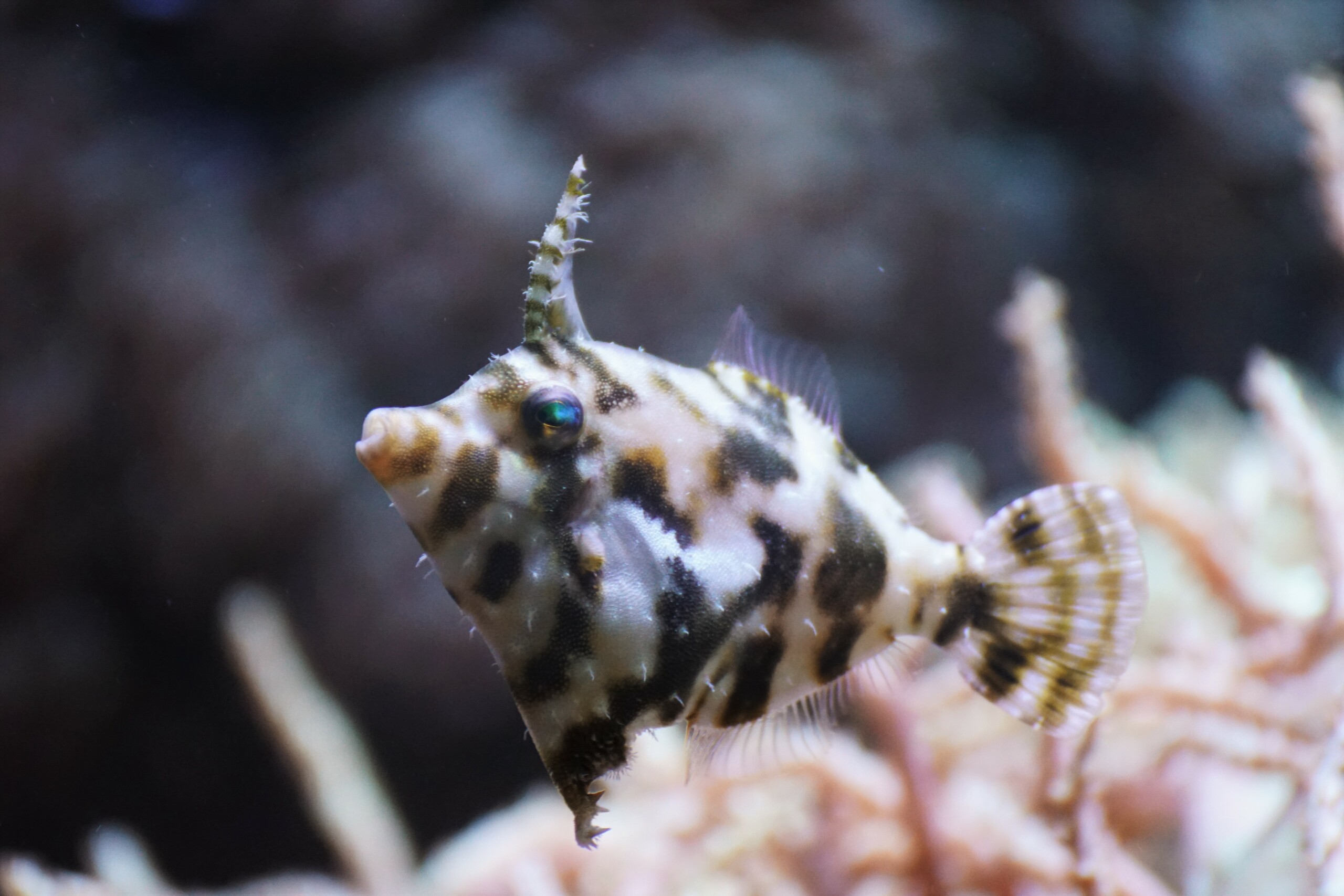
Acreichthys tomentosus, known as bristle-tail file-fish, is a tropical marine species belonging to the Monacanthidae family. Found in the Indo-Pacific, its distribution ranges from Sri Lanka to New Caledonia, up to the Ryukyu Islands in the north and New South Wales. It inhabits seagrass beds, shallow coral reefs, and rocky areas.
Who is it?
Morphology
-
Average size8 cm
-
Maximum size14 cm
-
Longevity9 year
-
Mimicryplants
-
Patternmottling
-
Average size8 cm
-
Maximum size14 cm
-
Longevity9 year
-
Mimicryplants
-
Patternmottling
How to recognize This fish ?
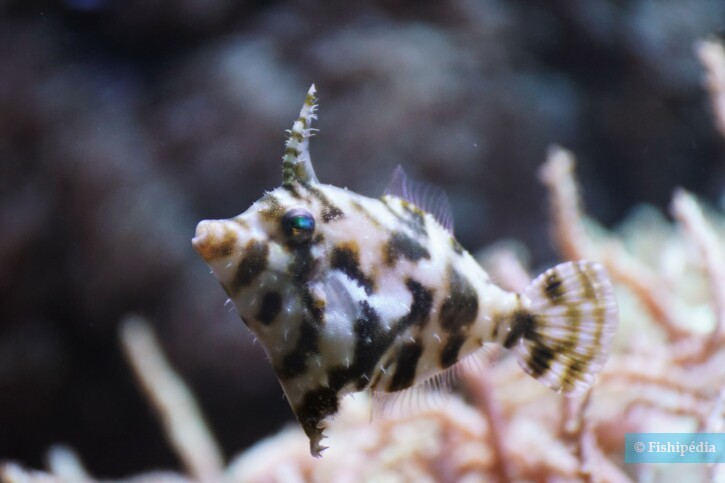
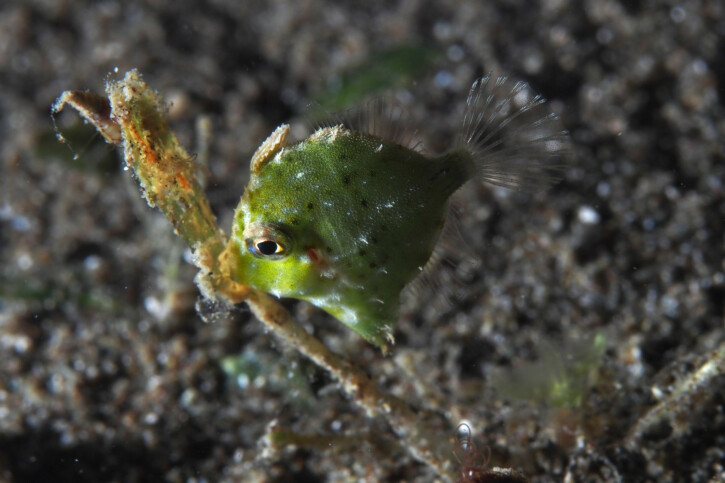
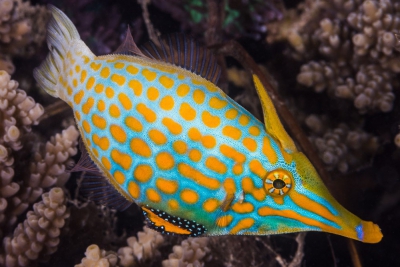
This fish reaches a length of 12 to 14 cm. Its compressed body, ranging from greenish to marbled brown, is adapted for mimicry. The species can quickly change its coloration and even the texture of its skin, producing nodules and filaments resembling the epiphytes of seagrass beds. This ability allows it to perfectly camouflage itself in seagrasses like Enhalus acoroides or Thalassia hemprichii.
Behaviour & Life cycle
-
dietcarnivorous
-
Sociabilitysolitary
-
territorialNo
-
Way of livingdiurnal
A solitary and benthopelagic species, A. tomentosus is found in seagrass beds, coral reefs, or debris zones. Juveniles hide in benthic algae or Sargassum fronds, while subadults and adults are often seen in seagrass beds, mimicking the appearance of leaves colonized by epiphytes. At night, subadults sleep suspended 0.5–1 m above the bottom, while adults remain close to the substrate.
This species primarily feeds on the epiphytes of seagrass beds, consisting of algae, protozoans, polychaetes, crustaceans, bryozoans, and small mollusks. It thus engages in a mutualistic relationship with seagrasses by limiting the proliferation of epiphytic organisms that can suffocate the leaves.
Reproduction
-
Reproductionovipare qui pond sur substrat découvert
Acreichthys tomentosus is an oviparous species that deposits eggs on exposed substrates. Females start developing their oocytes at 4.5 cm, and the eggs are fully formed from 8 cm onwards. Reproduction is associated with an absence of a pelagic larval phase, a rare trait in marine fish: juveniles remain in coastal habitats and attach directly to seagrass beds or floating algae like Sargassum. This strategy enhances the survival of the young but limits their dispersion.
Harmless species
This species does not pose a particular danger to humans when encountered in its natural habitat.
Origin and distribution
Geographic distribution & Conservation
The species is widely distributed in the western Indo-Pacific: from Sri Lanka to New Caledonia, up to the Ryukyu Islands in the north and New South Wales in the south. It has also been reported in Tonga. Mentions in East Africa seem to be errors.
Where to see this species?





What is its habitat?
Natural environment characteristics
-
Temperature25 - 29 °C
-
Depth2 - 15 m
Biotope presentation
A. tomentosus lives at depths ranging from 2 to 12 m, in tropical seagrass beds, shallow coral reefs, rocky areas, and coral debris bottoms. Juveniles often frequent floating algae, especially Sargassum.

Main recommendations for fishkeeping
Deontology
In order to preserve wildlife, if you acquire this animal, it must not be released into the wild. See also, the Fishipedia charter.
Fishipedia supports the practice of responsible and environmentally friendly aquarium keeping. We encourage maintenance if it is motivated by a desire to understand the biological functioning of living things and if it is done with respect for animal life.
We believe that aquaristics is an opening to the discovery of aquatic environments, especially freshwater, and that this knowledge is necessary to better protect and respect these environments. Logically, we refute the compulsive purchase of animals that would not find a sufficient and / or adapted place in the host aquarium.
Our recommendations
-
Min volume200 liters
-
Population min1
-
Temperature25 - 29 °C
Characteristics
-
Difficulty breedinghard
-
Robustnesssensible
-
Behaviourslightly aggressive
-
Availabilityoccasional
General reminders
It is strongly advised to read the complete dedicated file and to get information on the feedbacks of maintenance of the envisaged animal, this to avoid any potential conflict whose end result is generally the death of the individual (or the other inhabitants). It is important not to overload your aquarium to limit pollution. This will make maintenance easier.
General reminder on maintenance datas
Le démarrage d'un aquarium est une partie primordiale pour l'équilibre et le bien-être des poissons. Lorsque l'on met en eau un aquarium, l'eau passe naturellement par un cycle biologique : le cycle de l'azote. Celui-ci dure environ trois semaines. Tous les 2 jours, nous vous conseillons de tester votre eau jusqu'à ce que le taux de nitrite soit à zéro pendant plusieurs jours d'affilée.
Pour accélérer ce cycle, vous pouvez utiliser un activateur de bactéries comme JBL Denitrol. Cette solution riche en bactéries vivantes et enzymes permet une mise en place rapide du cycle de l'azote. Les poissons peuvent alors être introduits plus rapidement.
Il est important de tester l'eau de son aquarium régulièrement pour maintenir un environnement sain pour les poissons et les autres habitants. Les tests d'eau permettent de mesurer les niveaux de différents paramètres tels que le pH, la dureté totale, ainsi que les taux de nitrates, de nitrites et d'ammoniaque.
Pour réaliser ces tests, vous pouvez utiliser des produits d'analyse spécialisés tels que JBL ProScan qui permet de réaliser un diagnostic de l'eau directement via un smartphone. Il existe également des coffrets de tests plus classiques de bandelettes, comme JBL PROAQUATEST.
En cas d’usage de l’eau du robinet, vous pouvez utiliser un conditionneur d’eau de type Biotopol de JBL pour éliminer les substances nocives comme le chlore, le cuivre, le plomb et le zinc. Une eau trop dure ou trop calcaire peut être inadaptée à de nombreuses espèces tropicales d’eau douce. Si nécessaire, vous pouvez la couper avec de l’eau osmosée ou de pluie filtrée afin d’obtenir une dureté plus adaptée aux besoins de vos poissons et de vos plantes. Les conditionneurs d'eau garantissent une meilleure santé aux poissons et une meilleure croissance des plantes.
Chlorine and chloramine are dangerous for the health of animals. Used to disinfect water, these agents are present in significant quantities in tap water. We recommend using an anti-chlorine agent every time you change the water. In addition to chlorine, treatments and medicines sold for aquarium use sometimes contain dangerous heavy metals in high doses.
Specific needs for the bristle-tail file-fish
The bristle-tail file-fish is a marine species which lives naturally at a temperature between 25 °C and 29 °C. The bristle-tail file-fish is sensitive to abrupt changes in parameters as well as to chemicals. Its acclimation in an aquarium must be done with special care to prevent it from developing diseases or weaknesses. Nitrate levels should remain below 25mg/L. To keep the water clean and unpolluted, plan on changing 20% to 30% of the water volume each month. In seawater, it is also possible to remove nitrates using one of the following methods: Jaubert, denitrator on sulfur, biopeletts, vodka method.
The bristle-tail file-fish is a species whose maintenance is rather reserved for informed aquarists . It can only be successfully carried out by carrying out a minimum of documentation work. Special husbandry conditions can easily lead to the death of the species or other animals.
This species is generally available in specialized shops or from aquarium clubs. Specimens that have been bred for a long time are easier to breed, but special water parameters must be respected.
Cohabitation & Environment
In a community aquarium context, this species should be kept in a minimum volume of 200 liters.
The species enjoys a particularly vegetation-rich environment. The addition of plants will provide many useful hiding places for resting. These areas are also conducive to possible breeding in the aquarium.
Tips for feeding
The bristle-tail file-fish is carnivorous.
This species can eat dry food (flakes, pellets), fresh food and frozen food. To avoid deficiencies, it is recommended to vary the types of food.
Feed animals in moderation to maintain good water quality. Meals should be eaten within 2–3 minutes, served in several small portions rather than a single large ration.
Uneaten food quickly decomposes, releasing ammonia, nitrites, and nitrates, which disturb the aquarium’s biological balance.
Make sure each species can access food properly, slower or bottom-dwelling individuals may require targeted feeding.Reproduction protocol
-
egg-laying protectionYes
Hybridization risks
In general, it is advised not to mix several species of the same genus or different varieties of the same species, to avoid the risks of hybridization.
These animals might interest you
These plants might interest you
Plants play a crucial role in aquariums, both for their ability to filter water by absorbing excess nutrients and for their aesthetic contribution. They provide fish with natural hiding places, can serve as breeding sites, and generally help maintain the overall balance and optimal conditions of the aquarium. The selection presented here includes species from the same regions as the species described on this page, although they do not necessarily come from its exact natural biotope.
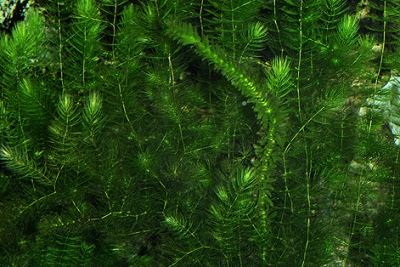
rigid hornwort
Ceratophyllaceae
To go further
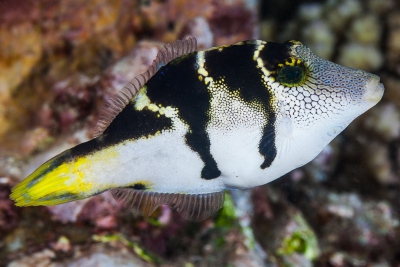
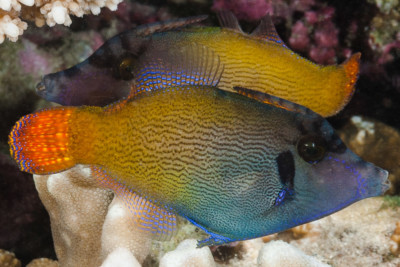
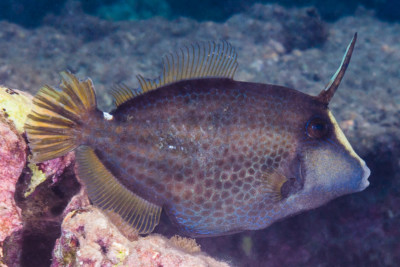







Sources & Contributions
Participation & Validation
The Fishipedia team and specialist contributors are committed to providing high-quality content. However, although the information comes from scientific sources or testimonials from specialists, the cards may contain inaccuracies.

Adrien Falzon

Benoit Chartrer
Translation
Translation done with the valuable contribution of our translators, who make this information available to a wider audience. We sincerely thank them for their commitment.

Marine Kassel
Bibliographic references
- GBIF
- The Seagrass Filefish, Acreichthys tomentosus (Linnaeus), a master of camouflage — GIRLEY S. GUMANAO — ARTHUR R. BOS — John E. Randall — Journal of the Ocean Science Foundation — . volume 30
Where to see this species?
Scientific partners



Tags
Species of the same family


