
Introduction
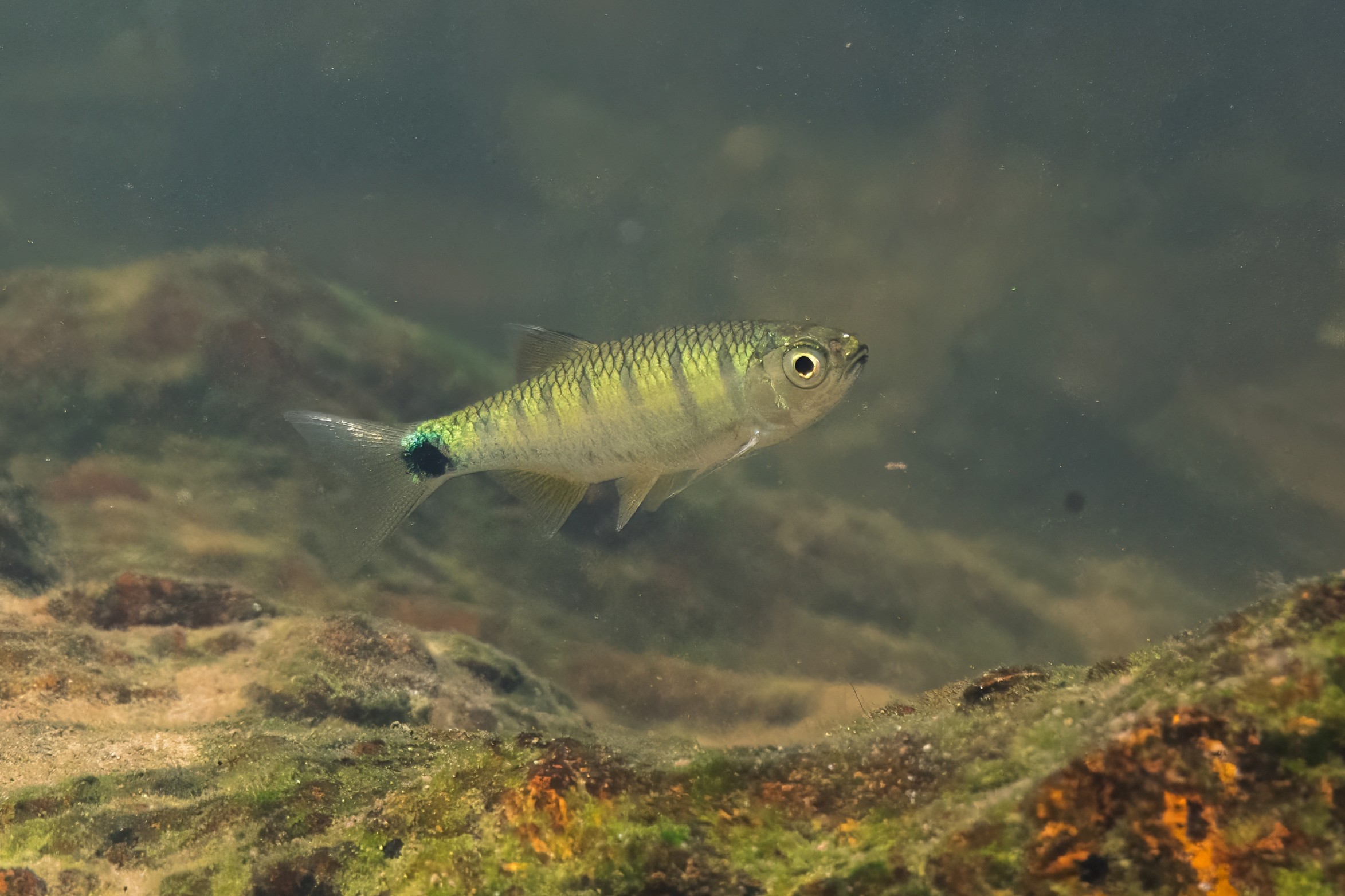
Opsarius bernatziki is a small cyprinid from Southeast Asia, endemic to the Malay Peninsula and neighboring regions of Thailand. Initially described in the genus Barilius, it was transferred to Opsarius. This genus includes lively and slender fish from tropical streams.
Who is it?
Morphology
-
Average size6 cm
-
Maximum size9 cm
-
Patternvertical stripes
-
Average size6 cm
-
Maximum size9 cm
-
Patternvertical stripes
How to recognize This fish ?
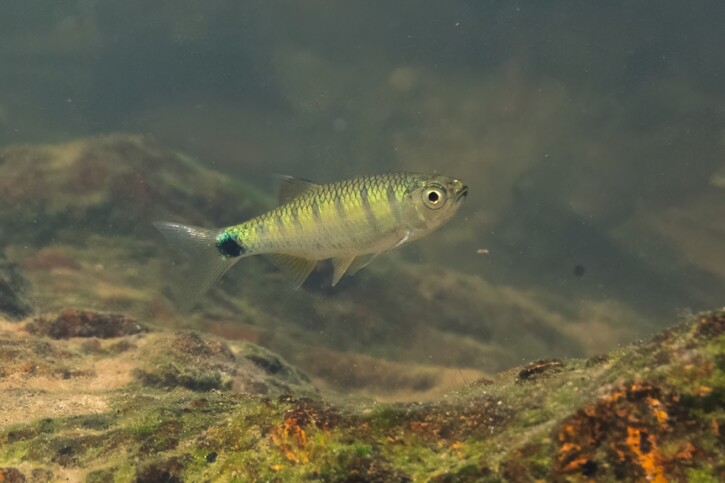
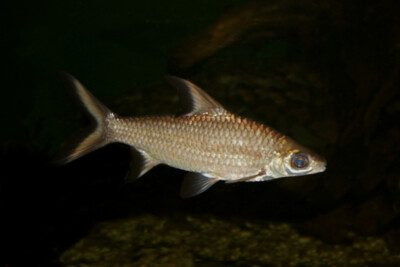
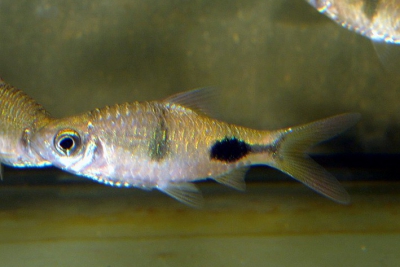
This species reaches about 9 cm in standard length. The body is fusiform, moderately compressed, with a slightly arched back and a rounded belly, typical of Opsarius and related species. The mouth is terminal, oblique, adapted for capturing drifting insects. The flanks are marked with dark vertical bars and a pronounced caudal spot, a characteristic shared with other species in the group (information confirmed by comparison with B. signicaudus and relatives).
Sexual dimorphism
Behaviour & Life cycle
-
dietinsectivore
-
Sociabilityliving in small groups
-
territorialNo
-
Way of livingdiurnal
It is an active fish in the water column and near the bottom. Like other Opsarius, it frequents areas of current and primarily feeds on aquatic and terrestrial insects falling to the surface, supplemented by small benthic invertebrates. This insectivorous diet makes it dependent on clear, oxygenated rivers.
Reproduction
-
Reproductionovipare qui pond en eau libre
-
PolygamyYes
Direct information is limited. Based on observations of closely related Barilius, reproduction generally occurs at the beginning of the rainy season, when flow rates increase and gravel and pebble zones are available for spawning. The species is oviparous, with eggs dispersed among rocky or sandy substrates.
Harmless species
No known danger to humans.
Origin and distribution
Geographic distribution & Conservation
Opsarius bernatziki is known from the northern Malay Peninsula and southern Thailand, with records in the provinces of Chiang Mai, Phrae, Nan, Kanchanaburi, and Nakhon Ratchasima. Its distribution range covers the submontane and hill streams of this area. It is classified as Vulnerable (VU) in Thailand due to habitat degradation and fragmentation.
What is its habitat?
Natural environment characteristics
-
Temperature22 - 27 °C
-
pH (acidity)6.5 - 7.5
-
FlowMedium
Biotope presentation
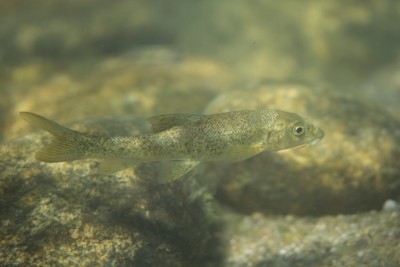
The species frequents clear streams and rivers in foothills and mid-mountain areas, often with sandy, gravel, and rocky bottoms. It is particularly abundant under waterfalls or in areas of moderate to swift current, where the water is well oxygenated. Juveniles prefer quieter zones along the edges or sheltered by rock blocks.

To go further

Sources & Contributions
Participation & Validation
The Fishipedia team and specialist contributors are committed to providing high-quality content. However, although the information comes from scientific sources or testimonials from specialists, the cards may contain inaccuracies.

Benoit Chartrer
Translation
Translation done with the valuable contribution of our translators, who make this information available to a wider audience. We sincerely thank them for their commitment.
Scientific partners




Species of the same family


