Introduction
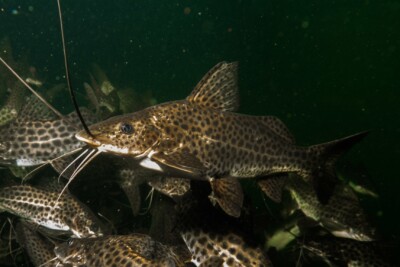
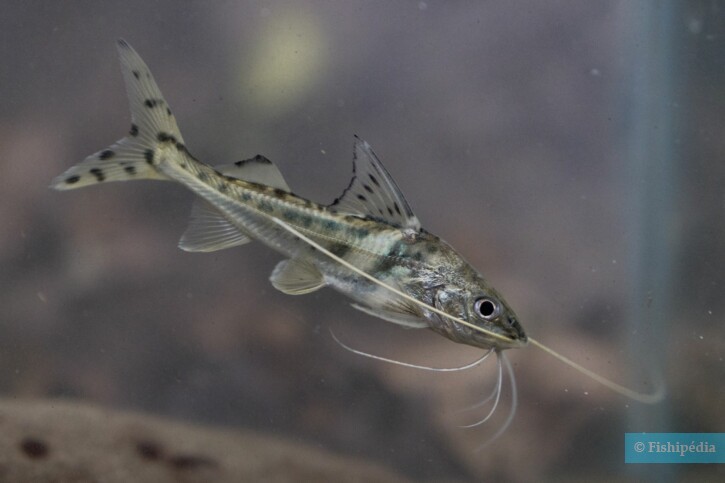
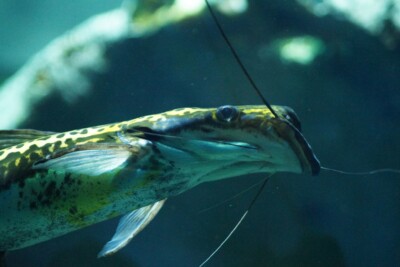
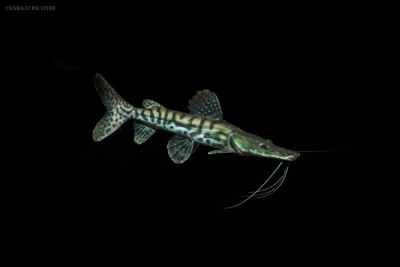
Pimelodus pictus (pictus catfish), locally known as 'cunchi' or 'pez gato moteado', is a catfish species native to South America. It is found in the basins of the Amazon and Orinoco rivers. This species is observed in calm areas outside of the breeding period, and in more turbulent waters during migration.
This species is locally consumed, especially in Peru. In Colombia, studies have raised concerns about the potential overfishing of this species for the aquarium trade.
Who is it?
Genus Pimelodus
Ces poissons appartiennent à la grande famille des Pimelodidae, elle-même comprise dans le grand ordre des siluriformes, communément appelés poissons-chats.
En 2020, on compte 33 espèces de poissons officiellement valides dans le genre Pimelodus. Elles sont réparties dans les eaux douces de la région néo-tropicale sud-américaine, exceptée P. punctatus qui est présente le long du canal du Panama.
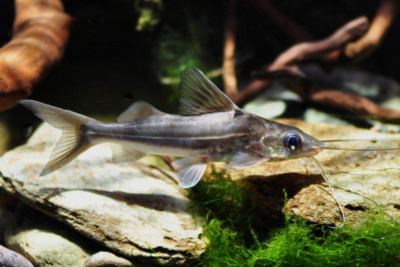
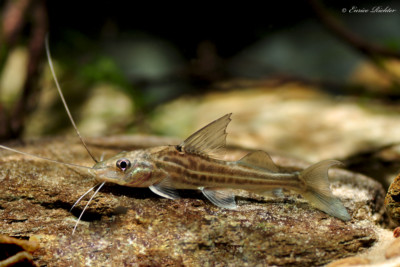
D'un point de vue morphologique, ces poissons sont caractérisés par la présence de longs barbillons, également appelés moustaches. Toutes possèdent une paire de barbillons maxillaires et deux paires de barbillons situées sous la bouche. Les yeux sont de grande taille. Les motifs sont variables, allant des ponctuations aux bandes sombres. Certaines espèces sont de couleur unie.
Les plus petites espèces mesurent à peine une dizaine de centimètres tandis que les géants du groupe atteignent plus de 50 cm. Toutes les espèces se nourrissent à minima d'insectes aquatiques mais les plus grandes chassent également d'autres poissons. Certaines sont également fructivores et détritivores, aidant à la dispersion des graines. Une partie des espèces au moins sont migratrices. De plus, ces poissons sont capables de respirer à la surface en utilisant leur muqueuse intestinale pour prélever de l'oxygène.
Ces poissons sont très proches des espèces des genres Cheirocerus, Duopalatinus, Bergiaria et Iheringichthys. Elles se distinguent de leurs cousins par la constitution de leur dentition et de leur armature osseuse. La fontanelle frontale ne s'étend pas à l'arrière de l'orbite. Le cleitrhum est large et dépourvu d'épine. Le premier rayon de la nageoire dorsale est épineux, et suivi de 6 rayons mous.
Avec une dizaine de descriptions au cours des années 2.000, ce genre va encore d'évoluer au cours des recherches à venir. D'après les ichtyologues Lundberg et Parisi (2002), un redécoupage doit être envisagé avec une description plus précise des caractéristiques morphologiques et anatomiques.
Plusieurs espèces sont menacées par la mise en place de barrages, en particulier dans le bassin moyen et supérieur du rio Tocantins au Brésil. La raréfaction des populations a également observé dans le bassin du Rio Paranà. Outre le blocage des poissons dans leur migration, les barrages bloquent également les inondations des plaines qui constituaient le lieu de croissance des juvéniles de certaines espèces.
Les plus grandes espèces font l'objet d'une pêche importante, commerciale et de loisir.
Morphology
-
Average size10 cm
-
Maximum size12 cm
-
Longevity8 year
-
Patternponctuations
-
Average size10 cm
-
Maximum size12 cm
-
Longevity8 year
-
Patternponctuations
How to recognize This fish ?
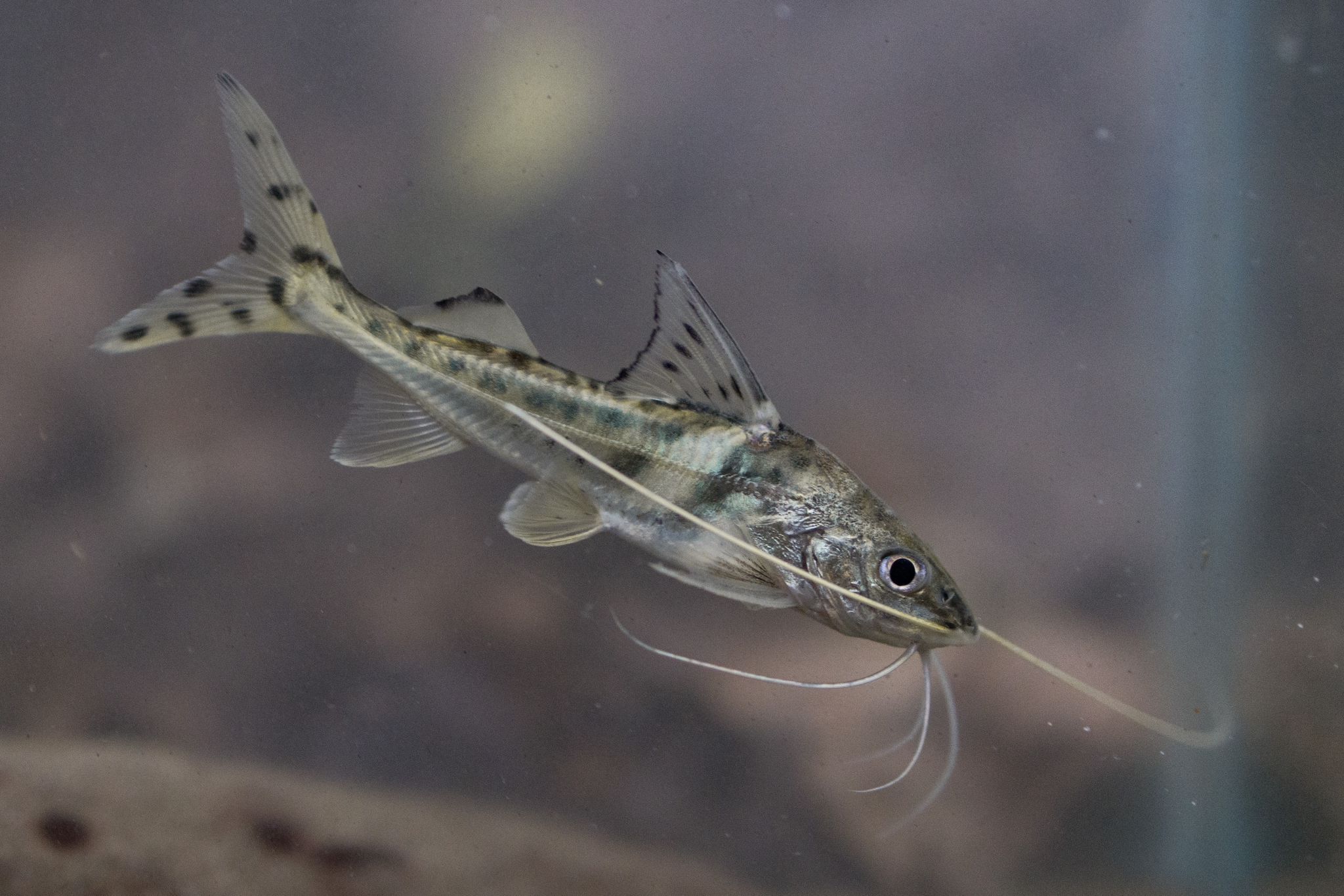
This fish has the particularity to possess several pairs of barbels, which allow him to search the bottom and to detect the food thus moved.
The body is beige and silver, covered with black spots. The fins are transparent, also spotted. With a maximum length of about ten centimeters, this species is one of the smallest in its genus.
Sexual dimorphism
Differences between sexes are poorly understood, but females may have a wider abdomen.
Behaviour & Life cycle
-
dietcarnivorous
-
Sociabilitygregarious
-
territorialYes
-
Way of livingdiurnal
Like many of their relatives, these carnivorous fish live in large groups in a wide range of habitats. They are particularly active at twilight and dawn, and remain discreet throughout the day. They mainly feed on fish and insect remains, including caddisflies (larvae), beetles (larvae and adults), and flies.
They are potamodromous migratory fish, with migrations exclusively taking place in freshwater. Studies have shown that some populations travel over 1,000 km to reproduce.
Reproduction
-
Reproductionovipare qui pond en eau libre
-
Migratory speciesYes
The breeding period lasts from May to July, coinciding with the rainy season and high temperatures. During this period, the pH is slightly acidic.
Harmless species
This species does not represent any particular threats to humans when encountered in its natural environment.
Origin and distribution
Conservation and international regulations
Where to see this species?


What is its habitat?
Natural environment characteristics
-
Temperature22 - 30 °C
-
pH (acidity)6 - 8
-
gh (hardness)5 - 19
-
FlowStrong, Medium and Slow
Biotope presentation
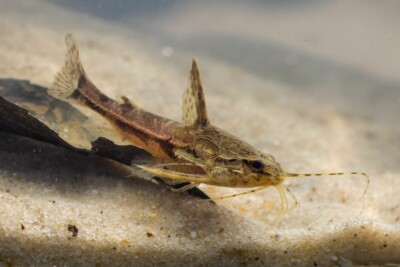
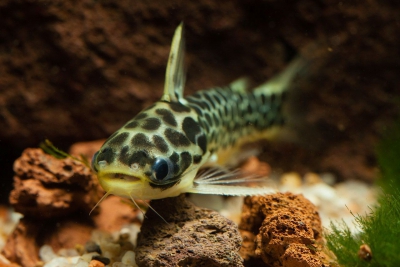
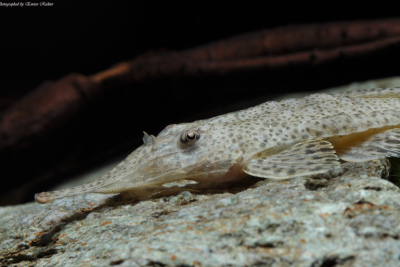
Pictus catfish inhabits the rivers and streams of the Amazon. They appear to live in current areas near rocks and sandy bottoms.
To go further
Species of the same family
Espèces du même genre
To read on the web

Sources & Contributions
Participation & Validation
The Fishipedia team and specialist contributors are committed to providing high-quality content. However, although the information comes from scientific sources or testimonials from specialists, the cards may contain inaccuracies.

Benoit Chartrer
Translation
Translation done with the valuable contribution of our translators, who make this information available to a wider audience. We sincerely thank them for their commitment.
In collaboration with : Estudios Amazónicos - Urku
Bibliographic references
- GBIF — Pimelodus pictus
- iNaturalist — Pimelodus pictus
- Three new Pimelodus species (Siluriformes: Pimelodidae) from the rio Tocantins drainage, Brazil — Frank R. V. Ribeiro — Carlos A. S. Lucena — Paulo H. F. Lucinda — Neotropical Ichthyology —
- FECUNDIDAD EN EL TIGRITO Pimelodus pictus (Steindachner, 1876) (PISCES: SILURIFORMES: PIMELODIDAE) — Victor Junca — Mauricio Molano — BOLETÍN CIENTÍFICO INPA —
Where to see this species?
Scientific partners




Tags
Species of the same family
Same genus