
black prochilodus
| Family | Prochilodontidae |
|---|---|
| Genus | Prochilodus |
| IUCN category (World) | LC |
Introduction
Black Prochilodus, locally known as "sábalo" in some regions of the Amazon, is a migratory characiform fish of major ecological and economic importance, widely distributed in the Amazon and Tocantins-Araguaia river basins in South America.
Although detailed information on certain aspects of its biology is scarce, its extensive range and the absence of critical immediate threats at a global scale give it a status of "Least Concern" according to the IUCN.
This species plays a crucial functional role in nutrient cycling and benthic community structure. Its long-term survival depends on river connectivity, which is currently threatened by hydroelectric dam projects.
Who is it?
Morphology
-
Average size45 cm
-
Maximum size52 cm
-
Average size45 cm
-
Maximum size52 cm
How to recognize This fish ?
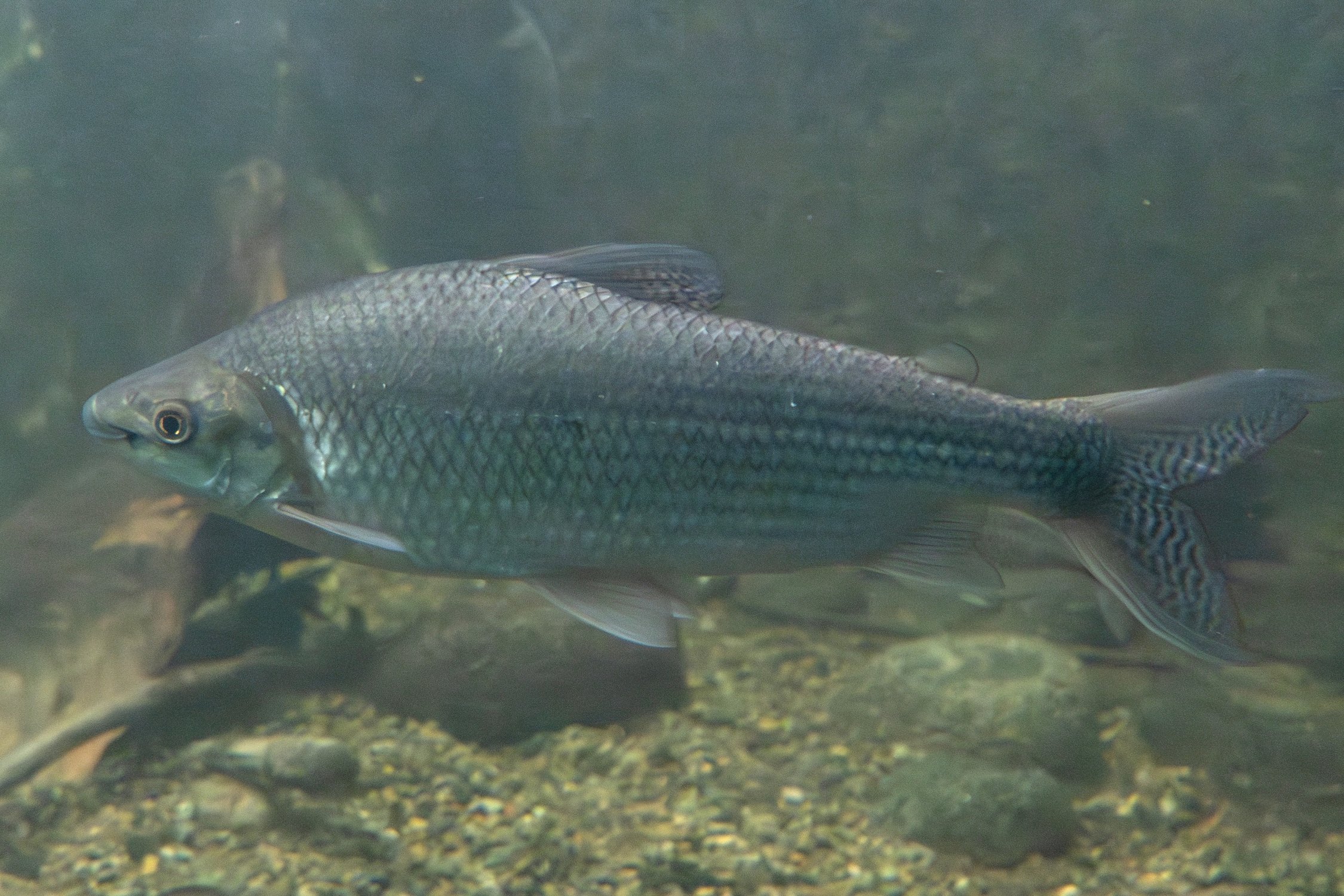
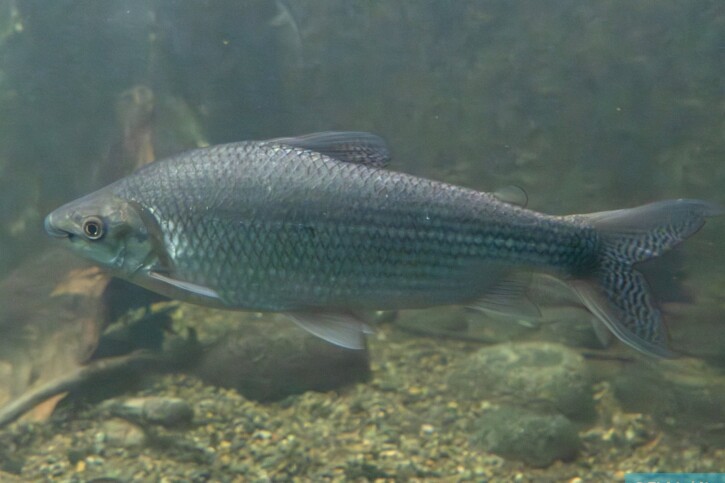
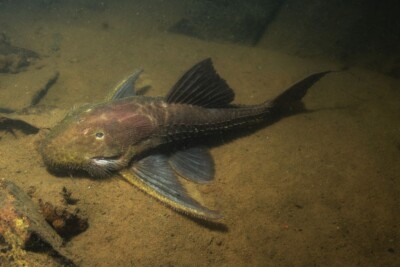
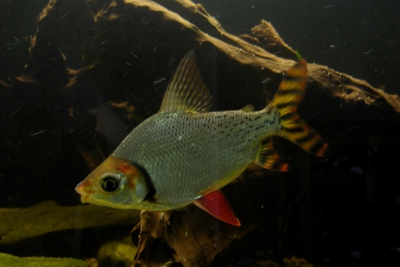
The Black Prochilodus has a fusiform and laterally compressed body, typical of active bottom swimmers, reaching a maximum standard length of about 48.5 cm (up to 52.5 cm in females) and a weight of up to 3 kg. Its most distinctive feature is its protractile mouth located on the underside of the head, adapted for scraping the substrate.
The lips are thick and horny, forming a kind of adhesive disk that allows it to cling to the current and feed on the bottom. The general coloration is dark, ranging from dark grey to blackish on the back and sides, with a lighter belly, hence its common name. The fins are usually dark, without distinct bright markings, although variations may exist among populations and seasons.
Sexual dimorphism
Sexual dimorphism is mainly visible during the breeding season. Females generally become larger and heavier than males, mainly due to the development of gonads which can represent up to 15% of their total body mass.
During the spawning season, males may develop nuptial tubercles (small rough outgrowths) on the head and pectoral fins, although this trait is more documented in other Prochilodus species. The sex ratio is generally balanced in natural populations, although selective fishing gear (such as gillnets) may disproportionately capture more females due to their larger size.
Behaviour & Life cycle
-
dietscavenger
-
Sociabilitygregarious
-
territorialNo
-
Way of livingdiurnal
The Black Prochilodus is a potamodromous species, undertaking long migrations within freshwater systems in response to hydrological cycles. Its behavior is rhythmically tied to flood events: during the rainy season, adults migrate laterally from peripheral habitats (lagoons, flooded forests, blackwater tributaries) to the main white-water rivers to spawn.
After spawning, they return to feeding areas to replenish their energy reserves. A major behavioral trait is the formation of large schools during recruitment migrations (upstream juvenile movements) and spawning.
These massive movements, locally known as "mijano" in Ecuador, can involve thousands of individuals moving over hundreds of kilometers. The species is also known for its local daily relocation movements, moving to shallow areas at dusk to feed and returning to the main channel or deeper waters during the day to avoid predators.
The Black Prochilodus is a specialized detritivore. It primarily feeds on decomposing organic matter (detritus), benthic algae, biofilm, and fine sediments which it scrapes from river bottoms, rocks, and muddy substrates using its horny lips.
This benthic feeding plays a crucial ecological role in stirring up sediments and recycling nutrients in the water column. During periods of intense migration (breeding or juvenile upstream movements), feeding activity almost ceases, as evidenced by the high proportion of empty stomachs observed in migrating individuals.
Reproduction
-
Reproductionovipare qui pond en eau libre
-
Migratory speciesYes
Reproduction in the Black Prochilodus is closely synchronized with the flood cycle of the Amazon rivers. Spawning typically occurs during the rising water season (March-April in the Ecuadorian and Peruvian Amazon), when adults migrate to the main rivers with turbid and well-oxygenated waters.
Unlike some fish species that build nests, P. nigricans spawns in open water. The eggs are semi-pelagic and slightly sticky. Fertilization is external. A female can produce a large quantity of eggs (estimated between 200,000 and 500,000 depending on size).
After hatching, larvae passively drift over very long distances (up to several hundred kilometers) to downstream floodplains, which serve as rich nursery areas. Juveniles grow in these floodplains for 6 to 18 months before actively migrating upstream to join the adults. Sexual maturity is reached at around 2 years for males and 3 years for females. No parental care is provided after spawning.
Harmless species
The Black Prochilodus poses no direct danger to humans. However, it is a species of crucial economic importance for artisanal and commercial fisheries in the Amazon, providing a major source of protein for local populations. Its flesh is highly appreciated, although the presence of numerous intramuscular bones can make consumption tricky.
Origin and distribution
Geographic distribution & Conservation
Black Prochilodus is native to South America, with a wide distribution covering the entire Amazon basin (including main and secondary tributaries) and the Tocantins-Araguaia basin in Brazil. Reports also exist in Argentina, although their status there is less clear. The species is classified as "Least Concern" due to its current abundance and wide distribution.
However, it faces increasing and potentially devastating long-term threats: the construction of hydroelectric dams that fragment migration routes, pollution (particularly related to oil exploitation in the Ecuadorian Amazon), deforestation affecting nursery areas, and overfishing targeting spawning aggregations. Given that its migrations ignore political boundaries, its conservation requires international cooperation and integrated watershed management. The loss of this species would have major impacts on the functioning
Conservation and international regulations
Where to see this species?

What is its habitat?
Natural environment characteristics
-
Temperature23 - 28 °C
-
pH (acidity)5 - 7
-
FlowMedium and Slow
Biotope presentation
The Black Prochilodus is a freshwater benthopelagic species, confined to tropical river systems. It occupies a variety of habitats throughout its life cycle:
- Spawning zones: Large white-water rivers with moderate to strong currents, turbid waters, neutral pH, and high oxygenation.
- Nursery areas: Floodplains, lagoons, and flooded forests downstream, rich in organic matter and protected from predators.
- Feeding and adult life areas: Main rivers, tributaries, and lentic systems (lakes and lagoons) where it feeds on the bottom. It is capable of adapting to different types of water (white, black, clear) depending on the season and resource availability. Its presence is closely linked to flood pulse regimes, which determine access to feeding and spawning areas.


To go further


Sources & Contributions
Participation & Validation
The Fishipedia team and specialist contributors are committed to providing high-quality content. However, although the information comes from scientific sources or testimonials from specialists, the cards may contain inaccuracies.

Benoit Chartrer
Translation
Translation done with the valuable contribution of our translators, who make this information available to a wider audience. We sincerely thank them for their commitment.
Where to see this species?
Scientific partners




Tags
Species of the same family


