Introduction
Schizodon fasciatus is a freshwater fish species widely distributed throughout the Amazon Basin and the coastal rivers of the Guianas. Classified as "Least Concern" (LC) due to its vast range, it is a highly prized food fish throughout its distribution.
Recent taxonomic studies have enabled its distinction from morphologically similar sister species such as S. vittatus (Araguaia-Tocantins basin) and S. trivittatus (Xingu-Tapajós basins).
Who is it?
Morphology
-
Average size35 cm
-
Maximum size40 cm
-
Patternvertical stripes
-
Average size35 cm
-
Maximum size40 cm
-
Patternvertical stripes
How to recognize This fish ?
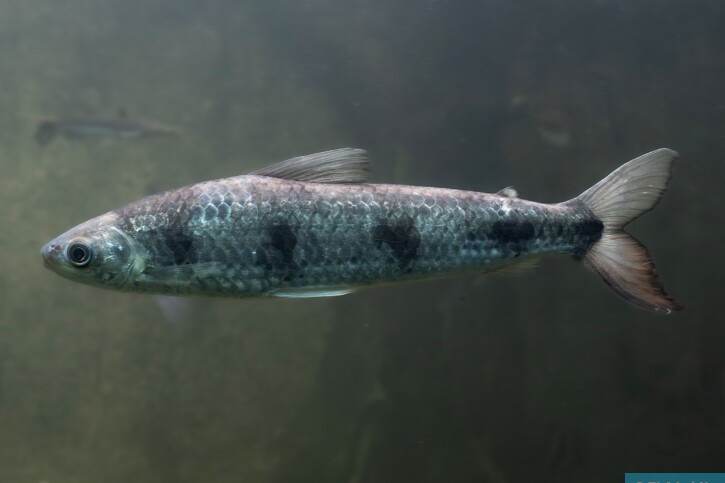
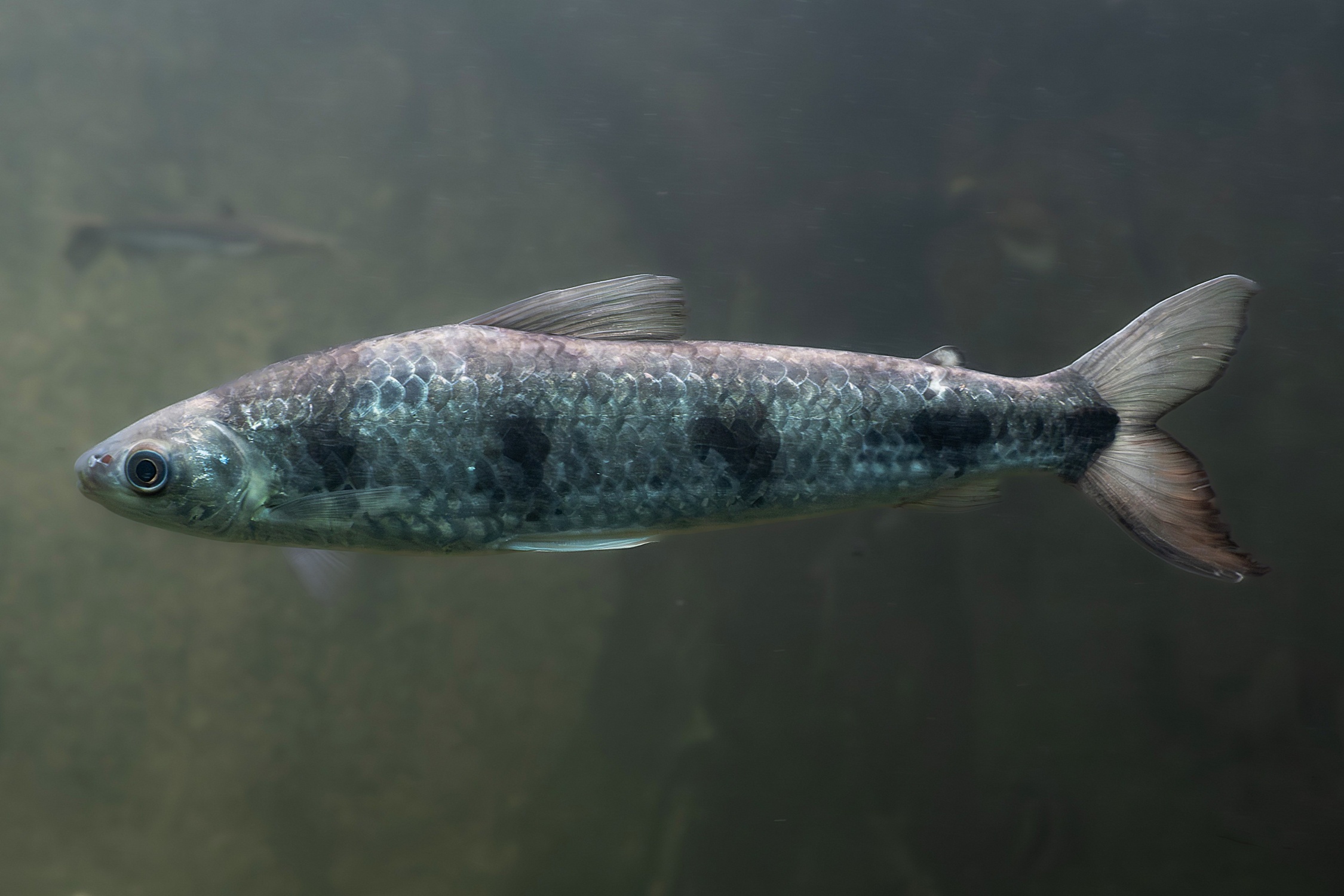
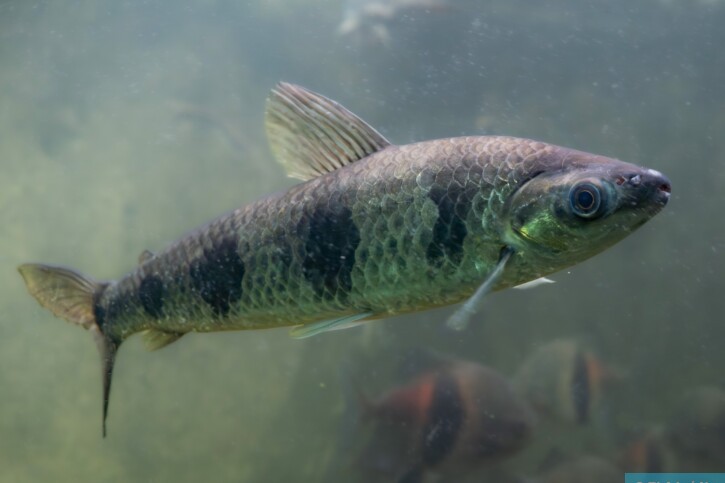
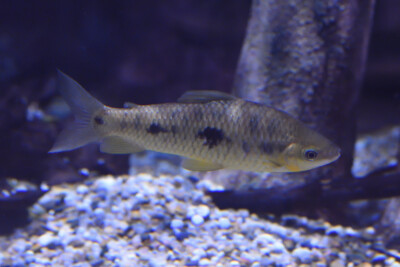
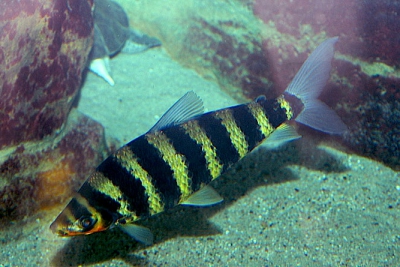
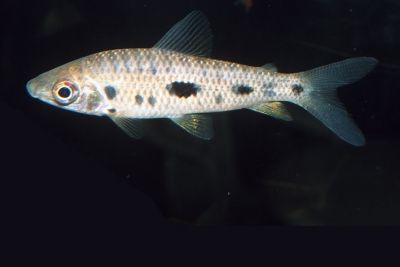
Schizodon fasciatus is a large species, reaching lengths of up to 40 cm. Its body is compressed and fusiform. The primary diagnostic characteristic distinguishing it from its congeners in the Amazon clade (S. vittatus, S. trivittatus, S. scotorhabdotus) lies in its coloration and scalation.
Unlike species possessing a dark longitudinal stripe on the caudal peduncle, Schizodon fasciatus exhibits a pale caudal peduncle and base of the median caudal-fin rays, adorned with a single rounded dark spot.
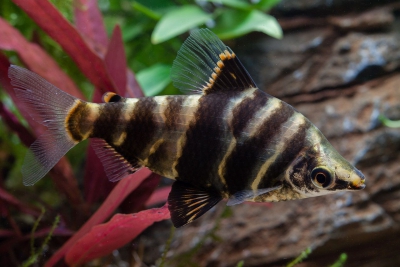
The body generally displays conspicuous dark transverse bars. The mouth is small and terminal, with the upper and lower jaws meeting horizontally at the midline of the orbit.
Sexual dimorphism
Sexual dimorphism is barely visible outside the breeding period, during which the female appears slightly stockier.
Behaviour & Life cycle
-
dietherbivorous
-
Sociabilityliving as a couple or in a group
-
territorialNo
-
Way of livingdiurnal
In the Amazon Basin, species of the genus Schizodon, including S. fasciatus, are gregarious and undertake potamodromous migrations. During the breeding period, group behavior gives way to a more intimate organization: distinct pairs form specifically for reproduction.
Schizodon fasciatus is primarily herbivorous, feeding on plant debris, leaves, and algae. Its dentition, adapted for cutting, allows it to consume vegetation.
Reproduction
-
Reproductionovipare
-
Migratory speciesYes
Spawning occurs once a year, at the start of the flood season, in white-water rivers. Distinct pairs reproduce in areas of dense vegetation. Males reach maturity from 18 cm, while females mature from 22 cm.
Harmless species
Schizodon fasciatus poses no danger to humans.
Origin and distribution
Geographic distribution & Conservation
Schizodon fasciatus is present in the Amazon Basin and the Guianas.
Its distribution is distinct from that of its close relatives: it is absent from the Xingu and Tapajós basins (where S. trivittatus lives) and from the Araguaia and Tocantins basins (where S. vittatus lives), although these species were long confused due to their great morphological similarity.
The species is classified as "Least Concern" (LC) as it is widely distributed and faces no major imminent threats identified in sources, although it is a significant target for food fisheries.
Conservation and international regulations
Where to see this species?

What is its habitat?
Natural environment characteristics
-
Temperature24 - 28 °C
-
pH (acidity)6.5 - 7.5
-
gh (hardness)3 - 10
-
FlowMedium and Slow
Biotope presentation
The species inhabits white-water rivers. As adults, it frequents ponds and flooded areas. For reproduction, it depends strictly on densely vegetated zones.

To go further

Sources & Contributions
Participation & Validation
The Fishipedia team and specialist contributors are committed to providing high-quality content. However, although the information comes from scientific sources or testimonials from specialists, the cards may contain inaccuracies.

Benoit Chartrer
Translation
Translation done with the valuable contribution of our translators, who make this information available to a wider audience. We sincerely thank them for their commitment.
Where to see this species?
Scientific partners




Species of the same family