Introduction
The crevalle jack (Caranx hippos) is an iconic species of the coastal waters of the Atlantic. Fast and powerful, it is prized by both commercial and sport fishermen.
Who is it?
Morphology
-
Average size124 cm
-
Maximum size75 cm
-
Longevity15 year
-
Average size124 cm
-
Maximum size75 cm
-
Longevity15 year
How to recognize This fish ?
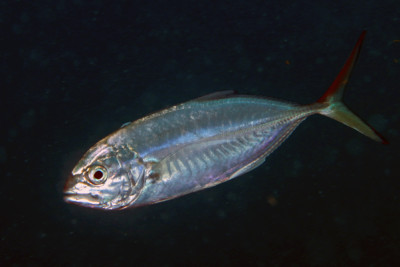
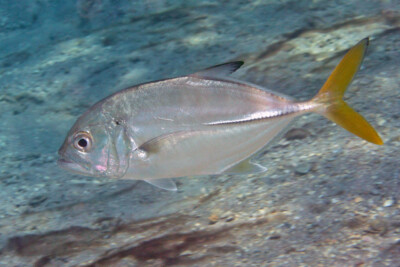
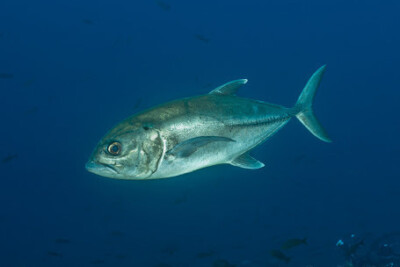
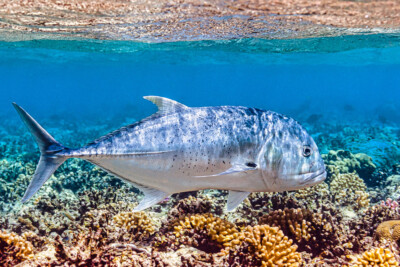
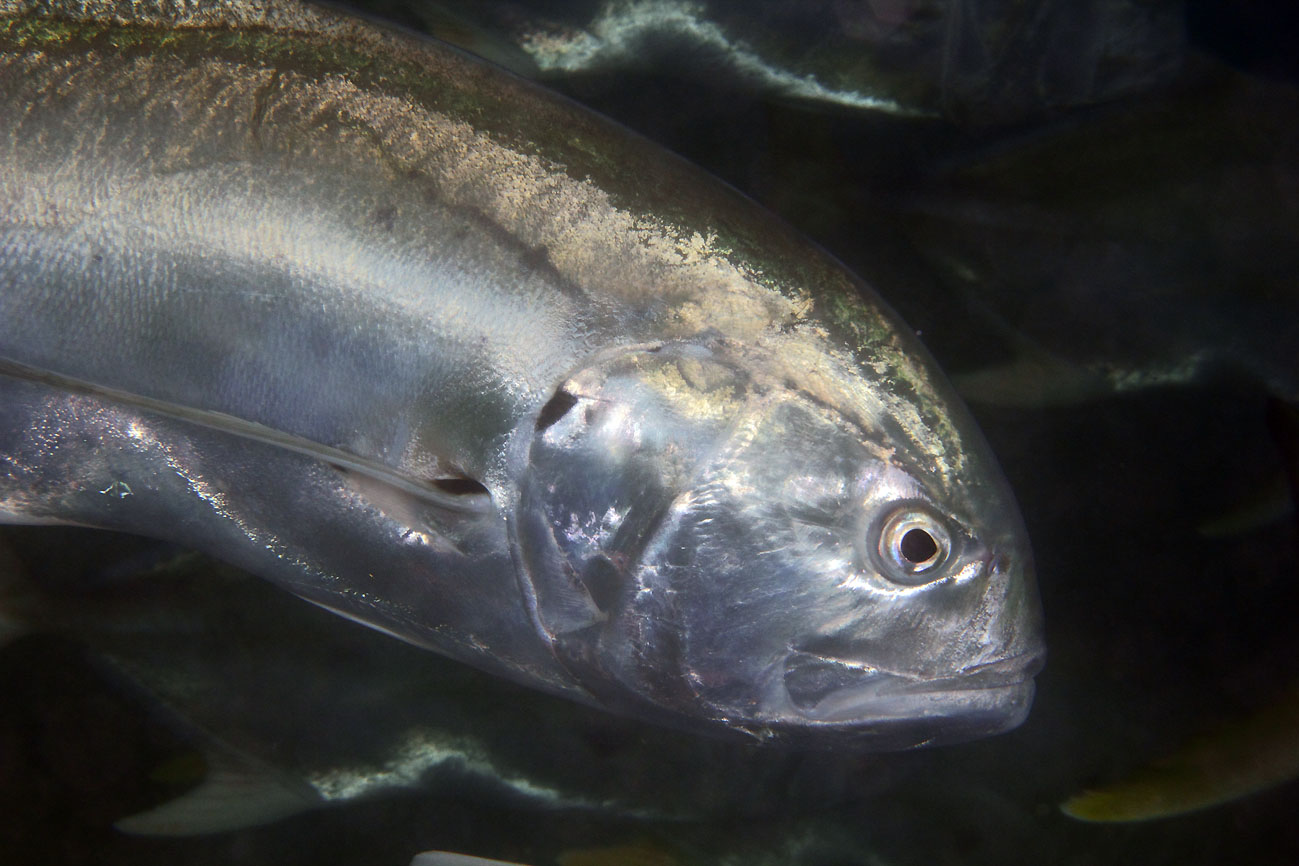
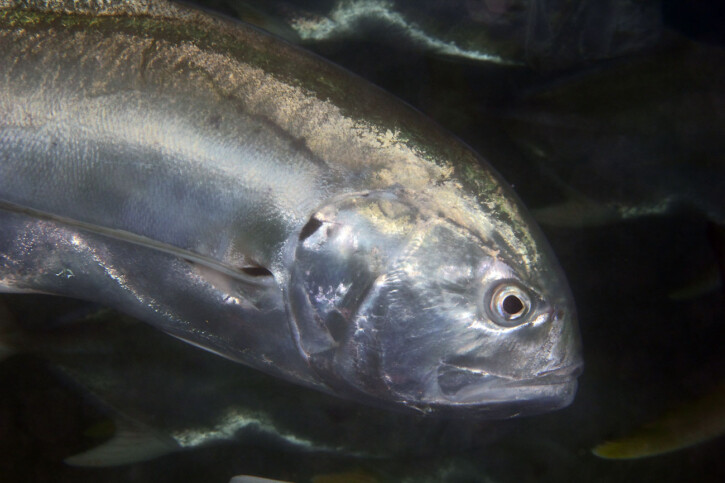
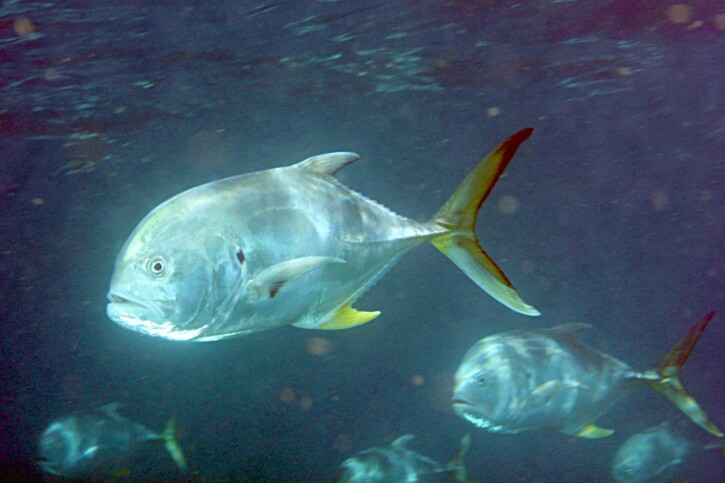
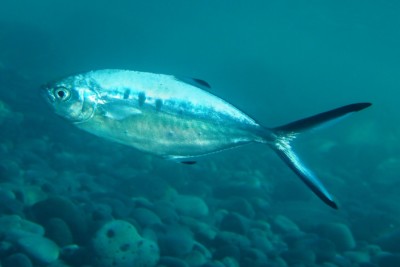
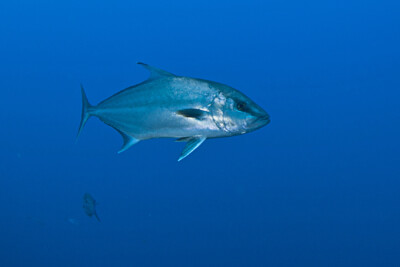
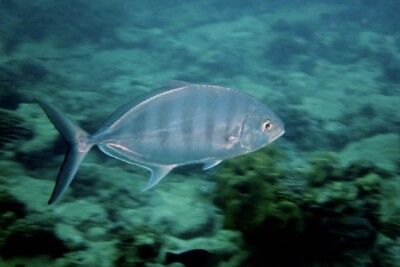
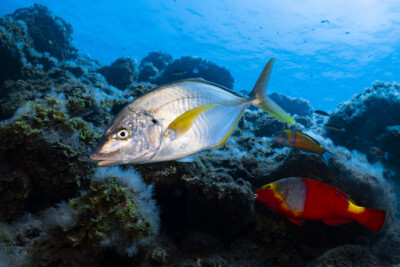
This large carangid can reach 124 cm and over 30 kg. Its fusiform body is silvery with golden hues, olive-green to blue-green back. A black spot is recognizable on the gill cover and often another at the base of the pectoral fins. The tail is yellowish. The forehead is steep, and the chest is bare except for a small scaly area in front of the pelvic fins. The dorsal and anal fins are almost symmetrical, the pectoral and pelvic fins are triangular and translucent.
Sexual dimorphism
There is no apparent dimorphism in this species.
Behaviour & Life cycle
-
dietcarnivorous
-
Sociabilityliving in a group or alone
-
territorialNo
-
Way of livingdiurnal
A social species, the crevalle jack forms fast-moving schools in open water, but large individuals often become solitary. Juveniles inhabit estuaries, lagoons, seagrass beds, and sandy areas, where they find shelter and food. This fish is an active predator, its shape and musculature make it a formidable hunter. C. hippos feeds on small fish, shrimp, and other invertebrates. When captured, it often emits characteristic grunts, produced by its sound-producing muscles.
Reproduction
-
Reproductionovipare
Reproduction is oviparous. The pelagic eggs are dispersed in open water. Juveniles grow in sheltered coastal areas before joining adult pelagic schools.
Harmless species
This species does not pose any particular danger to humans if encountered in its natural environment.
Origin and distribution
Geographic distribution & Conservation
The crevalle jack is widely distributed in the Atlantic Ocean. In the eastern Atlantic, it occurs from the coasts of Portugal to Angola and also enters the western Mediterranean. In the western Atlantic, it is found from Nova Scotia, Canada, to Uruguay, passing through the Gulf of Mexico, the Caribbean Sea, and the Greater Antilles. Reports from the Indian Ocean or the Pacific actually correspond to other closely related species, such as Caranx ignobilis or Caranx caninus.
Conservation and international regulations
What is its habitat?
Natural environment characteristics
-
Temperature17 - 28 °C
-
Depth1 - 350 m
Biotope presentation
Juveniles frequent estuaries and seagrass beds before moving to coastal and offshore waters where they hunt fish and shrimp. Adults venture both near the coast and offshore and can even go up certain rivers.
To go further


Sources & Contributions
Participation & Validation
The Fishipedia team and specialist contributors are committed to providing high-quality content. However, although the information comes from scientific sources or testimonials from specialists, the cards may contain inaccuracies.

Adrien Falzon
Translation
Translation done with the valuable contribution of our translators, who make this information available to a wider audience. We sincerely thank them for their commitment.

Marine Kassel
Scientific partners




Tags
#Carangidae
#Caranx
#crique côtière
#lagon
#mangrove
#plein eau
#récifs extérieurs
#zone côtière
#Gulf of Mexico
#Caribbean Sea
#Atlantic Ocean: North Coast of Brazil
#Océan Atlantique Est Afrique - Golfe de guinée
#Océan Atlantique Est Afrique - Transition & Cap Vert
#Northwest warm temperate Atlantic Ocean
#Southwest warm temperate Atlantic Ocean
#Southwest Tropical Atlantic Ocean
#Martinique
Species of the same family
Same genus