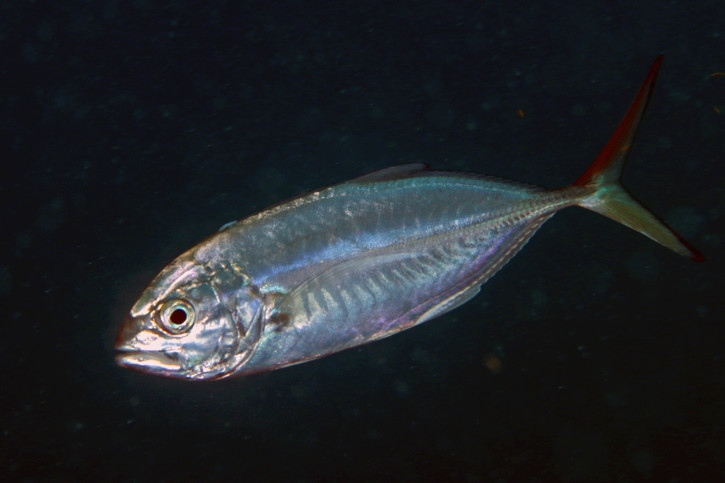
blue runner
- Carangoides crysos
Carangoides crysos
- Carangoides crysos
| Family | Carangidae |
|---|---|
| Genus | Caranx |
| IUCN category (World) | LC |
Introduction
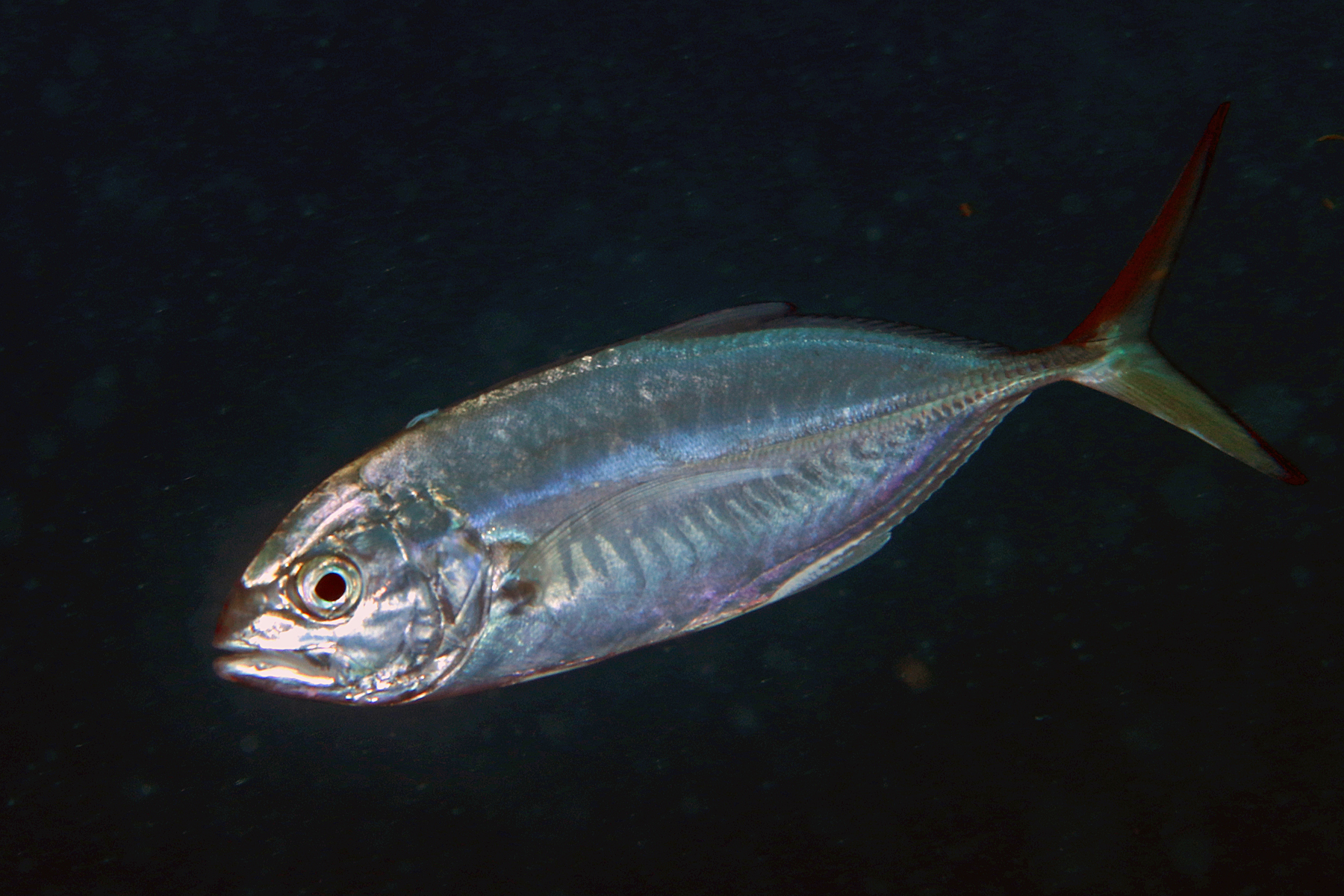
The blue runner, also known by the scientific name of Caranx crysos, is a species of fish found in the Atlantic Ocean as well as in the Mediterranean Sea. This fish occasionally inhabits brackish water areas.
Who is it?
Morphology
-
Average size40 cm
-
Maximum size70 cm
-
Longevity11 year
-
Average size40 cm
-
Maximum size70 cm
-
Longevity11 year
How to recognize This fish ?
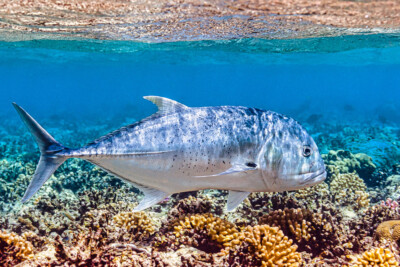
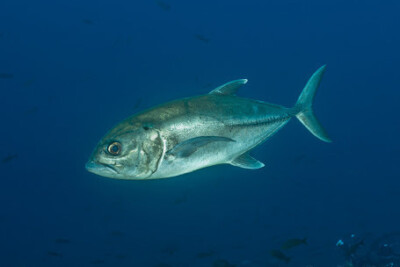
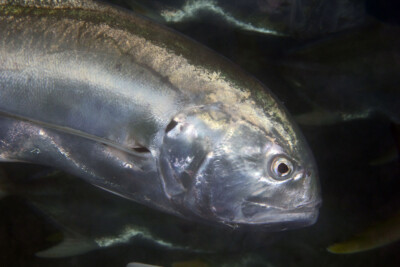
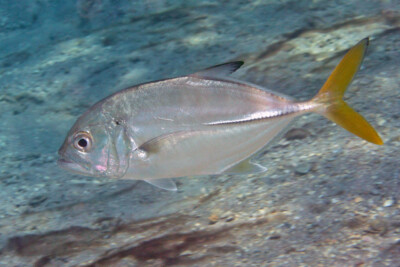
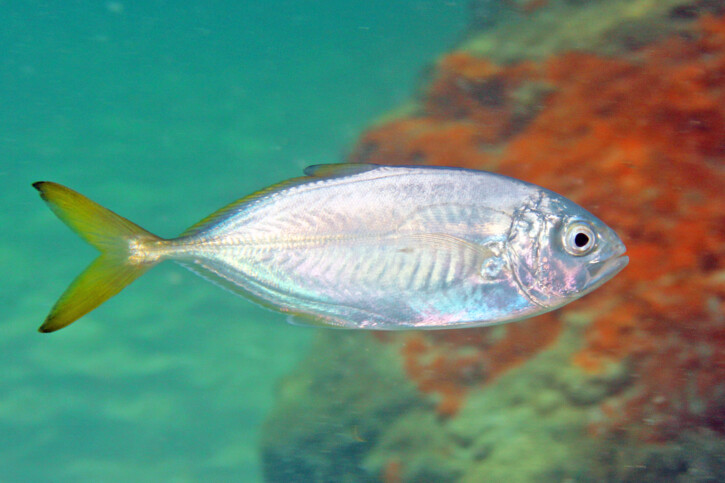
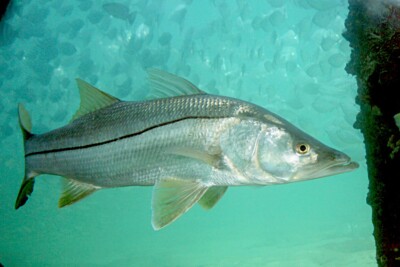
The blue runner is monochromatic with an oval, laterally compressed body, predominantly silvery gray. The pectoral fins are long and slender, the first dorsal fin is transparent, the second dorsal fin, the anal fin, and the caudal fin are sometimes yellow. The caudal fin is homocercal, forked. Carinae are noted along the lateral line, from the second dorsal fin to the caudal fin. Juveniles sometimes have seven dark vertical bars on their flanks.
Sexual dimorphism
No apparent dimorphism in this species.
Behaviour & Life cycle
-
dietcarnivorous
-
Sociabilityliving in shoals
-
territorialNo
-
Way of livingdiurnal
The blue runner is a gregarious pelagic species, forming schools often close to the shore. Juveniles frequently associate with floating algae rafts, particularly Sargassum, which provide them with both protection and food. Adults actively hunt fish, shrimp, and other invertebrates.
Reproduction
-
Reproductionovipare qui pond en eau libre
The blue runner is oviparous. Reproduction takes place in open sea with pelagic eggs. The spawning period extends from January to August, with a peak in summer (June to August) and sometimes a second one in October. The larvae develop in open water before joining coastal areas.
Harmless species
This species poses no particular danger to humans in case of encounter in its natural environment.
Origin and distribution
Geographic distribution & Conservation
Caranx crysos is present in the western Atlantic from Nova Scotia (Canada) to Brazil, including the Gulf of Mexico and the Caribbean Sea, as well as in Argentina. In the eastern Atlantic, it is reported from Senegal to Angola, including western Mediterranean. In the eastern tropical Pacific, it is replaced by Caranx caballus, considered by some as conspecific.
Conservation and international regulations
Where to see this species?

What is its habitat?
Natural environment characteristics
-
Temperature17 - 28 °C
-
Depth0 - 100 m
Biotope presentation
A marine and brackish species, the blue runner lives up to 100 m depth. It is found in schools near the coast, in open coastal waters, sometimes in lagoons and estuaries. Juveniles are associated with floating algae and can enter brackish waters. Adults move in coastal pelagic areas, but also frequent reef edges and sandy-muddy bottoms.
To go further
Species of the same family
Espèces du même genre
To read on the web


Sources & Contributions
Participation & Validation
The Fishipedia team and specialist contributors are committed to providing high-quality content. However, although the information comes from scientific sources or testimonials from specialists, the cards may contain inaccuracies.

Adrien Falzon
Translation
Translation done with the valuable contribution of our translators, who make this information available to a wider audience. We sincerely thank them for their commitment.

Marine Kassel
Where to see this species?
Scientific partners





Tags
#Carangidae
#Caranx
#mangrove
#zone côtière
#zones côtières troubles
#zones d'algues et de détritus végétaux
#Gulf of Mexico
#Caribbean Sea
#Mediterranean Sea
#Atlantic Ocean: North Coast of Brazil
#Océan Atlantique Est Afrique - Golfe de guinée
#Océan Atlantique Est Afrique - Transition & Cap Vert
#Cold temperate Northwest Atlantic Ocean
#Northwest warm temperate Atlantic Ocean
#Eastern tropical Atlantic Ocean
#Southwest Tropical Atlantic Ocean
#Martinique
Species of the same family
Same genus