sandbar shark
- Carcharinus plumbeus
- Carcharinus plumbeus
| Family | Carcharhinidae |
|---|---|
| Genus | Carcharhinus |
| IUCN category (World) | EN |
Introduction
Wide-ranging coastal and circumtropical and subtropical, Carcharhinus plumbeus mostly inhabits continental shelves. A species with low productivity, it has experienced significant declines due to fishing pressure, with signs of recovery where management measures are in place.
The sandbar shark is listed as endangered by the IUCN.
Who is it?
Morphology
-
Type
-
Average size200 cm
-
Maximum size300 cm
-
Longevity34 year
-
ShapeOval
-
Type
-
Average size200 cm
-
Maximum size300 cm
-
Longevity34 year
-
ShapeOval
How to recognize This fish ?
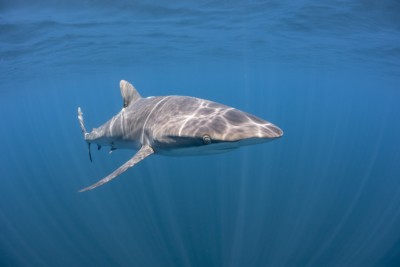
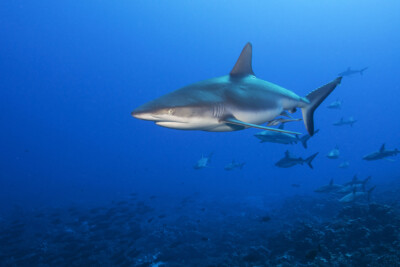
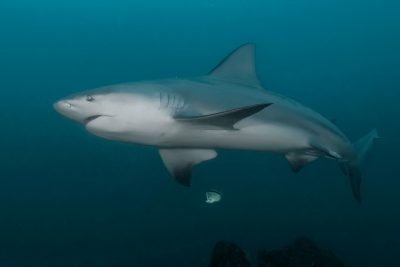
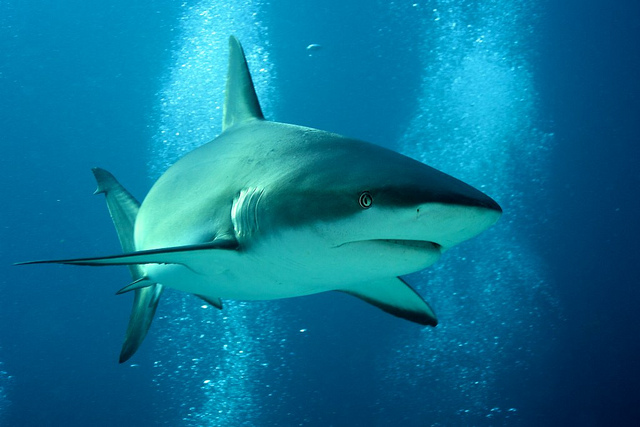
This robust-bodied shark has a rounded snout, a pronounced inter-dorsal ridge, and a high triangular first dorsal fin. Its upper teeth, wide and finely serrated, emphasize its predator profile. Its coloration is gray-brown to bronze, with a whitish belly and sometimes darkened fin tips. The average size is around 2 m, but individuals up to 240 cm are regularly observed, with some reports reaching 3 m and 118 kg.
Sexual dimorphism
Sexual dimorphism is slight. Adult females, however, have thickened skin that protects them during mating.
Behaviour & Life cycle
-
dietcarnivorous
-
Sociabilityliving in small groups
-
territorialNo
-
Way of livingdiurnal
A demersal and pelagic coastal species, the sandbar shark inhabits continental shelves from the shoreline to 280 m deep. It prefers bays, estuaries, lagoons, and offshore banks, while avoiding exposed beaches and rugged coral reefs. Some populations undertake long seasonal migrations.
Its diet is varied: it primarily preys on bony fish but also consumes cephalopods, crustaceans, rays, and occasionally young sharks. Juveniles feed mainly on crabs and mantis shrimps. Populations show age segregation, with young individuals often occupying sheltered coastal areas that serve as nurseries.
Reproduction
-
Reproductionvivipare
This shark is viviparous, with a yolk sac placenta. After a gestation period of about 12 months, the female gives birth to 1 to 14 pups (usually 5 to 12) measuring 40 to 76 cm at birth. The reproductive cycle is biennial to triennial depending on the region. Maturity is reached late: between 8 and 16 years in females, with a maximum lifespan of 27 to 34 years. Nurseries are often located in shallow bays or estuaries, where young sharks find shelter and food.
Risks for humans
-
VenomousNo
-
BiteYes
The sandbar shark is generally not considered dangerous to humans. Its imposing size and sometimes curious behavior, however, warrant caution, especially in coastal areas where it may approach swimmers or fishermen. Although involvement in accidents is rare, its power makes it a species to be respected and observed from a distance.
Origin and distribution
Geographic distribution & Conservation
This species is circumtropical and widely distributed:
- Indo-Pacific: from the eastern coast of Africa to the Hawaiian Islands and French Polynesia, from southern Japan to New Caledonia.
- Eastern Pacific: from the Gulf of California to Panama and to the Galápagos.
- Atlantic: from the northeast United States and the Gulf of Mexico to Brazil, including the Caribbean and the Guianas.
- Mediterranean: once common, it is now very rare and sporadically reported (Tunisia, Turkey, Algeria).
Conservation and international regulations
Where to see this species?

What is its habitat?
Natural environment characteristics
-
Temperature23 - 27 °C
-
Depth0 - 500 m
-
EnvironmentActive pelagic
Biotope presentation
The sandbar shark mostly inhabits continental and insular shelves, on sandy or mixed bottoms, from 10 to 280 m. It is found in bays, estuaries, and harbors, as well as offshore banks. Juveniles readily populate turbid and sheltered coastal areas, which act as nurseries.
To go further
Species of the same family

Espèces du même genre
To read on the web


Sources & Contributions
Participation & Validation
The Fishipedia team and specialist contributors are committed to providing high-quality content. However, although the information comes from scientific sources or testimonials from specialists, the cards may contain inaccuracies.

Adrien Falzon
Translation
Translation done with the valuable contribution of our translators, who make this information available to a wider audience. We sincerely thank them for their commitment.

Marine Kassel
Where to see this species?
Scientific partners




Tags
#Carcharhinidae
#Carcharhinus
#barrière de corail
#fonds rocheux
#plein eau
#récifs extérieurs
#tombant
#shark
#Bay of Bengal
#Gulf of Mexico
#Persian Gulf
#Great Barrier Reef
#mer d'Oman
#Caribbean Sea
#Philippine Sea
#Red Sea
#South East Asian Seas
#Indonesian seas
#Océan Atlantique Bahamas
#Océan Atlantique Bermudes
#Atlantic Ocean: North Coast of Brazil
#Océan Atlantique Est Afrique - Angulhas
#Océan Atlantique Est Afrique - Golfe de guinée
#Temperate Eastern Atlantic Ocean
#Océan Atlantique Est Afrique - Transition & Cap Vert
#Northwest warm temperate Atlantic Ocean
#Southwest warm temperate Atlantic Ocean
#Eastern tropical Atlantic Ocean
#Southwest Tropical Atlantic Ocean
#East Indian Ocean
#western Indian Ocean
#Desventuradas Islands
#Galapagos
#Océan Pacifique Nord Est Tempere Chaud
#Océan Pacifique sud-est tempéré chaud
#Western Tropical Pacific Ocean
#Oceania
Species of the same family
Same genus